


 2 Photos
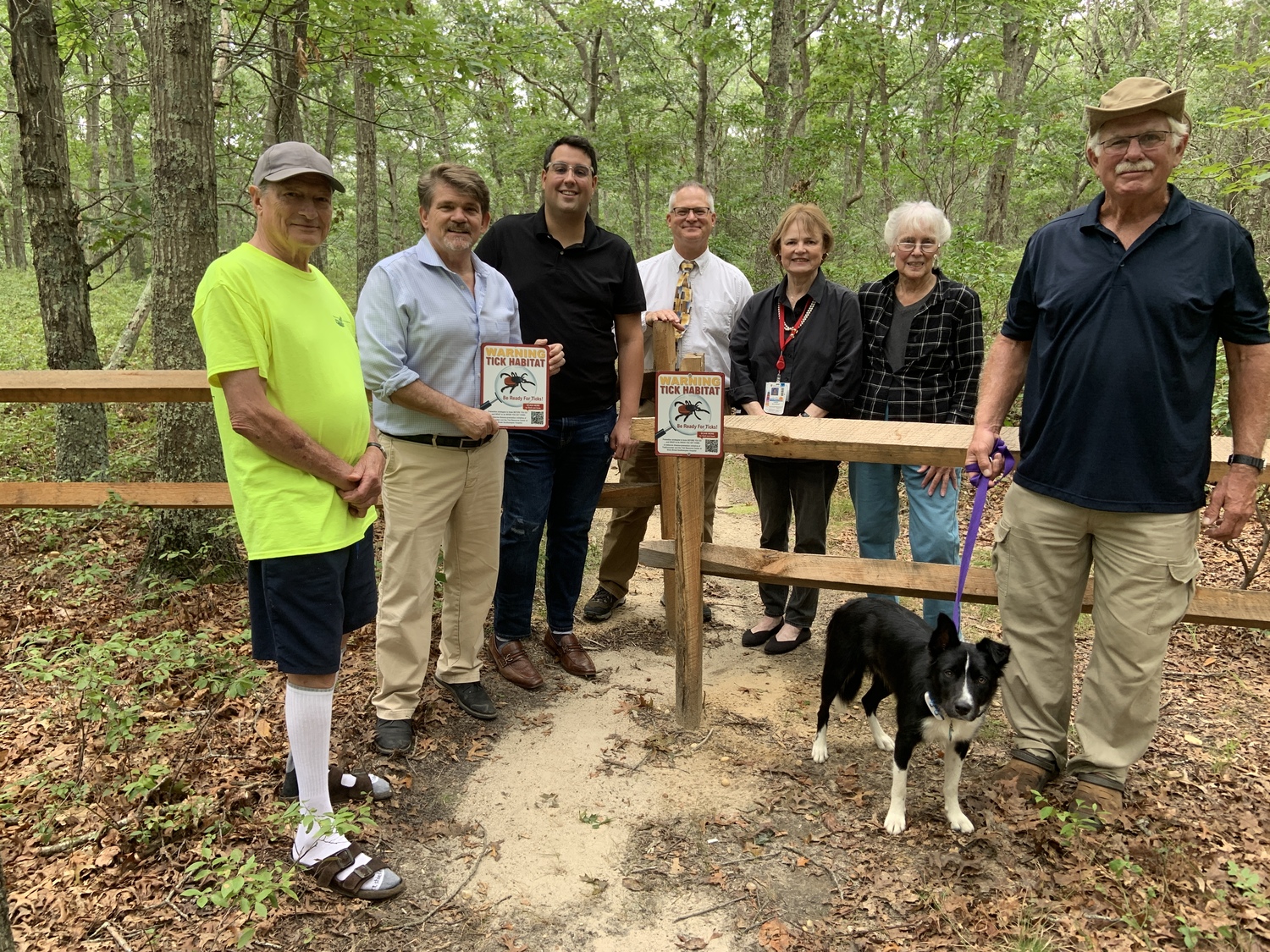
Celebrating the placement of tick awareness placards in the Long Pond Greenbelt and other trailheads in Southampton Town are, from left, Peter Wilson of the Friends of the Long Pond Greenbelt; Southampton Town Councilman Tommy John Schiavoni; Michael Iasilli, an aide to Suffolk County Legislator Bridget Fleming; Dr. Scott Campbell of the Suffolk County Department of Health Service's Anthropod-Borne Disease Laboratory; Karen Wulffraat, director of community outreach for Stony Brook Southampton Hospital's Regional Tick-Borne Disease Resource Center; Sandra Ferguson, vice president of the Friends of the Long Pond Greenbelt; and Tim Corwin of the Southampton Trails Society. STEPHEN J. KOTZ
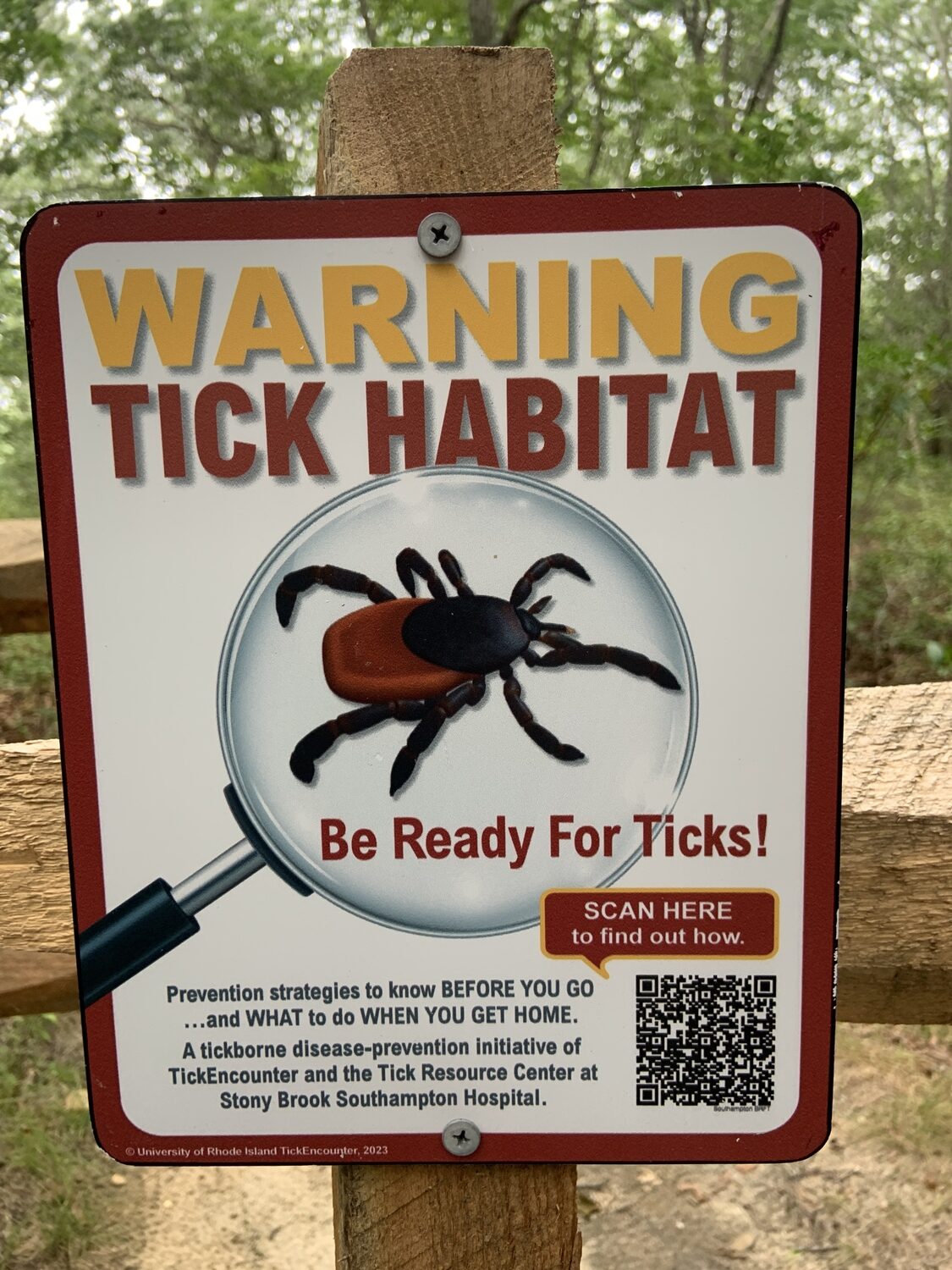
The placards include a QR code that links to information about staying safe from ticks while on the trails.
Visitors to 50 different trails scattered across Southampton Town will encounter small placards placed at trail heads warning them that they are entering tick habitat and providing a QR code that they can use to obtain helpful information about avoiding tick bites while enjoying nature.
“They provide useful tips about what you can do now — on the trail — to avoid tick bites,” said Councilman Tommy John Schiavoni. “We want people to use the trails, but we also believe it is important that they are knowledgeable about preventing tick-borne illnesses.”
The signs are a collaborative effort of the University of Rhode Island, the Suffolk County Department of Health Services’ Arthropod-Borne Disease Laboratory, the Regional Tick-Borne Disease Resource Center at Stony Brook Southampton Hospital, and the town.
Those groups were brought together by the Tick Control Advisory Committee, which was established by Suffolk County Legislator Bridget Fleming.
The QR code link encourages hikers to stay in the middle of the trail, keep their shirts tucked in and their pants tucked into socks, and to use tick spray. It also links to other resources that provide more detailed information about the different types of ticks and the diseases they spread. The location of the hiker clicking on the code will also be submitted to researchers to help them learn where people use public trails.
The signs are part of a broader research project being conducted by URI that focuses on providing “Just-in-Time” information to hikers before they begin their walks.
The URI effort, which focuses on providing “Just-in-Time” information to hikers before they begin their walks, is affiliated with the New England Regional Center of Excellence in Vector-Borne Diseases, which is a project funded by the federal Centers for Disease Control dedicated to research, training, and addressing public health needs related to vector-borne diseases. The University of Massachusetts is the lead researcher with partners at universities in Rhode Island, Vermont, Connecticut, New Hampshire, and Maine.
URI reached out to the local committees because they believe that eastern Long Island was endemic for tick-borne disease and needed to be represented in the data.


 Stephen J. Kotz on Aug 29, 2023