Gumbs Leads National Native Coalition in Opposition to 'Rushed' Wind Farm Development

icon 2 Photos
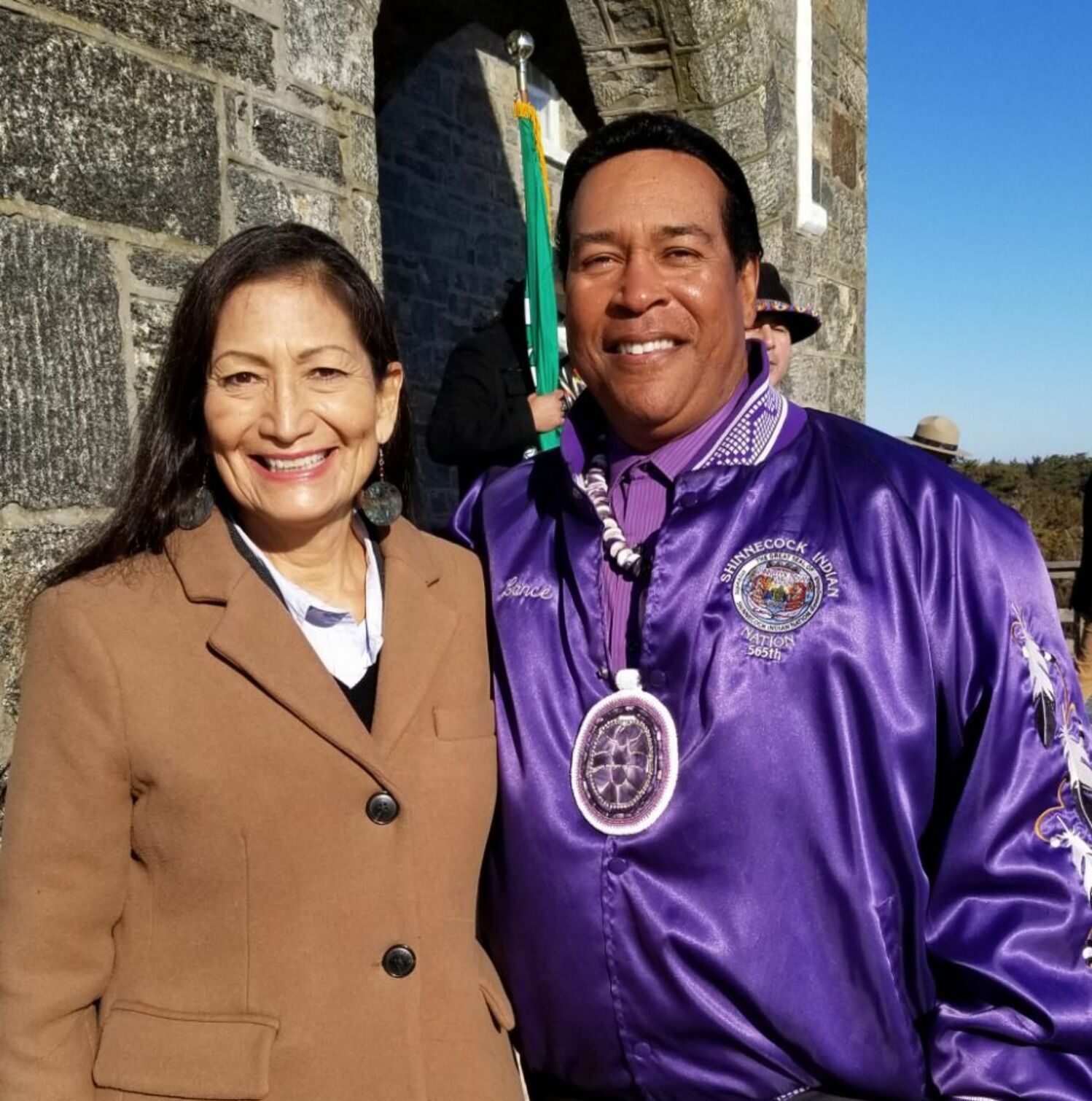
Lance Gumbs, a member of the Shinnecock Nation and the vice president of the National Congress of American Indians, with U.S. Secretary of the Interior Deb Haaland. Gumbs has led a coalition of Native American tribal representatives who have been critical of offshore wind development and demanded that native tribes be given more voice in the review and approval process for the projects.
Lance Gumbs, a member of the Shinnecock Nation and the vice president of the National Congress of American Indians, with U.S. Secretary of the Interior Deb Haaland. Gumbs has led a coalition of Native American tribal representatives who have been critical of offshore wind development and demanded that native tribes be given more voice in the review and approval process for the projects.

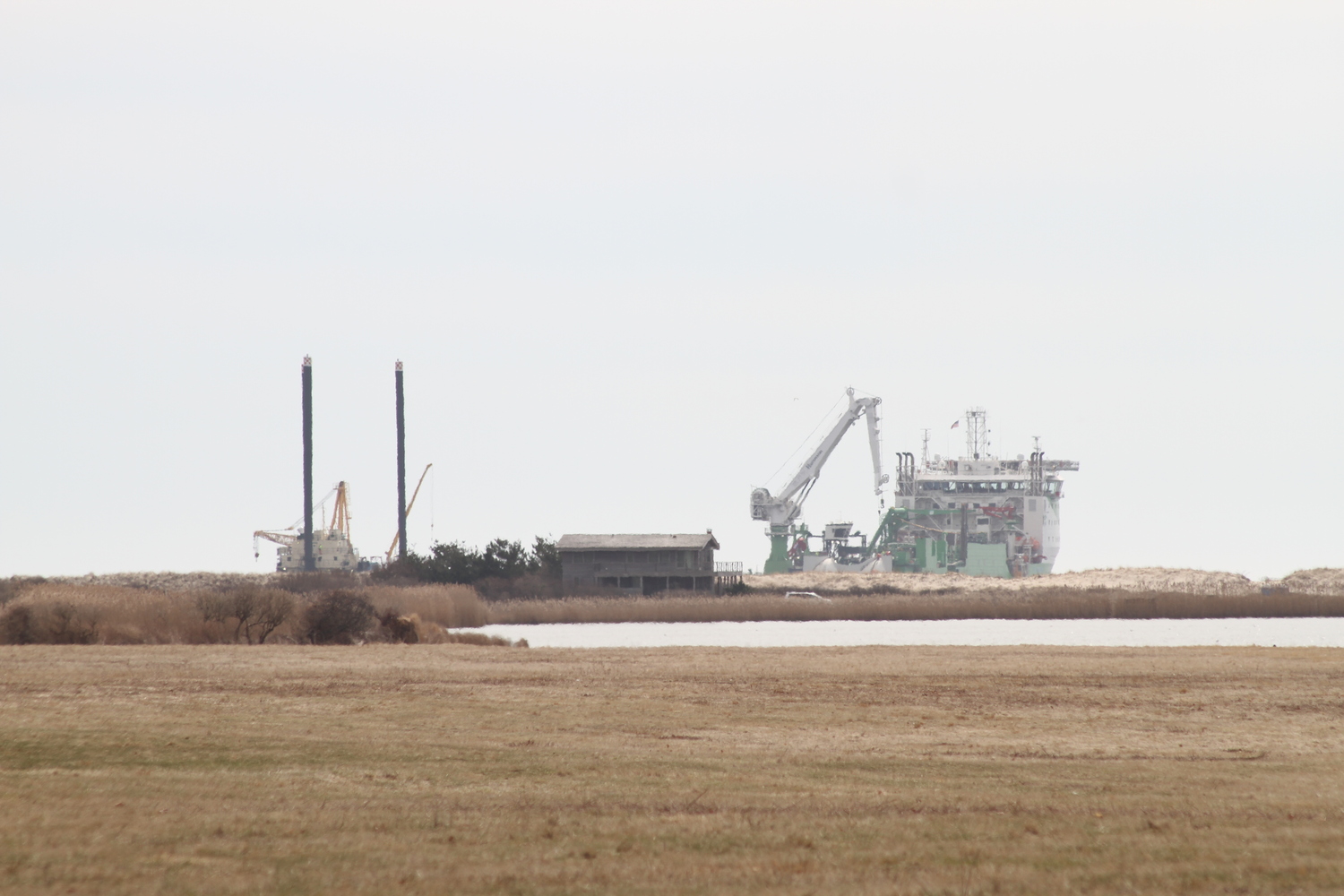
Representatives of Native American tribes, led by Shinnecock Nation member Lance Gumbs, have voiced concerns about the potential impacts to their traditional fishing rights posed by wind farm development. The cable for the South Fork Wind Farm was installed in Wainscott, above, last spring. 
MICHAEL WRIGHT

Representatives of Native American tribes, led by Shinnecock Nation member Lance Gumbs, have voiced concerns about the potential impacts to their traditional fishing rights posed by wind farm development. The cable for the South Fork Wind Farm was installed in Wainscott, above, last spring. MICHAEL WRIGHT

authorMichael Wright on Sep 6, 2023

Lance Gumbs, a former Shinnecock Nation tribal trustee, is leading a coalition of Native American tribes from the East and West Coasts of the United States that are raising questions about how the federal government reviews and approves offshore wind farms — and are demanding more of a voice, and a cut of the financial benefits, in the process

“I was listening to stories from tribes from Maine to Virginia about the lack of meaningful consultation with the tribes, about the Biden administration talking about inclusion and co-management but not following through with the tribes on the East Coast,” Gumbs, who is the vice president of the National Congress of American Indians, said this week.

“There is a real disconnect between what the White House is saying, what the Department of the Interior is saying, and what [the Bureau of Ocean Energy Management] is doing,” he added.

Earlier this year, the coalition organized by Gumbs called for a moratorium on wind farm approvals in areas that could impact Native peoples, until more can be done to flesh out the potential negative impacts of the construction on the environment, on marine mammals and on tribes that depend on the sea and marine life for their livelihoods or tribal economies.

The moratorium got the coalition a meeting with Interior Secretary Deb Haaland — who is a Pueblo and the first Native American cabinet secretary in U.S. government history — to discuss the breakneck pace of wind farm planning and applications off the East Coast.

“We felt the meeting went nowhere,” Gumbs said. “We told her, we’re not here for a listening session — we’re here for actionable items. But it’s a directive from the White House, so she had nothing to give us, really.”

With just five turbines currently online along the entire East Coast and two wind farms under construction — including South Fork Wind, off Montauk, which will connect to land in Wainscott — the tribes are worried that there are potential impacts that are being glossed over or ignored in the haste of getting more projects through the approval process.

Wind farm development dozens of miles away could have negative fallout for coastal tribes like the Shinnecock, Gumbs said, and the federal review process has not proven to him that it is giving each proposal the due diligence of an in-depth, independent review. Instead, he believes the government is fast-tracking them for approval to meet the administration’s goals of tens of thousands of megawatts of power to be generated by offshore wind turbines by the end of the decade.

On the Shinnecock territory, Gumbs said that there are concerns that the detritus of ocean dumping in the New York Bight from decades ago could be stirred and resurfaced by the construction of two new wind farms with hundreds of turbines planned for the ocean off Long Beach.

“We remember the streams of garbage that would get sucked in here — right in the inlet — and then the current carries it right to our shores. We’d find garbage all over,” Gums recalled of the ocean dumping days. “So my question to BOEM is, has there been any analysis if the garbage dumps come back?”

The problem for the Shinnecock and other tribes, Gumbs said, is that they do not have the internal manpower to dedicate to close examination of the details in tens of thousands of pages of application documents — without outside, hired help.

He said that Ørsted, the Danish company spearheading the development of South Fork Wind and three other wind farms that would be built in the waters east of Long Island, offered the tribe $65,000 to hire consultants to review the application of Sunrise Wind, which will send power ashore in Smith Point. The amount was insultingly insufficient, Gumbs said — noting that in the same month the company had agreed to donate more than $170 million to the Town of Brookhaven as the project’s public benefit contribution to the project’s on-land “host.”

“We are not opposed to wind farms, but they are rushing these things through — even other federal agencies are upset with how it is being handled — and we are being left out,” Gumbs said.

“This has the ability to affect our livelihoods. They stole land from us, but no tribe has relinquished its water rights. We have every right to be included in these negotiations, including the funding, so we can make informed decisions.”

You May Also Like:

The Urgency of Real

The Hamptons International Film Festival typically takes up a lot of oxygen in the fall on the South Fork, but it’s worth celebrating a slightly smaller but just as vital event in late autumn: the Hamptons Doc Fest. Running this week for its 18th year, the festival of documentaries was founded by Jacqui Lofaro and has become an essential part of the region’s arts scene every year. It’s a 12-month undertaking for Lofaro and her staff, and the result is always a tantalizing buffet of outstanding filmmaking, not to mention unforgettable stories. The arrival of the era of streaming services ... 10 Dec 2025 by Editorial Board

Hitting Pause

East Hampton’s housing shortage is real; the town can’t afford to ignore any potential long-term solutions. But the recent — and now scrapped — plan for a large employer-run complex on Three Mile Harbor Road raises too many questions that haven’t been fully answered. The proposal, put forward by Kirby Marcantonio and an unnamed partner, would have created 79 units of employer-controlled housing, comparable to a project he has pitched on Pantigo Road. To make it happen, the East Hampton Town Board would have had to allow the project to sidestep the town’s 60-unit limit on affordable developments, and rezone ... by Editorial Board

Proceed With Caution

Overlay districts are a common zoning tool used by many municipalities. Southampton Town has used them to varying degrees of success — the aquifer protection overlay district has been a winner; a downtown overlay district in Hampton Bays less so — in various parts of the town. They essentially look at the existing zoning, then allow those rules governing what can be done on properties to be reconsidered if there’s a newer concern to be addressed. In a bid to clean up the process for creating more affordable housing, the Town Board is looking at a new overlay district that ... by Editorial Board

The Whole Picture

When it comes to evaluating a complex development proposal, splitting up the application into separate parts may seem tempting, especially when environmental uncertainties loom. But in the case of Adam Potter’s plan for 7 and 11 Bridge Street, the Sag Harbor Village Planning Board should resist any temptation to segment the project for review. Potter’s attorney has asked the board to consider the gas ball property at 5 Bridge Street — a site that could provide the 93 parking spaces required for Potter’s 48 residential units and commercial spaces nearby — separate from the main development. The reason is understandable: ... by Editorial Board

New Law Requires Owners of Historic Buildings in Sag Harbor To Document Historic Features Before Renovation Work

The stories are almost commonplace: People seeing dumpsters full of old windows, doors and trim outside historic houses in Sag Harbor that are being renovated. On Tuesday, the Village Board adopted a proposal that it hopes will help put an end to that practice. It will require the owner of a historic house to complete a construction protocol and preservation plan before undertaking any major renovation. That document could be a few sentences or several pages long, depending on the type of work being considered. The amendment requires that the plan outlines “with specificity the detailed preservation, rehabilitation, restoration and/or ... by Stephen J. Kotz

Potential Disaster

It’s back — the federal government’s push to expand offshore oil drilling. The waters off Long Island are not in the plan, as of now. As the recent headline in Newsday reported: “Plan for New Oil Drilling Off Fla. and Calif. Coasts.” The subhead on the Associated Press article: “States push back as Trump seeks to expand production.” The following day, November 22, Newsday ran a nationally syndicated cartoon by Paul Dukinsky depicting President Trump declaring in front of a line of offshore wind turbines: “Wind Turbines Ruin the View!” Then there was Trump in front of a bunch of ... by Karl Grossman

Pierson Hosts Community Forum on Proposed $40 Million Facilities Improvement Project

The Pierson High School doors were opened to parents and residents on Tuesday night for ... by Cailin Riley

Edward F. McGuire Jr., Formerly of East Hampton, Dies December 5

Edward F. McGuire Jr., originally from East Hampton, died peacefully on December 5 in Melbourne ... by Staff Writer

Benjamin ‘Shonowe Kellis Haile of the Shinnecock Nation Dies November 12

Benjamin Kellis Haile, “Shonowe”, 60, of the Shinnecock Indian Nation began his journey to the ... by Staff Writer

Sag Harbor Village Board Authorizes a Flurry of Studies of Key Issues

Members of the Sag Harbor Village Board have long cited the need for objective data ... 9 Dec 2025 by Stephen J. Kotz