


 1 Photo
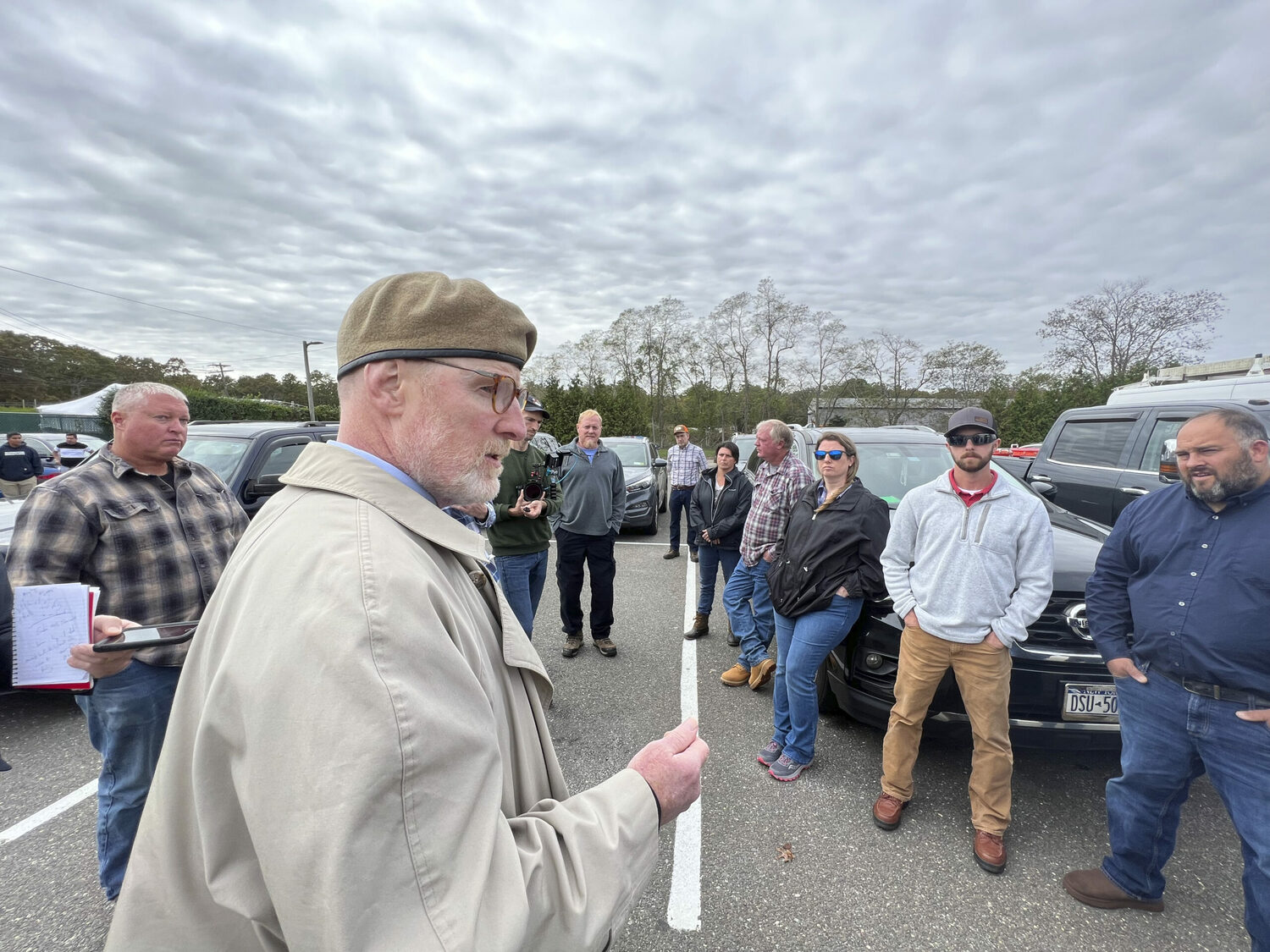
Dan Rodgers, speaking to the defendants in the Truck Beach trespassing case where his incendiary statements led to a censure recommendation from the judge in the case, Suffolk County Supreme Court Justice Paul Baisley. Rodgers is now suing Baisley, who retired shortly afterward, for defamation. DANA SHAW
A Southampton attorney who was recommended for discipline by a Suffolk County Supreme Court justice over comments about the rights of East Hampton Town residents to access a privately owned beach is now suing that judge for defamation and is seeking $25 million in compensation.
Dan Rodgers, the attorney, accuses now-retired Justice Paul Baisley Jr. of libel and slander that caused him financial, professional and reputational harm in an August 31 ruling — his last from the county bench — that Rodgers said made false and defamatory claims against him.
Rodgers also said that the judge’s actions were malicious toward him because, instead of privately recommending that a judicial disciplinary committee review Rodgers’s statements, he chose to do so via a written decision and order in a case before him.
“Judge Baisely made false claims against me about matters of which he had no personal knowledge,” Rogers said in a statement following the filing of his notice of claim. He said he has never appeared before or even met Biasley, and that the claims were made on the basis of information shared by plaintiffs in a lawsuit.
Rodgers had represented 14 East Hampton fishermen who were ticketed for trespassing when they drove 4x4 vehicles onto the stretch of Amagansett beach long known as “Truck Beach,” but which was declared private property by another state court in 2021. The charges against the fishermen were dismissed because none of the property owners — the more than 100 homeowners in the neighborhood east of Napeague Lane — would affirm the trespassing claims against them.
But following the dismissals, Rodgers made a number of statements about the rights of East Hampton residents and advised his clients and others that they should feel free to continue accessing the beach in their 4x4 trucks and that any resident of the town should as well — as long as they said they were there to fish, in accordance with the wording in a previous court ruling on the matter. He handed out laminated cards declaring the holder to be an East Hampton resident on the beach with the intention of fishing.
Attorneys for the more than 100 Amagansett homeowners who the previous ruling had declared owned the beach, asked Baisley to censure Rodgers and hold the East Hampton Town Trustees in contempt of court for allegedly aligning themselves with Rodgers. Baisely declined to hold the Trustees in contempt, noting that Rodgers did not represent them, but issued a scathing assessment of Rodgers’s actions.
In his ruling, dated August 30 — the same day he officially retired — Baisley said that Rodgers had “demonstrated a continuing brazen pattern of misinforming and misleading his clients as to the status of this matter, [and] demonstrated disrespect to the Supreme Court and the Appellate Division.” He recommended that the New York State Courts Attorney Grievance Committee review Rodgers’s conduct.
Rodgers said this week that Baisley had acted without knowledge of Rodgers’s actions, beyond quotations attributed to him in articles in The East Hampton Press that the homeowners’ attorneys had submitted.
“I’ve worked for 30 years in service to my community, performing thousands of hours of pro bono legal service, and not a blemish on my record — until one year ago, when a group of oceanfront homeowners in Amagansett presented [Baisley] with fabricated and misleading claims in a deliberate and planned effort to have me sanctioned by the court,” Rodgers said. “And it worked.”
Rodgers asks for $25 million in return for the harm caused him and his career. But he also acknowledges that such claims against judges for actions in their judicial role are nearly impossible to win because of the professional immunity afforded them.


 Michael Wright on Nov 15, 2023