


 3 Photos
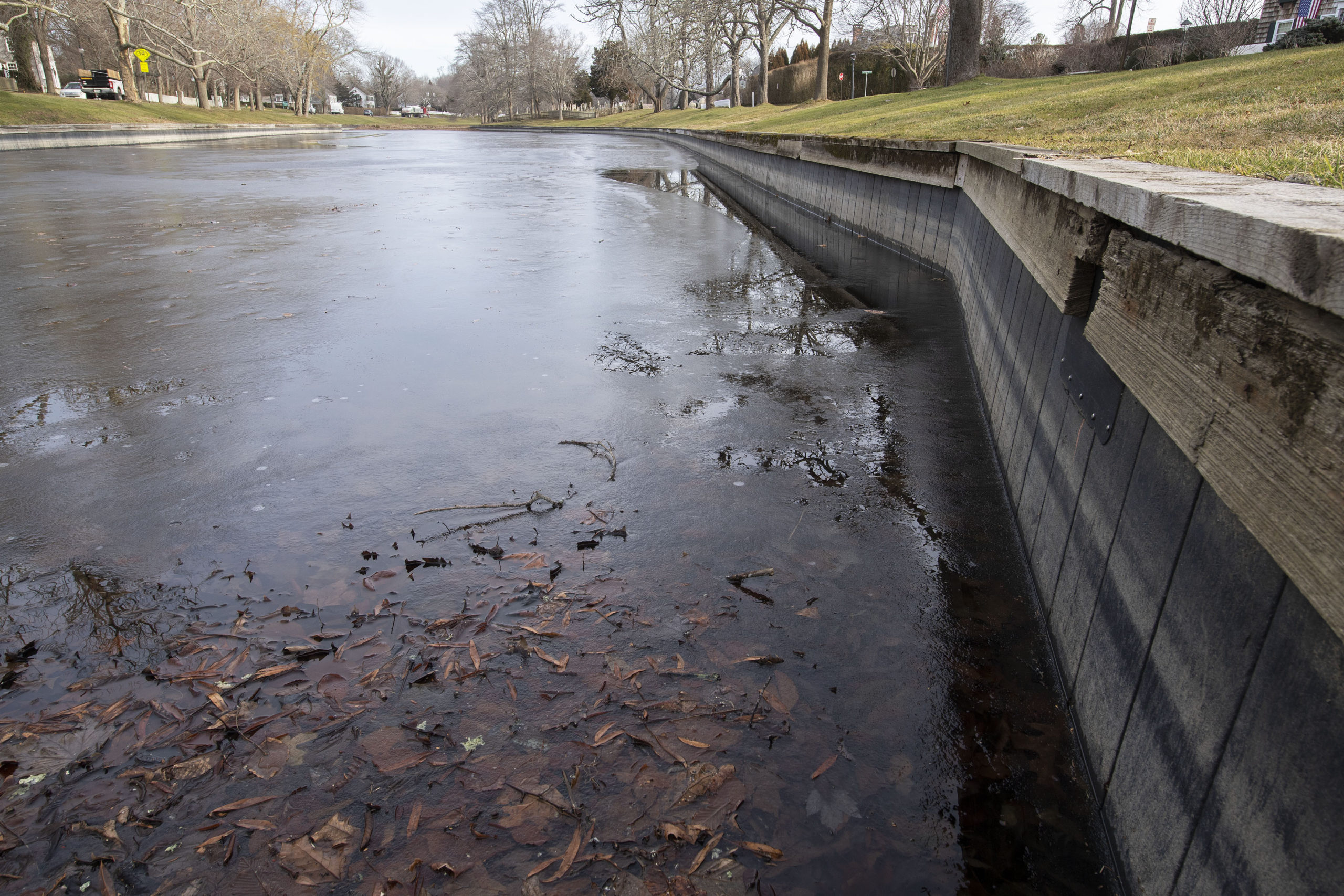
A dredging project, a malfunctioning pump and leaking bulkhead have prevented Town Pond, at the entrance to East Hampton Village, from refilling.
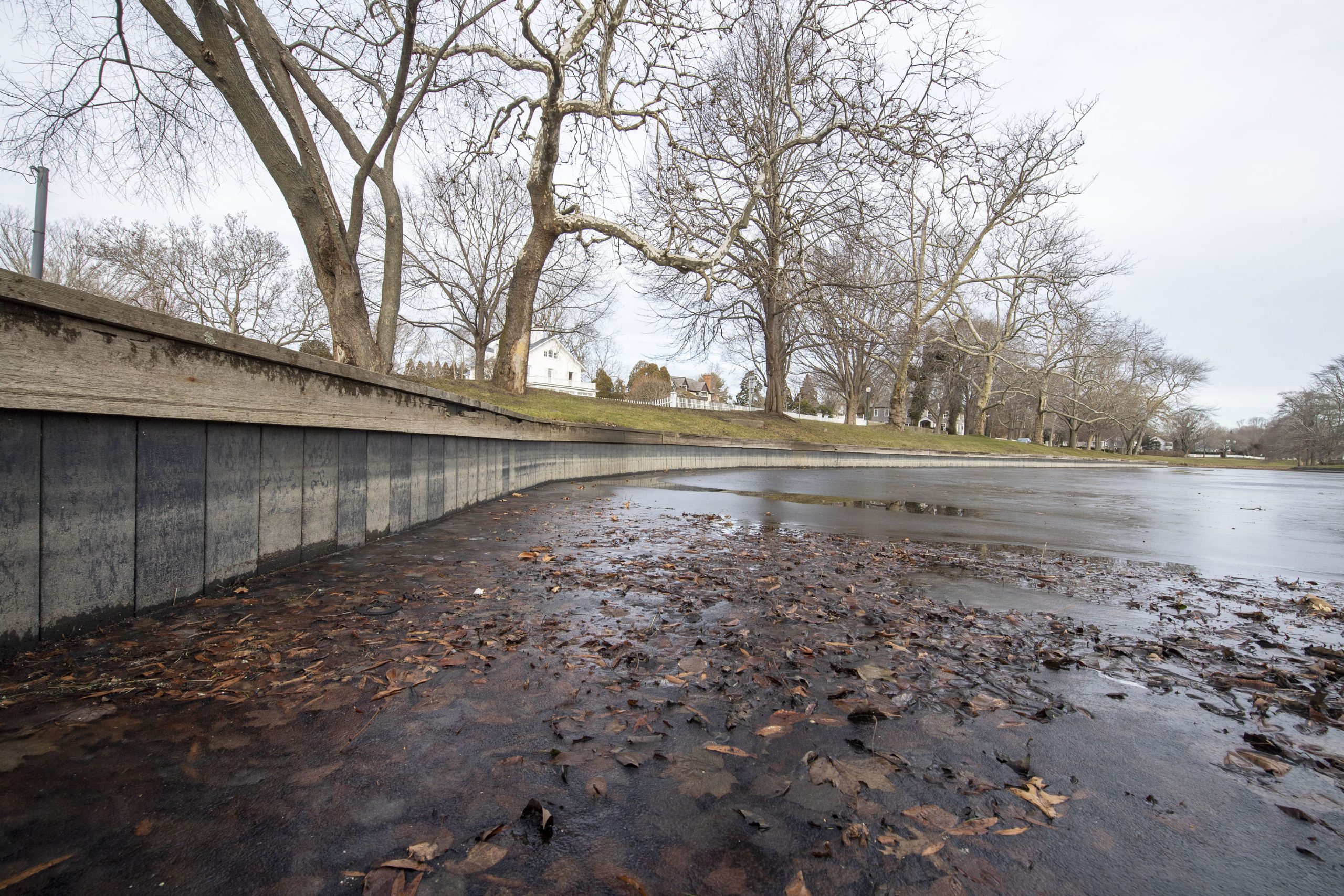
A dredging project, a malfunctioning pump and leaking bulkhead have prevented Town Pond, at the entrance to East Hampton Village, from refilling.
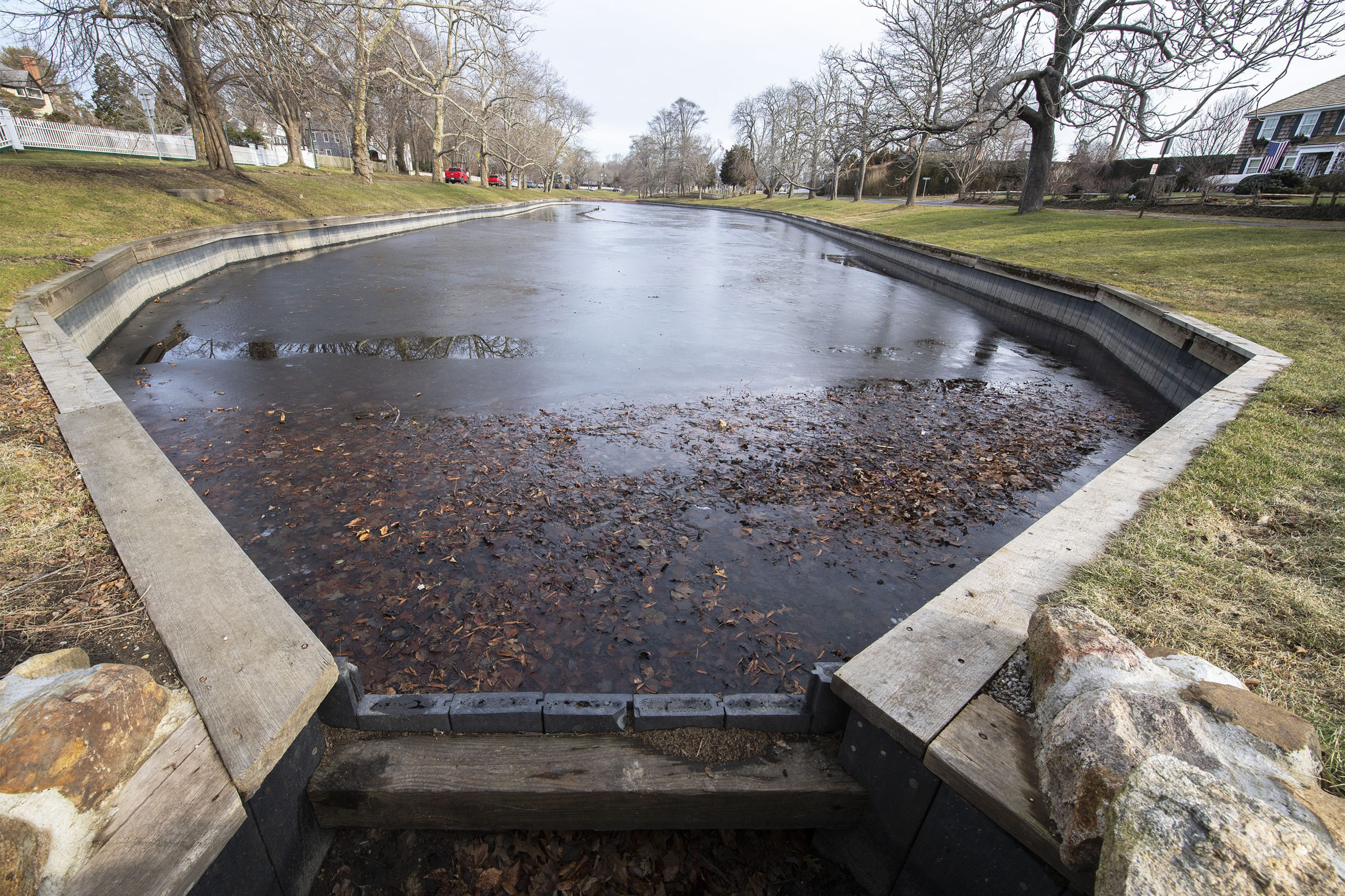
A dredging project, a malfunctioning pump and leaking bulkhead have prevented Town Pond, at the entrance to East Hampton Village, from refilling.
Since a long-overdue dredging of Town Pond at the western entrance to the East Hampton Village business district was completed last spring, the pond has rarely been filled with water again.
The problem, village officials say, is a combination of issues with a hydraulic pumping system that managed the pond’s water level, a leaky bulkhead and the recent dredging having, essentially, unclogged the manmade pond’s natural drainage.
The issue is being worked on, but solutions might not come quickly, the village’s superintendent of public works, David Collins, told members of the Village Board on Friday, January 21.
The pond is a milestone in the drainage network that sends rainwater from nearly every acre of the village flowing into Hook Pond. But when storm runoff doesn’t come regularly, the pond doesn’t stand naturally at an aesthetically attractive depth. So the village has long used a pumping system to draw some water back from Hook Pond to raise water levels in the pond.
Village officials told The Press last summer that the main issue appeared to be that the pump that sucks in water from Hook Pond had failed. But after a new pump was finally installed earlier this month, the problem did not appear to be solved.
Collins said his crew have re-piped the pumping system in search of air leaks that could be preventing the pumps from pressurizing, but found none. They now think the issue might be with the well head that draws in the water at Hook Pond itself, which may have caused the pump failure in the first place.
Getting that replaced will take time — mostly paperwork hurdles — he said, before the village will know whether it was the culprit of the pumping problems.
Another issue is that the pond’s bulkhead is leaking.
About 15 or 20 years ago, the village replaced the crumbling bulkhead that rims the edges of the pond. The top edge was rimmed with wood, which looks nicer, but the portion that is typically below the waterline was replaced with plastic.
But unlike the wood it replaced, the plastic does not swell with moisture creating a tight barrier, like a wooden ship’s hull. The plastic tongue-and-groove connections have small gaps that allow water to seep out.
And when the new bulkhead was installed, the blast of the hydraulic jet plow used to sink it into the pond bottom pushed up a layer of sand behind the bulkhead that now acts like a wick, allowing water seeping through the gaps to drain away quickly, Collins said, expediting the loss of water.
The dredging removed thousands of tons of sediment — a 5-foot thick layer of organic muck and leaves that filled a substantial portion of the pond’s volume, which had plugged many of those gaps.
Now the muck is gone.
“The muck in the pond did seal it up somewhat, so with that removed it’s leaking again,” Colins said. “Leaves and sediment will seal it up again, but it will take time.”
Mayor Jerry Larsen said that despite the issues since the dredging, the project was a critical step in the long fight to restore water quality in Hook Pond. The sediment in the pond was feeding an endless supply of nutrient pollution into Hook Pond, sparking algae blooms that turn the pond the color of pea soup in some summers.
“That pond was so polluted, that dredging needed to be done,” he said. “It will get there, it’s just going to take time.”


 Michael Wright on Jan 26, 2022