


 3 Photos
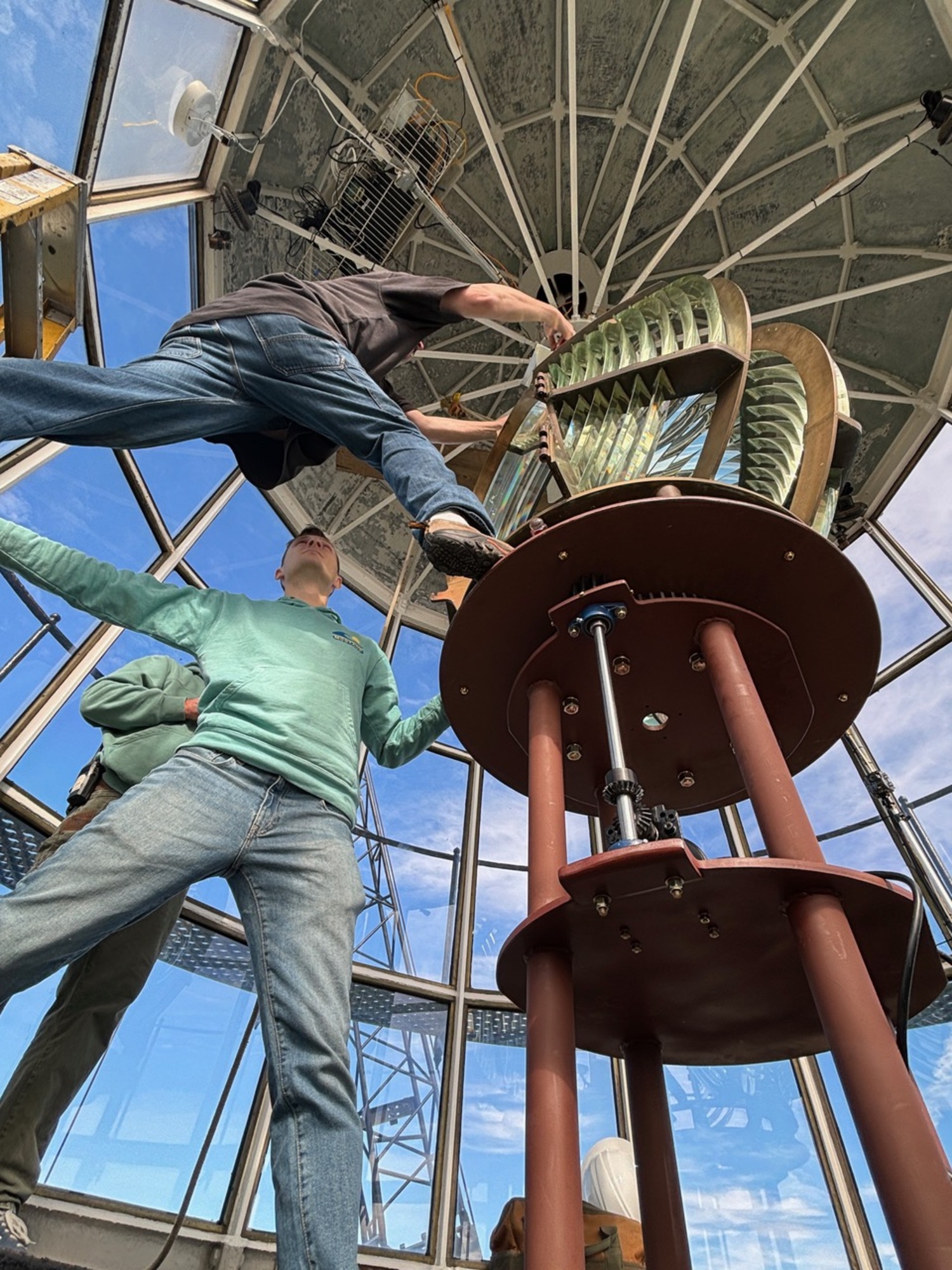
A new "fresnel" lens was returned to the Montauk Lighthouse for the first time this week since 1987. MONTAUK HISTORICAL SOCIETY
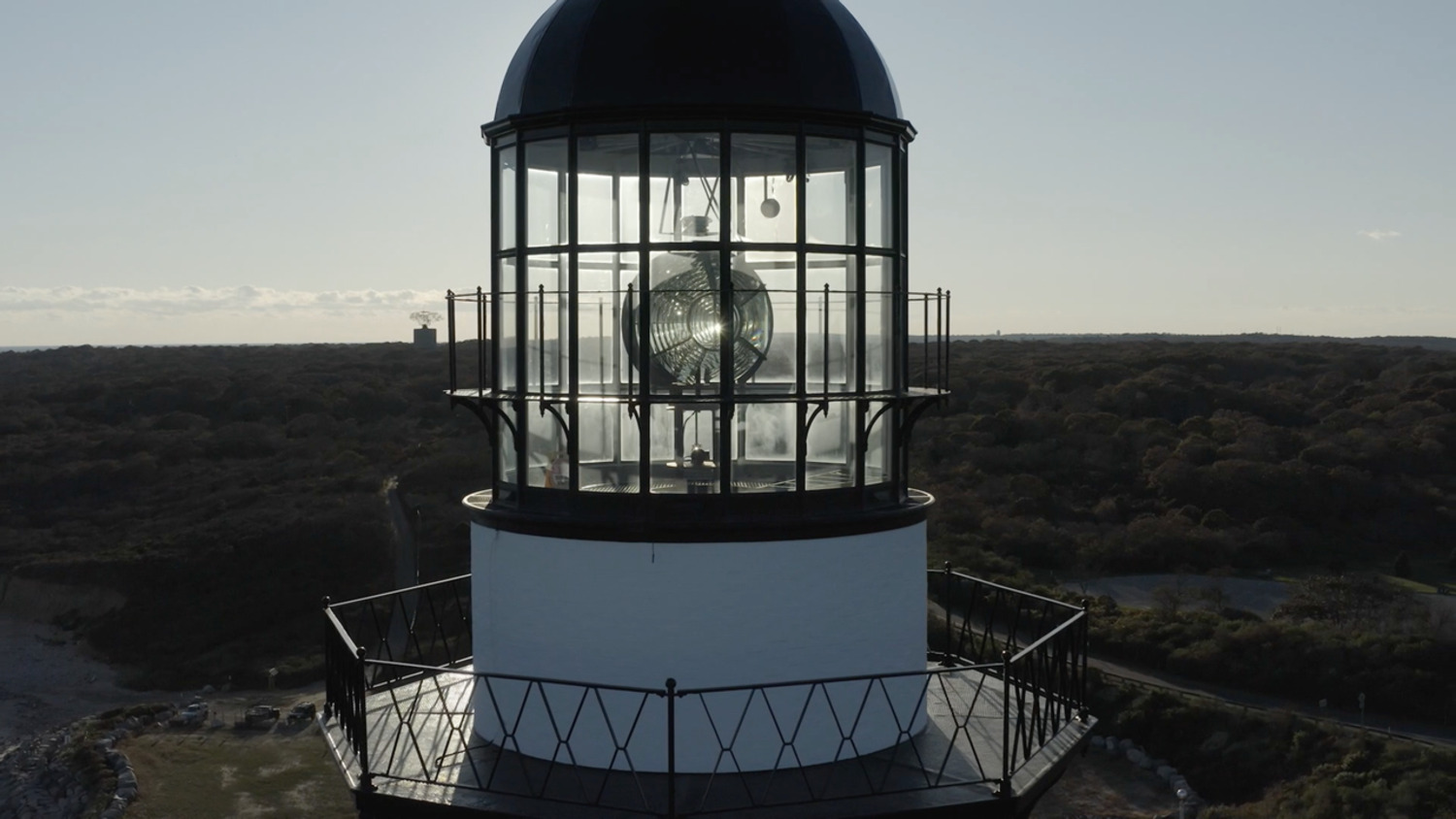
The new Fresnel lens in the Montauk Point Lighthouse.
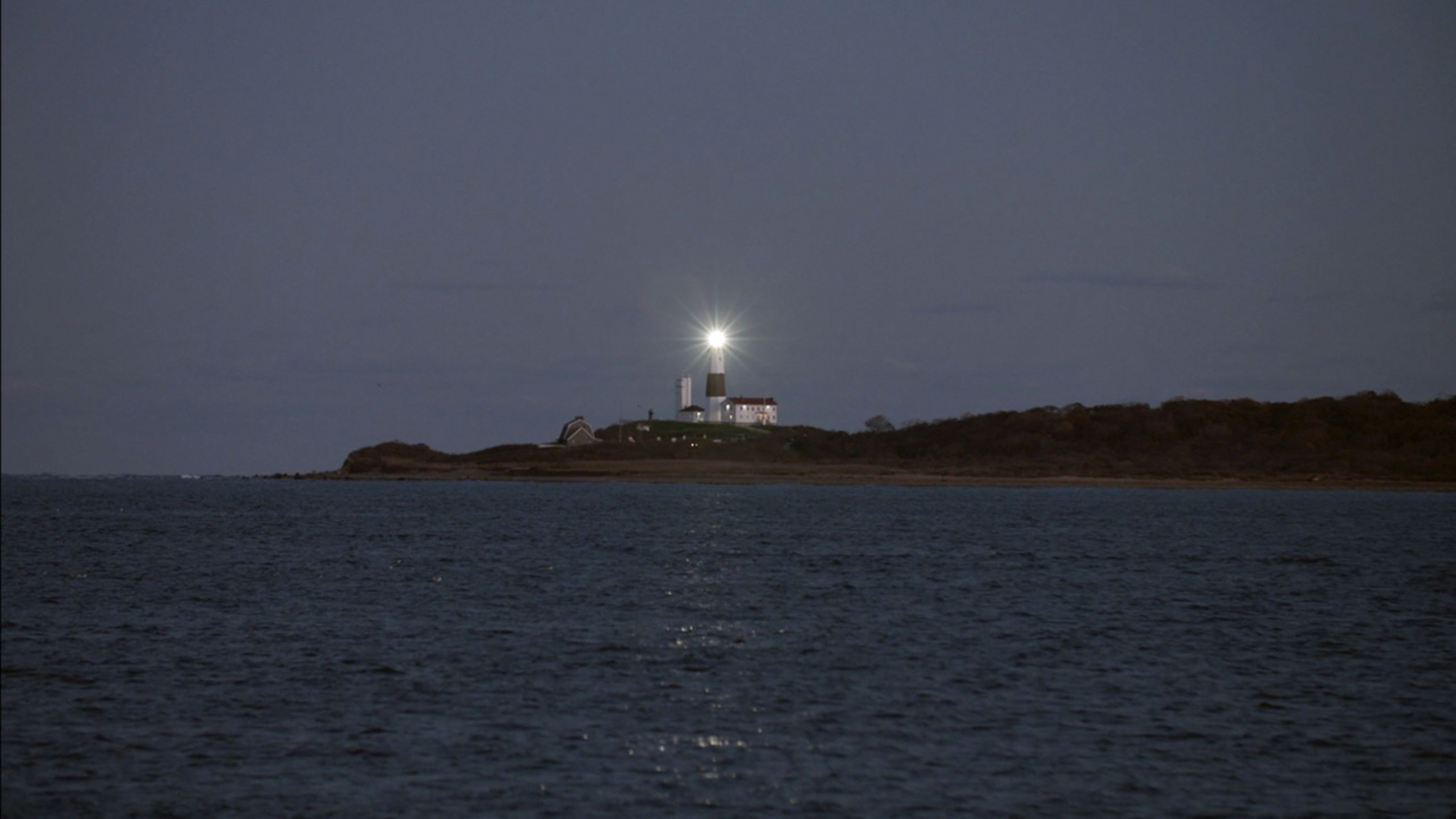
The Montauk Point Lighthouse will shine brighter after a Fresnel lens was turned to the top of the 100-foot tower for the first time since 1987. MONTAUK HISTORICAL SOCIETY
The beams of light extending out in two directions from the top of the Montauk Point Lighthouse swept across the moorlands for the first time in decades on Monday night.
For most of the 20th century, the light beams that appear as a sweeping flood of light up close, but a flash every 8 seconds from a distance, was one of the brightest ever devised in its time, thanks to a special lens that focused reflected light into a concentrated laser of light far brighter than the bulb behind it could generate on its own.
That lens, named after its inventor, French physicist Augustin-Jean Fresnel, was installed in the Montauk lighthouse in 1903 but was removed in 1987, when the U.S. Coast Guard turned over ownership of the lighthouse to the Montauk Historical Society and removed the government staff that had been responsible for maintaining the lens.
On Monday, the lens, which has been on display in the Lighthouse Museum since it was removed, was returned to the lantern room atop the 111-foot-tall lighthouse — the culmination of a decades-long effort by the Montauk Historical Society and its director, Mia Certic, and the final piece in a three-year expansive restoration of the lighthouse.
“Words cannot describe the difference — from the parking lot it looks like the beam reaches Connecticut,” Certic said this week. “It’s beautiful. This has been a dream of Dick White’s and most everybody who has been involved with the Montauk Historical Society since the Coast Guard removed the lens.”
Returning the lens to its original home was not a simple proposal.
Fresnel lenses are famous in lighthouses worldwide — a status their inventor, who died in 1827 at age 39, did not live to see — but also need to be cared for. The lens’s unique arrangement of prisms focuses the light from the top of the lens downward and from the bottom of the lens upward, into a super-concentrated beam.
But as modern electronics have diluted the role lighthouses play as navigational aids critical to mariners’ safety, the high-maintenance Fresnel lenses have often been relegated to museum displays. There are only about 50 of them still in place atop lighthouses in the United States.
But there are 50, and some of those had previously been removed, replaced with simpler modern designs, and then returned to their post — and that fact fueled the drive by the Historical Society director to get Montauk’s Fresnel back on the job.
“Dick White had been trying to get the Fresnel replaced … but the Coast Guard told him that was a step backward,” Certic recalled. “When I came aboard, I said we should give it another shot. I did some homework and found that there are these 50 Fresnel lenses, and that some had been removed and then replaced. So, armed with that information, I went back to Dick and said they’ve made exceptions in the past, why can’t we be one?”
Finally, in 2021, after years of fruitless lobbying with the Coast Guard, Certic was directed to Dan May, a retired Coast Guard engineer who had specialized in lighthouses and designed the original stone revetment that hardened the footing of the bluff atop which the lighthouse sits, in 1992.
With May’s help, and a site management team led by another former USCG officer, Jason Walter, the group convinced the federal maritime agency that a well-funded and smartly designed management plan for the newly restored lighthouse would be the perfect proving ground for how a private group could maintain and manage a Fresnel lens.
The newly weatherproofed lighthouse lantern room has been fitted with climate control equipment, UV-blocking film on the outer glass and 24/7 monitoring equipment.
With a $100,000 grant from the Ludwick Family Foundation, the Historical Society was able to hire a “lampist” — a specialist in lighthouse lighting fixtures — to restore the Fresnel lens that had been on display in the lighthouse museum since 1987 to full working order and designed and built a new pedestal for the 120-year-old, 40,000-pound lens.
“That lens will operate for long after you and me are gone,” May said this week from Florida. “We’re leveraging today’s technology to use this historic lens. It’s the perfect marriage of history and modern technology.”
For the Coast Guard, the Montauk pilot will hopefully result in a blueprint for other lighthouses to be restored to their historic glory.
“We saw this as a unique opportunity,” said Matthew Stuck, USCG 1st District waterways chief. “The Montauk Historical Society was very eager to put the 3½ order lens back up in their tower, and they were willing to perform daily maintenance tasks and keep detailed records and logs for the two-year duration of this pilot program to help us create new protocols for managing our Fresnels. In addition to that, they provided everything necessary to satisfy the Coast Guard curator’s requirements regarding temperature, humidity and light control in the lantern room.”
The swaths of light through the new lens will not, in fact, be quite as bright as they once were, or could be. The bulb used in the lighthouse now is an LED, which the Coast Guard has set at just 50 percent intensity, May said. But it is still a vast improvement over the previous light, which Certic called “wimpy.”
“We observed it from three or four miles out, on the Viking, and it was the most brilliant bright white flash that you would ever want to see,” May said. “So it will be a bit of a return to what folks were used to seeing 40 years ago.”


 Michael Wright on Nov 8, 2023