


 6 Photos
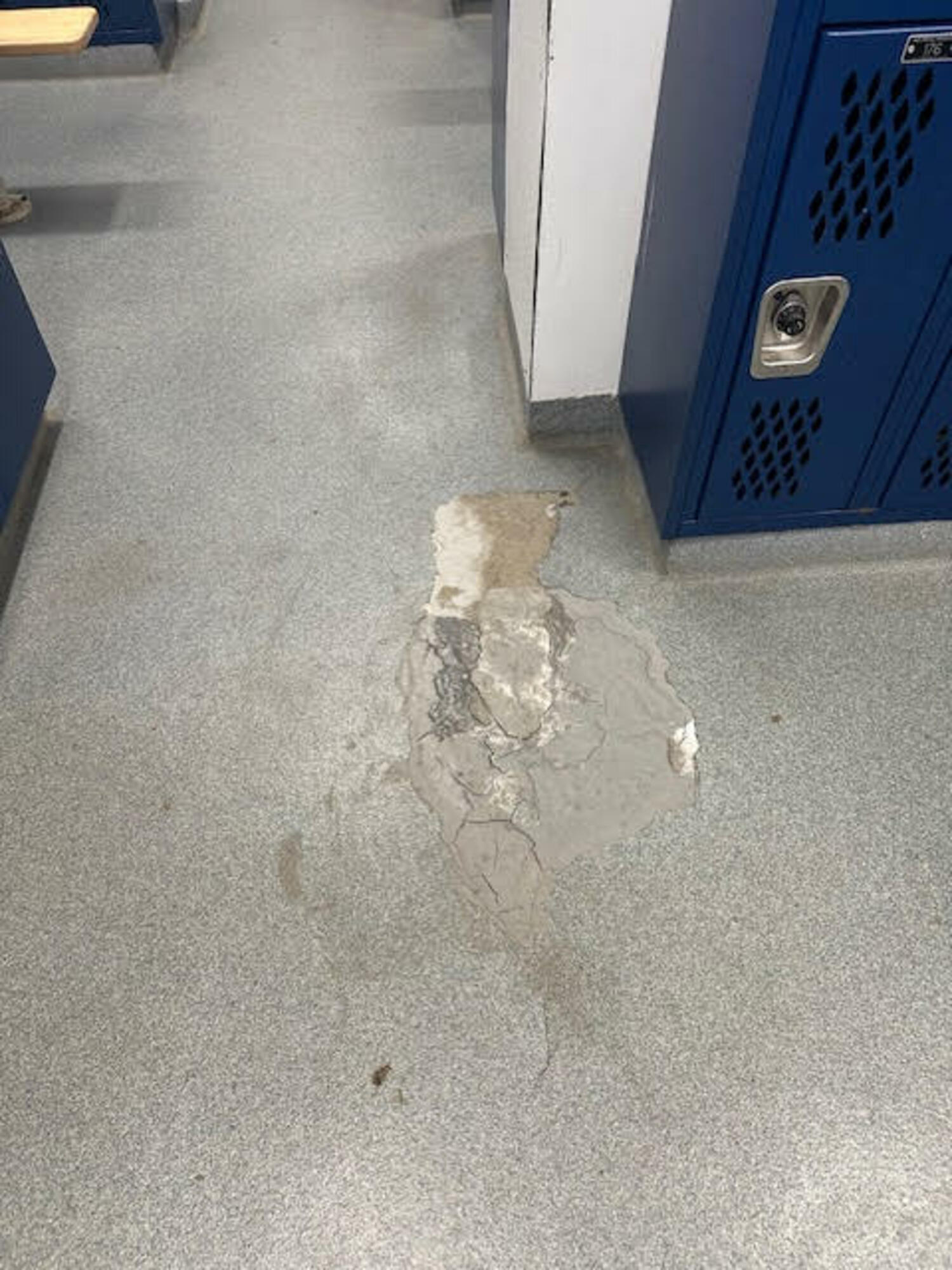
East Hampton Middle School locker room flooring is cracked and has been patched beyond repair. EAST HAMPTON SCHOOL DISTRICT
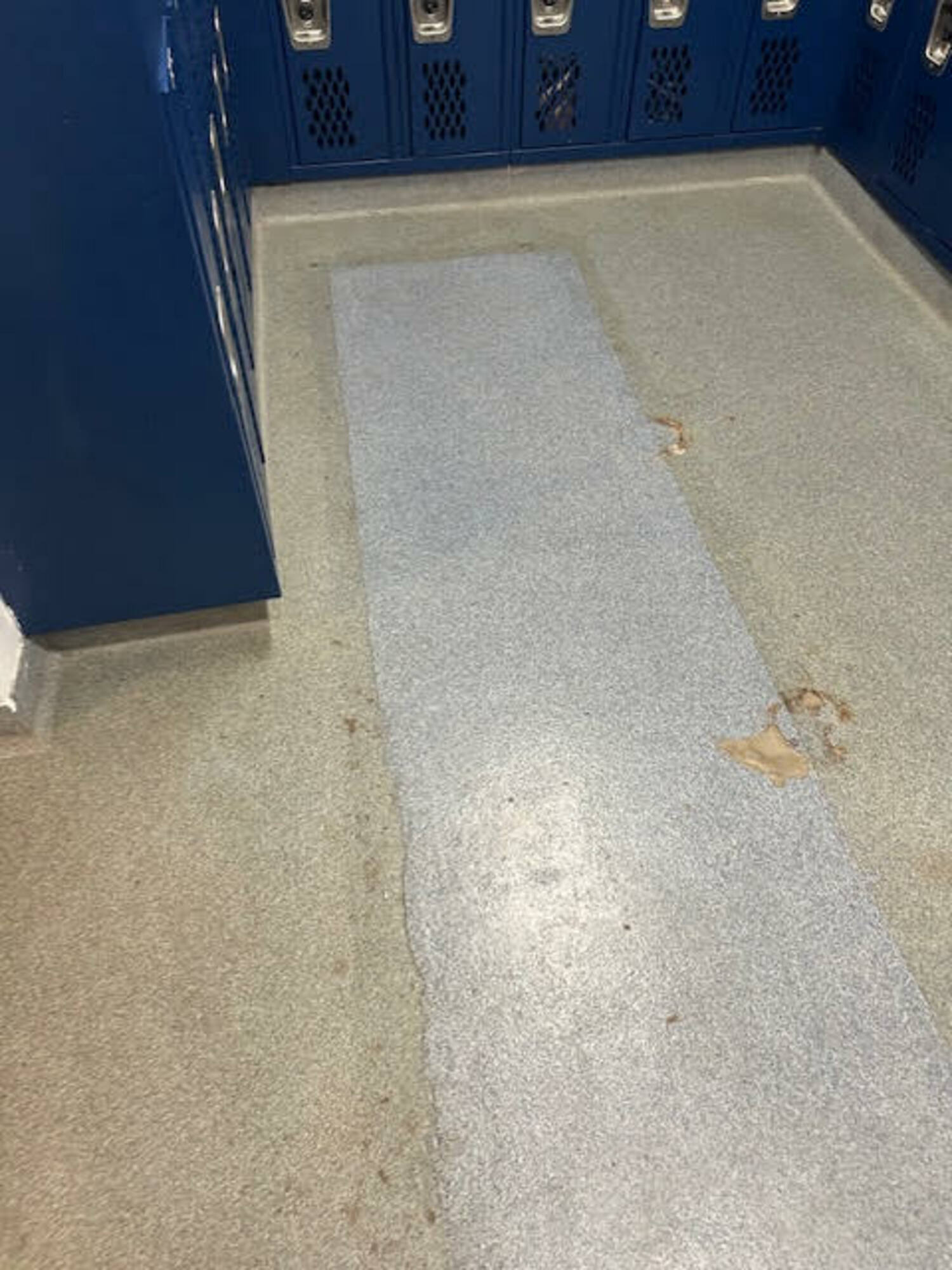
East Hampton Middle School locker room flooring need replacing. EAST HAMPTON SCHOOL DISTRICT
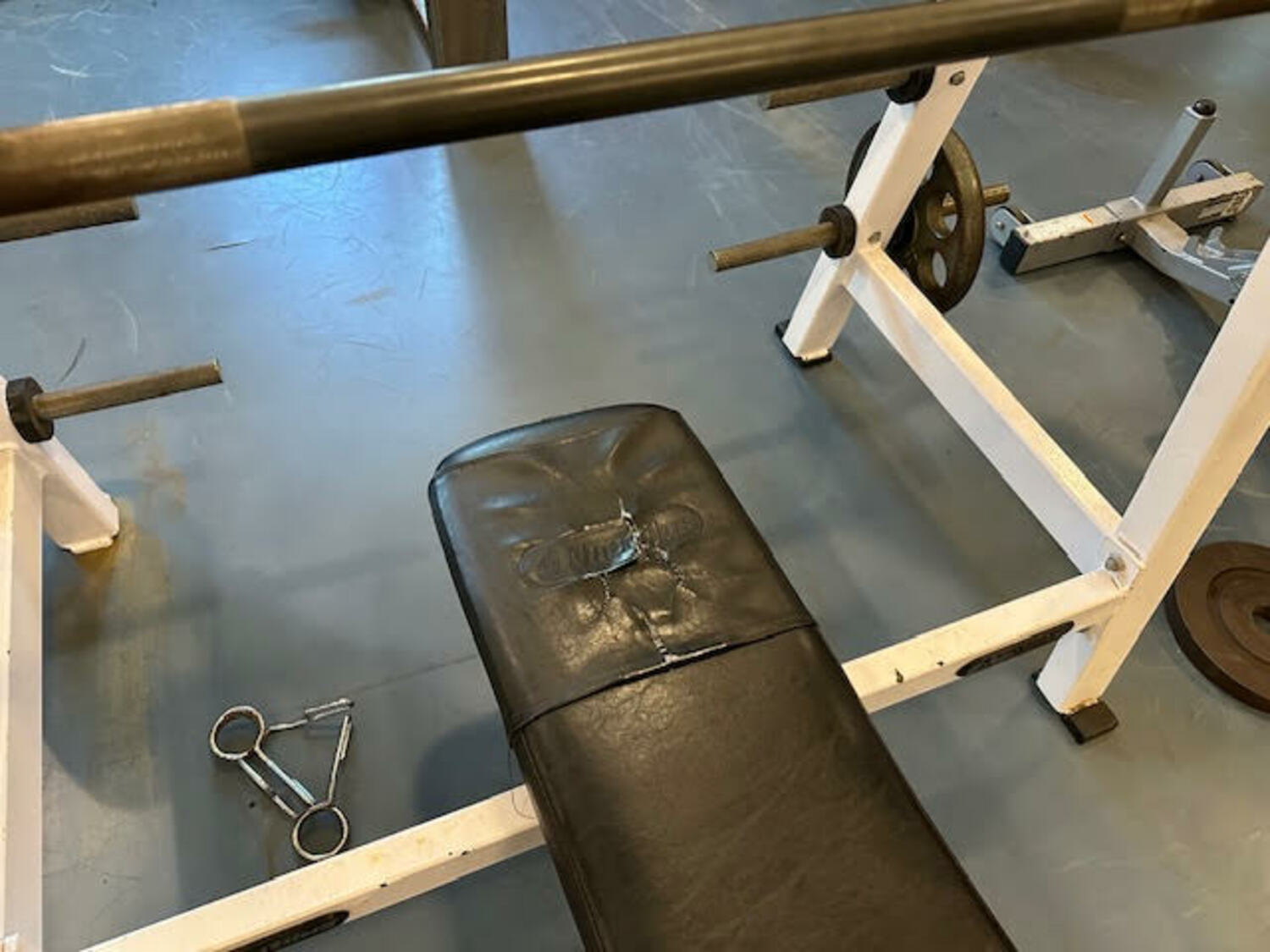
The East Hampton High School fitness center houses damaged and inoperable equipment. EAST HAMPTON SCHOOL DISTRICT
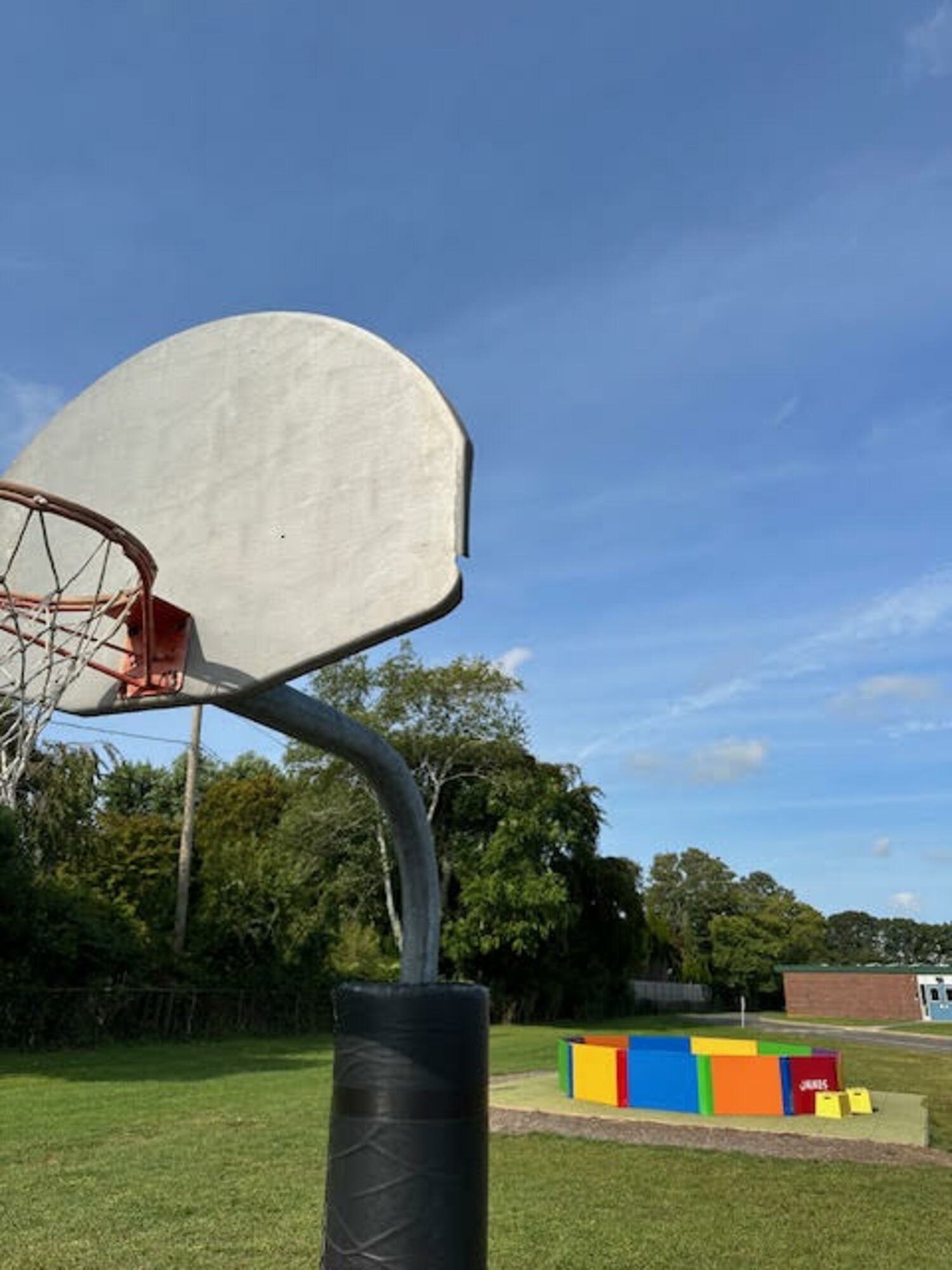
Assistant Superintendent for Business Sam Schneider said an employee injured his hand on one of the basketball backboards last week. EAST HAMPTON SCHOOL DISTRICT
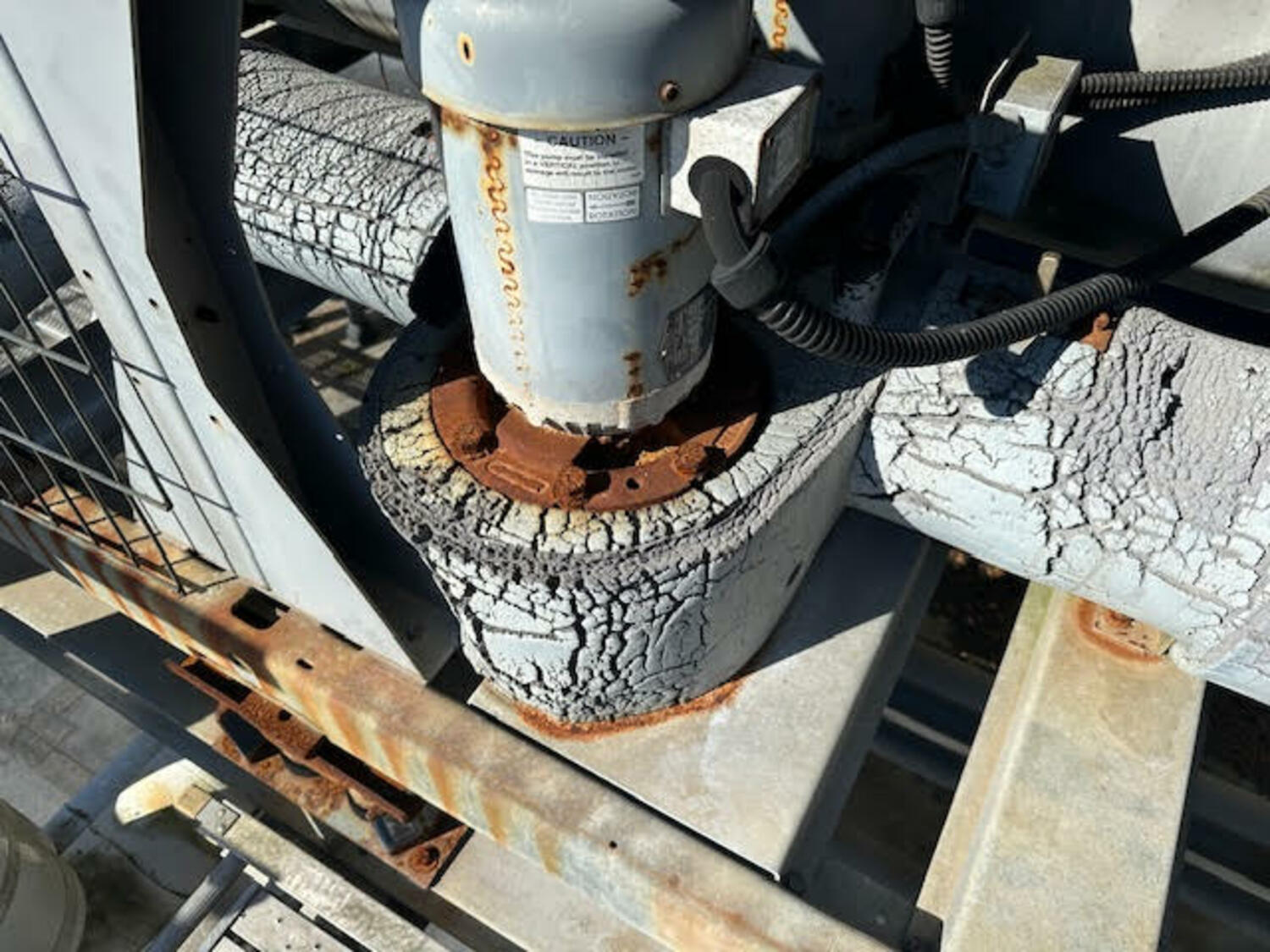
A circulator pump at John M. Marshall Elementary School is designed to work with two pumps, but only one is functioning. EAST HAMPTON SCHOOL DISTRICT
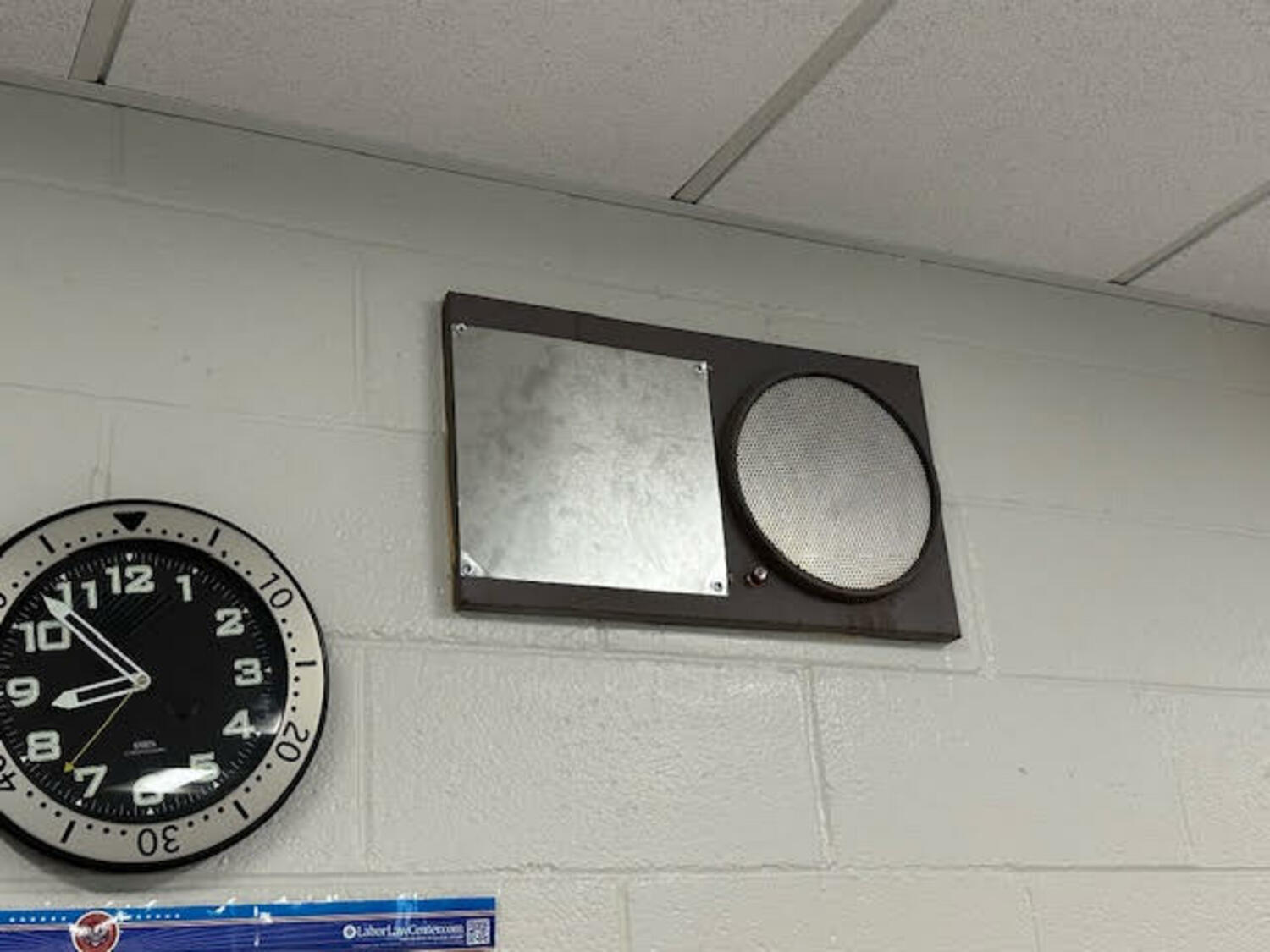
A clock and speaker that are part of the public address and bell system at East Hampton High School are no longer working. EAST HAMPTON SCHOOL DISTRICT
A withdrawal from East Hampton School District’s repair reserve fund has been approved to pay for additional upgrades and replacements needed districtwide.
The Board of Education unanimously voted last Wednesday, November 8, to authorize the withdrawal of $629,733 from the savings account to cover the cost of 11 different projects. President J.P. Foster was absent.
Most expensive on the list is what Assistant Superintendent for Business Sam Schneider called a “major overhaul” of the public address and bell system at the high school, costing approximately $168,343. Board members immediately agreed this work was needed, during his presentation at a public hearing on November 14.
“The maintenance mechanics do a great job and have done a great job with this system, but it is time for this system to be replaced because it is not functioning,” he said.
The next-most-costly item on the agenda is the replacement of chiller compressors on the roof of the middle school. The system has been running with only half the compressors in it functioning, Schneider said, so it keeps the building chilled, but is strained. A replacement is anticipated to cost $145,800.
The district will also be restocking the high school fitness center with new equipment, which is expected to come in at $129,600.
“We don’t have the modern equipment that student-athletes are using,” Superintendent Adam Fine said.
The current gear was donated back in 2014 from Southampton Gym through the Kendall Madison Foundation.
“The donation I’m sure was wonderful at the time, but it’s time,” Schneider said. “I know [Athletic Director Kathy Masterson] has been working to identify what is outdated and dangerous and broken or inoperable, so that will go a long way to replacing almost all of the exercise equipment in the fitness center.”
Also on the list is a new sound system for the high school turf field. While the district is working with a consultant to design the appropriate system, the work will be done by in-house district staff, cutting the price of the upgrade down to about $32,400.
Basketball backboard replacements outside all three buildings and inside John M. Marshall Elementary School are expected to total $33,996, new middle school locker room flooring comes in around $30,384 and tree trimming at the high school — mainly cedar trees around the football field — is anticipated to cost $25,488.
“We trimmed some during the first appropriation a year ago, but need to cut additional trees,” Schneider said. “There are 121 of them. Several need to go because they’re dead or dying and there’s some on the dirt road leading to the grounds department that also need trimming.”
District office door replacements at the high school comes with a projected $16,942 price tag, the purchase of a lawn mower to be used districtwide is about $16,367, the replacement of a circulator pump at the elementary school is approximately $15,984 and replacement of a nonworking kitchen oven in a high school culinary arts classroom is anticipated to cost $14,429.
“An employee injured his hand on one of the basketball backboards last week … And the pump at the elementary school circulates the hot and cold water around the building — there’s two, and it’s designed to work with two, but one of them doesn’t work, so one pump is doing the work of two,” Schneider said. “One of the existing ride-on lawn mowers has also reached the end of its useful life. We have a maintenance mechanic on staff now who has a lot of expertise in repairing and fixing our lawn mowers, but this one has mowed its last lawn. We need to put it out to pasture.”
This is the third use of money from the fund following voter approval of its creation in May 2022. Just shy of $1 million — $994,993 — was withdrawn in November 2022, and an additional $928,496 was pulled in June. As of October 30, there was $2,029,083 in the account.
“We’ve had some catching up to do because nothing was done,” board Vice President Christina DeSanti said. “Repairs kind of went to the bottom of the list the first few years of the tax cap, and we started to catch up, but then the pandemic hit. We have things that absolutely need to get done.”
A repair reserve can store $5 million over a 10-year period and is fueled by unused funds at the end of each fiscal year. The withdrawal of the money comes with no direct tax impact.
There is a three-step process to access the money. The district must first identify the needed projects before presenting them during a public hearing by the board of education to educate it and the public on the plans and costs involved, and then the board votes to authorize the use of the funds. Money can only be pulled out of a repair reserve, state law says, when something is decayed, deteriorated, weathered, broken, torn or inoperable.
“We’ve been using the repair reserve, I think, effectively and efficiently throughout the district,” Fine said. “We’ve drawn it down and we’ve replenished it, but we’re bound by the constraints of what we can put in it.”
Schneider said East Hampton will meet that $5 million cap if not this May, then by May of 2025. The district can ask voters for permission to set up a new fund, and even roll money over from this account into another in order to push things along in the future.


