


 1 Photo
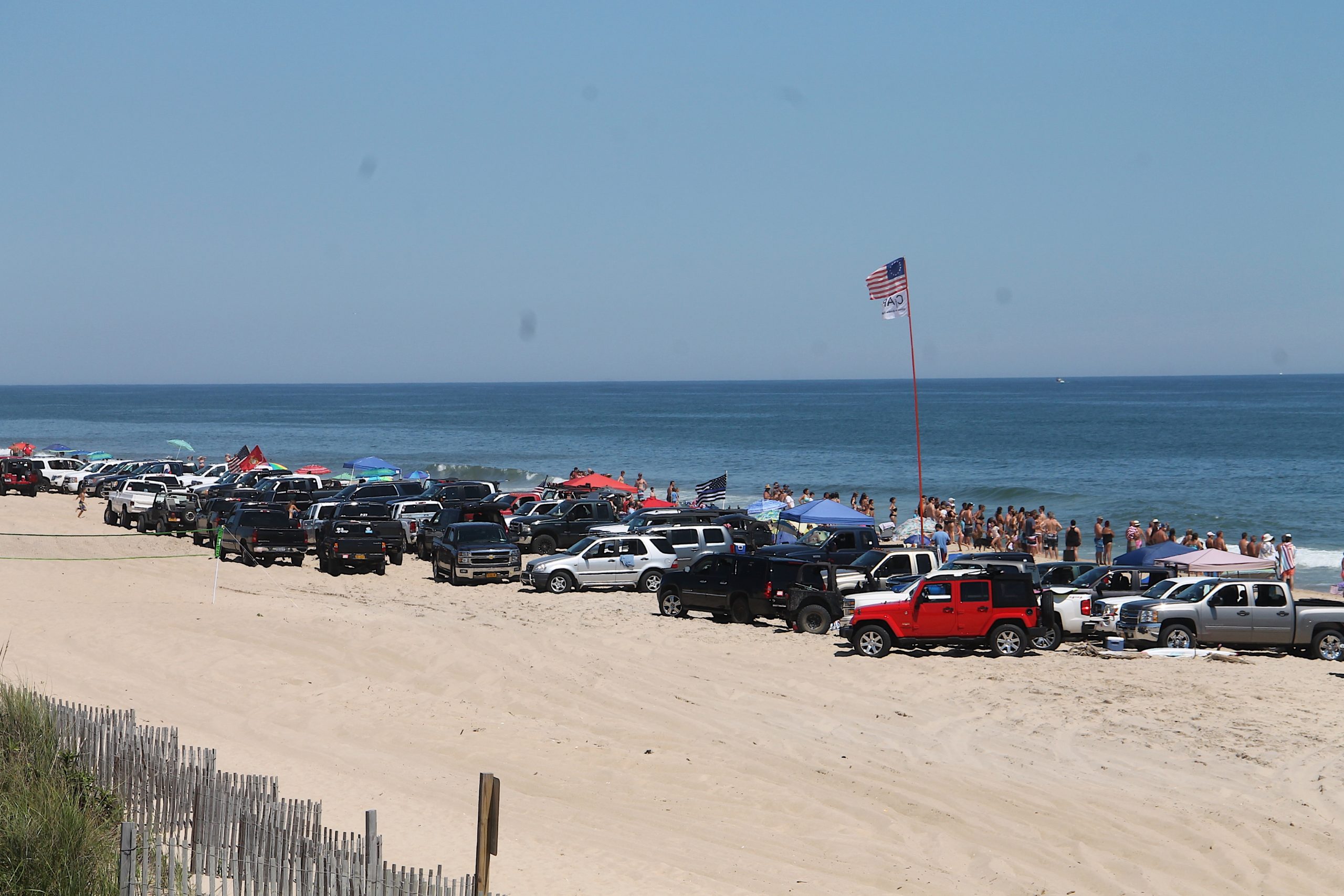
The beach in Amagansett long known as Truck Beach will be private for the foreseeable future after a court ruling ended the town's appeals this week.
New York State’s highest court has declined to allow East Hampton Town to appeal a ruling by a lower court that largely privatized a 4,000-foot stretch of ocean beach in Amagansett long known commonly as “Truck Beach.”
The ruling brings an end to 12 years of legal wrangling and the town’s last hope for undoing a February ruling by the New York State Supreme Court, Appellate Division that gave the title over the beach itself to the adjacent homeowners.
“Today’s ruling is finality — our clients own the property,” said Steve Angel, one of the attorneys for the homeowners who filed the suit in 2009. “The only question that remains is the political one and the matter of condemnation.”
Indeed, the ruling now puts the spotlight back on the idea of condemning the beach through the municipal powers of eminent domain. Seizing the beach had been a strategy that the East Hampton Town Board and East Hampton Town Trustees had been considering before the first 2016 court ruling dismissed the homeowners’ claims.
The Town Board, during Supervisor Larry Cantwell’s administration, had said bluntly in 2015 and 2016 that if the town lost the case it would condemn the beach. Supervisor Peter Van Scoyoc has said the approach is still on the table, but was waiting for legal avenues to be exhausted before taking up its consideration again.
“The Town Board will take any and all steps necessary to ensure that East Hampton’s longstanding, cherished rights and tradition of public beach access continue now and for generations to come,” Mr. Van Scoyoc said in a statement in February.
Mr. Van Scoyoc has yet to offer any assessment of the situation in light of Tuesday’s ruling, which came down while the board was in its weekly public work session meeting.
Eminent domain requires paying the owners fair market value for the land being seized and there had already been a debate raging between the town’s legal counsel and the homeowners about what the monetary value of the beach would actually be.
The homeowners, predictably, forecast that seizing the beach would saddle the town with the obligation to pay them tens or even hundreds of millions of dollars for the sand. The town’s attorneys countered that, as undevelopable land that can’t actually be “used” for anything of value, the beach would be considered essentially valueless from a legal standpoint — tallied in only the hundreds of thousands of dollars. The ultimate decision, assuming the town and the homeowners would not agree on the value, will land back in the courts.
The case was originally brought by four homeowners associations, several individual property owners and the owners of the White Sands Motel, claiming that the beaches along their land had been part of the deeds sold by the East Hampton Town Trustees to developer Arthur Benson in the 1880s. The suit claimed that the town did not have right to allow vehicles to drive on the sand in two areas: the 4,000 foot stretch east of Napeague Lane that had become the common gathering spot for hundreds of vehicles on summer weekends, and a 1,500-foot stretch in front of the White Sands, just west of Atlantic Drive in Napeague.
The plaintiffs also argued that irrespective of the ownership claims, the town’s policy of allowing beach access during the day in summer along only a couple areas of beach had created a health and safety hazard in the form of hundreds of vehicles traversing and parked on a single narrow stretch of sand and was an unreasonable nuisance for those who lived adjacent to what had been dubbed Truck Beach for obvious reasons.
It took nearly seven years for the lawsuit to reach trial in 2016. After three weeks of testimony, the judge who heard the case, Judge Joseph Gazillo, threw out the entirety of the plaintiffs’ claims — a decision that even surprised the town’s own attorney in its totality.
After another long lag through the appeals process, the state Appellate Division heard arguments on the appeal in February of 2020, just before the onset of the coronavirus pandemic that halted nearly all court matters for months. The five-judge appellate panel finally issued its ruling in February, finding that the homeowners did, in fact, own the beach and that public access was allowed only insomuch as the original deed had contained an accommodation allowing the beach to continue being used for “fishing and fishing related purposes.” The appellate division carved out the portion of beach in front of the White Sands Motel, which was not part of the ruling appealed to the Court of Appeals and remains accessible by the public.
The state Court of Appeals decision was posted on Tuesday, simply stating that the town’s request to appeal was denied and offering no explanation for its position — as is common practice in such denials. The Court of Appeals accepts very few of the appeal requests presented to it, which must show that the lower court ruling failed to properly apply a legal standard, rather than arguing the merits of the case.
Ken Silverman, who has been the lone homeowner among the plaintiffs to speak publicly since the case went to trial, said this week that he and his neighbors are relieved that the Court of Appeals sided with their argument. He said that the town’s claims to ownership were flawed from the beginning.
“Despite the Town officials’ public statements that all ocean beaches, except those in Montauk, are owned by the Town Trustees, under oath they admitted that neither the Town nor the Trustees own the beach in question,” Mr. Silverman said on Wednesday in a statement on behalf of the plaintiffs. ”Nor did they ever indicate who, other than the homeowners, might have any title claims. They were unable to point to any defect in any of the chains of title and produced no title expert or anyone who had actually examined the chains of title. The Town wasted 12 years of taxpayer dollars fighting a lie it admitted to in court.
The necessity of all the trucks being focused on the beaches in front a residential neighborhood proved to have easy alternatives, he said.
“The Truth is that this past summer the trucks from ‘Truck Beach’ dispersed and found other places to go,” Mr. Silverman said. There is no longer a question of where to put them.”
Since the February ruling, the homeowners have also sought to have the court charge several town officials, personally, with contempt for not making a more public show of enforcing the court ruling barring vehicles from the beach.
Following the ruling, and just before the start of the summer beach season, town officials posted a sign at the vehicle accesses used to get to the contested stretch of beach that said vehicle access was only for fishing purposes — echoing the caveat in the deed and the appellate division ruling that allowed for fishing access. But when the original deed was issued, motorized vehicles did not exist, and the homeowners asked the court to clarify that its ruling meant no vehicles were allowed on the beach under any circumstances without the permission of the property owners — which was affirmed by the court.
The accusations of contempt are still pending before the State Supreme Court.


 Michael Wright on Sep 14, 2021