


 4 Photos
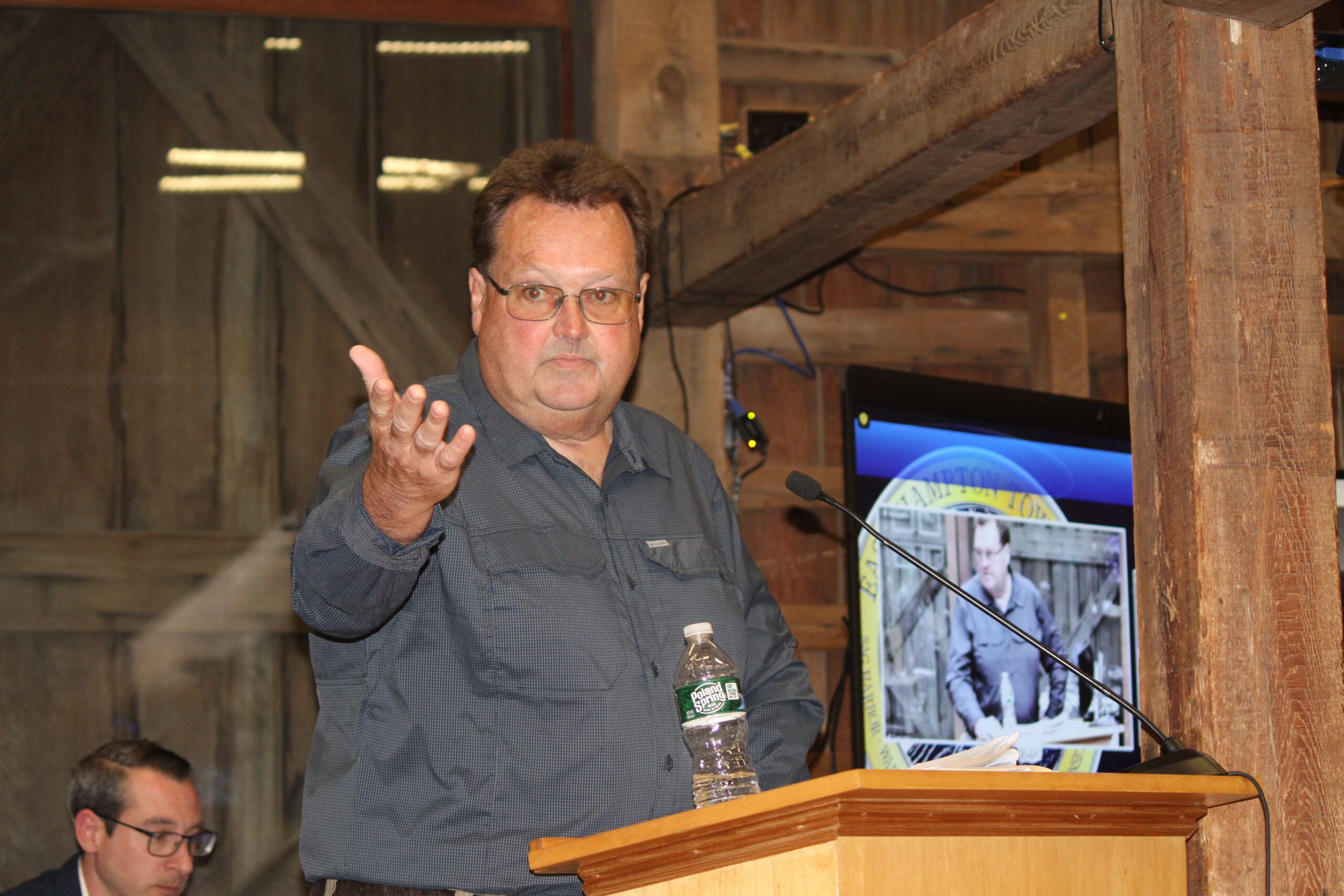
David Eagan
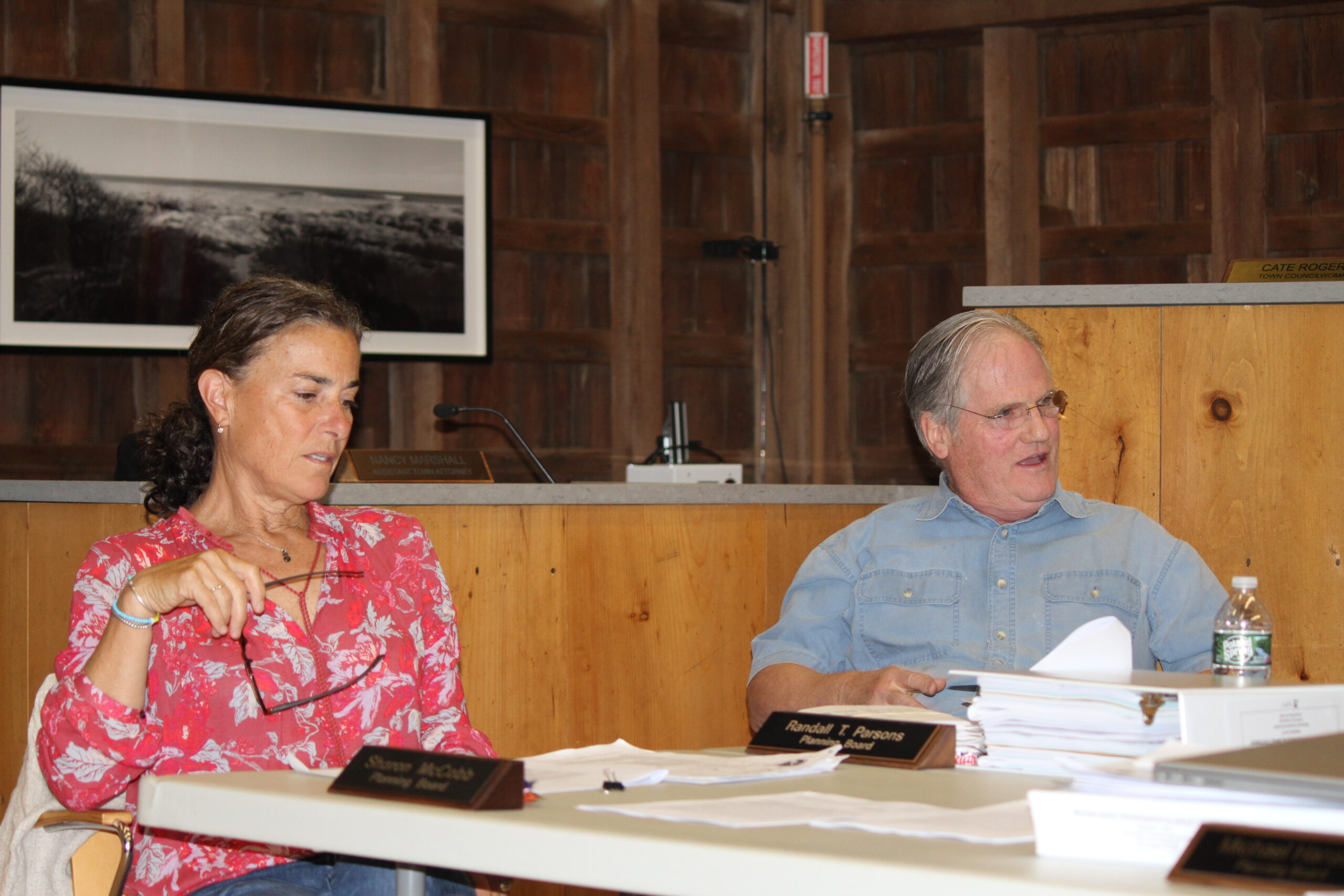
Sharon McCobb and Randy Parsons.
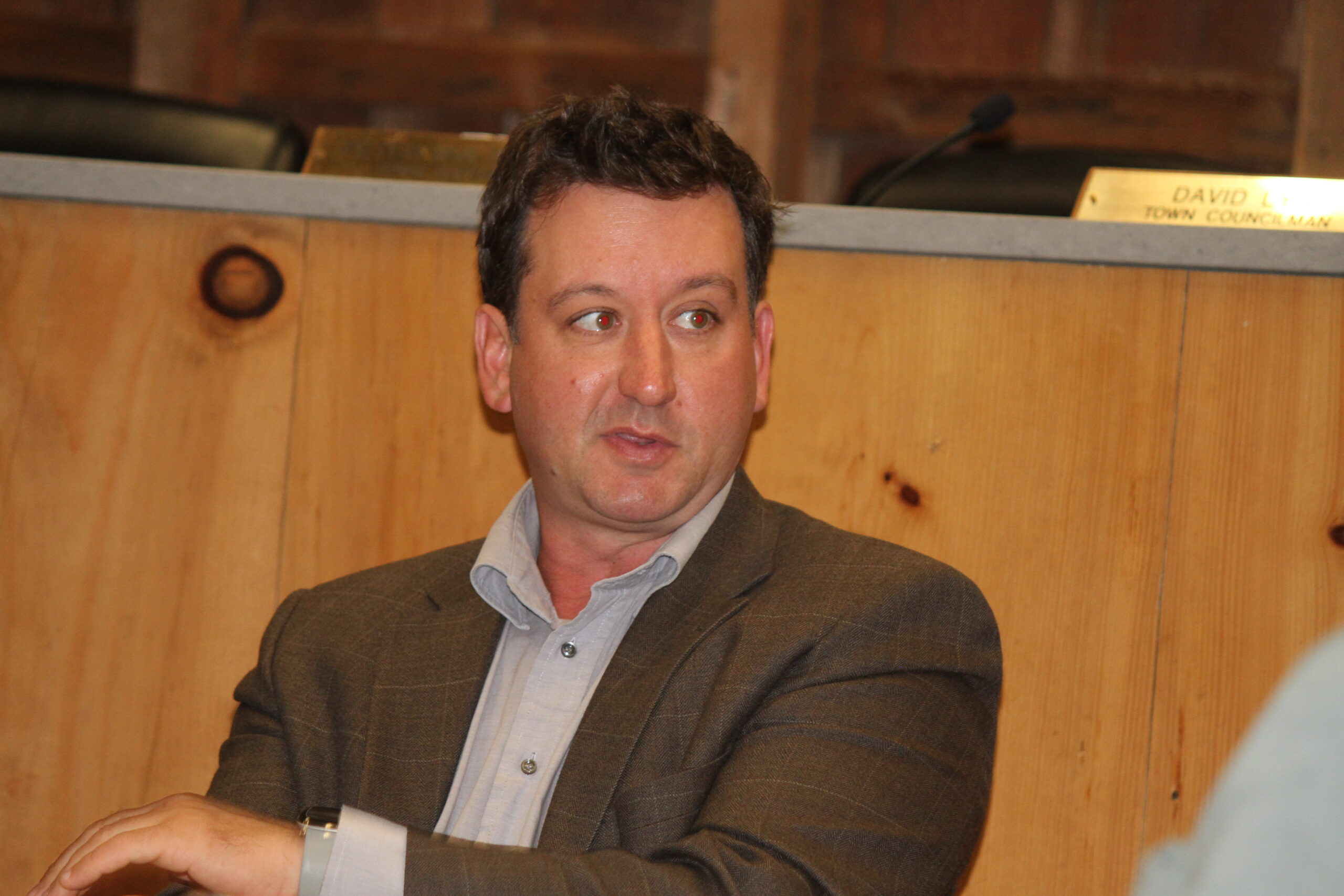
Ian Calder-Piedmont.

The 300-page draft environmental impact statement for the Wainscott Commercial Center.
The Wainscott Commercial Center proposal is inching closer to clearing the next hurdle in the planning review process, even though members of the East Hampton Town Planning Board said that the 50-lot commercial-industrial subdivision cannot be approved by the board as it is currently proposed.
In the first public review of the WCC application by the Planning Board since last fall, town planning staff said that there are now just a handful of items that representatives of the property owner, John Tintle, need to present more fully before the environmental impact statement on the project — an in-depth analysis of all the impacts on its surroundings that the new development may cause — could be deemed officially complete, more than three years after it was begun.
Details about certain traffic patterns, a clearer picture of how rain runoff will be controlled, how foundations will be sufficiently separated from groundwater and whether the alternative design the applicants presented that acknowledged longterm planning goals in the recent hamlet studies conformed, remain insufficient in the Planning Department’s estimation, Assistant Planning Director Eric Schantz told members of the Planning Board on June 22.
Planning staff had started their review of the EIS with a list of 20 points of information that had been unanswered from those demanded in an original scoping document, completed in January 2019.
David Eagan, the attorney who is steering the application for the redevelopment of the 79-acre former sand mine, said that his experts will get back to work on closing the final gaps in the information so that the review can move to the next phase.
“We’ve put a lot of work into this and we’ve made substantial progress — I think we are very close on the open items,” he told board members. “We’ll let our experts get their work done and we’ll come back to you with a complete package. We’re one submission away. We’ll get it done. It won’t take another six months.”
“You’ve gone from 20 down to four — that’s pretty good,” Planning Board Chairman Sam Kramer offered to Eagan.
Board members said they want to see more detailed analysis of traffic impacts that could be expected from the vehicles using the new commercial center, in whatever form it ultimately takes.
“They didn’t address side street impacts,” Kramer, a Wainscott resident, said. “These are all residential streets, and pretty much all year-round residential streets.”
“And I wish there was some analysis of roads south of the highway,” added Michael Hansen, also a Wainscott resident. “There’s already a de facto bypass through there.”
Schantz said that the Planning Department feels the analysis of the impacts on intersections in the vicinity of the commercial center was insufficient and used an exceedingly low ballpark number of automobile trips through them.
Board member Randy Parsons said he saw the traffic information already presented as sufficient in his eyes, because it already showed unacceptable impacts.
“The information that is complete, I don’t find the impact acceptable, I don’t find the mitigation acceptable,” he said. “It doesn’t matter what more information is brought to us … Do we need more bad news?”
But the most vexing issue for Planning Board members at the recent discussion was whether they should be deeming the actual map of the subdivision — which shows 50 separate commercial parcels — satisfactory for the purposes of review, since it is not a layout or yield that conforms with several components of Town Code and could not be approved as drawn.
“We want to see a subdivision design that is more consistent with what the Planning Board has approved in the past,” Schantz said. “That being said, as far as this evening, the order of business is whether it’s complete. I don’t know that the applicants are required to revise their proposed design at this time.”
The board’s consulting development attorney, Rob Stout, said that the viability of the subdivision design will have to be addressed before the EIS is brought up for a public hearing, but that the map can be deemed satisfactory in a technical sense.
“Tonight is about completeness with the scope … not whether it’s satisfactory to the board,” Stout said, referring to the package of information about potential impacts that started off the EIS review three years ago.
Parsons disagreed.
“I don’t see how we can analyze impacts of a subdivision design that doesn’t meet code,” he said. “It’s not possible to approve this.”
Fellow board member Ian Calder-Piedmonte noted that since the submission proposed is far more intensive than whatever Town Code and the Planning Board ultimately might allow, the impacts couldn’t be worse.
“Maybe it would be to the applicant’s benefit to show [a code compliant design], because the impacts would be less,” he said. “This is worst case. So meeting code would be less impactful, because that is what it’s supposed to do.”
Stout offered that if the subdivision was changed in a way that raised some new need for further evaluation of impacts, the board could demand that the EIS be supplemented with additional information down the road.
Parson was unmoved.
“I think it’s a major issue to proceed with a map that doesn’t meet code,” he said. It’s a waste of time and money. What is the point of taking the ‘hard look’ of [and EIS] at something that is not approvable.”
Much the same questions arose over the request for an alternative design that conformed to the development picture that had been laid out in the hamlet study’s addendum to the town’s Comprehensive Plan, the planning document that gives longterm guidance on development throughout the town.
The hamlet study recommended that a portion of the property be dedicated to commercial industrial properties — which are in short supply and high demand in the town —but that a broad swath of the property be preserved as open space, and another portion be dedicated to residential development and a mix of service retail businesses.
Schantz said the version presented by the developers does not address the alternative view in enough detail but could be deemed “complete”in the technical sense, even if it simply deferred the debate over the design to later.
“We, at this point, don’t think that what is being offered is consistent with the hamlet plan,” he said. “This alternative does not meet the main goals of the hamlet plan. Does that mean this is incomplete?”
Board member Lou Cortese likened the EIS process to show business.
“I feel like this is an audition,” Cortese said. “We have issues with this project that we’re asking for mitigation ideas from the applicant ... some we approve, some we don’t. We’re asking the person to perform a certain number, to see if we’ll cast him in a show. If the audition doesn’t go well, we can always not cast the person.”


 Michael Wright on Jun 29, 2022