


 8 Photos
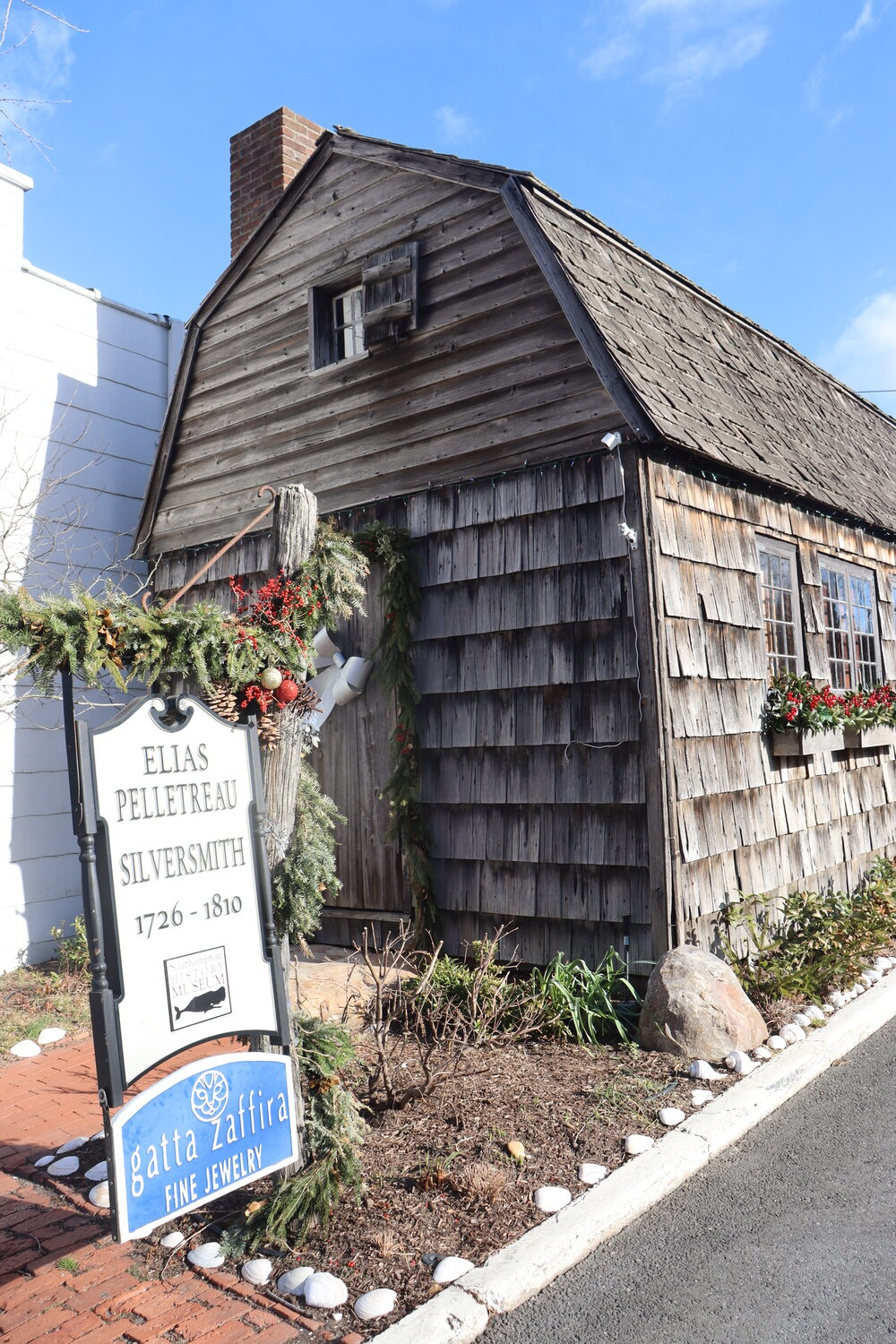
The Pelletreau Silver Shop on Main Street in Southampton Village. CAILIN RILEY
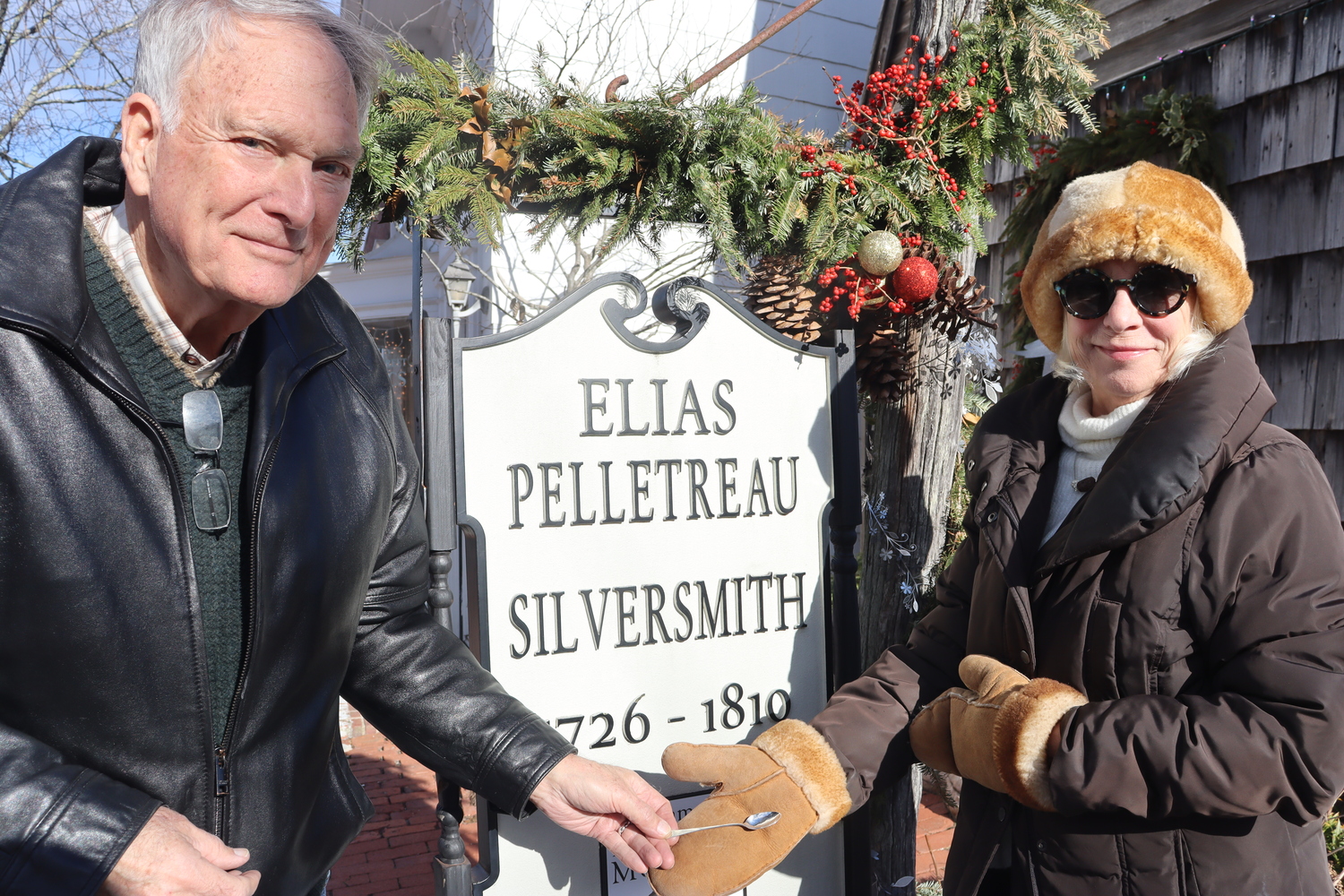
Noel Gish and Kathryn Curran purchased a 1700s-era silver spoon that had been made by Elias Pelletreau, and had it restored by resident silversmith Alyssa Saccente. CAILIN RILEY
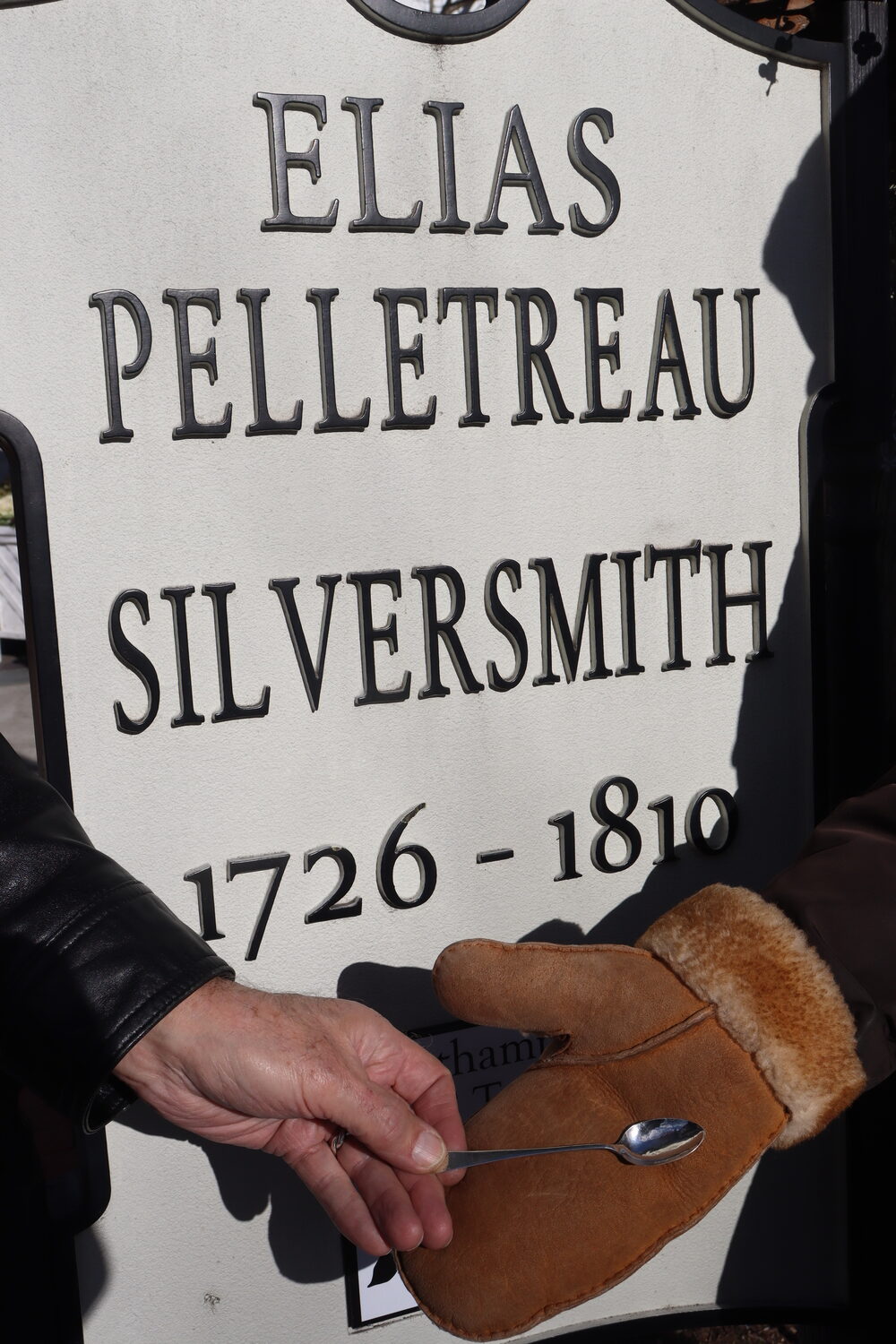
Noel Gish and Kathryn Curran purchased a 1700s-era silver spoon that had been made by Elias Pelletreau, and had it restored by resident silversmith Alyssa Saccente. CAILIN RILEY
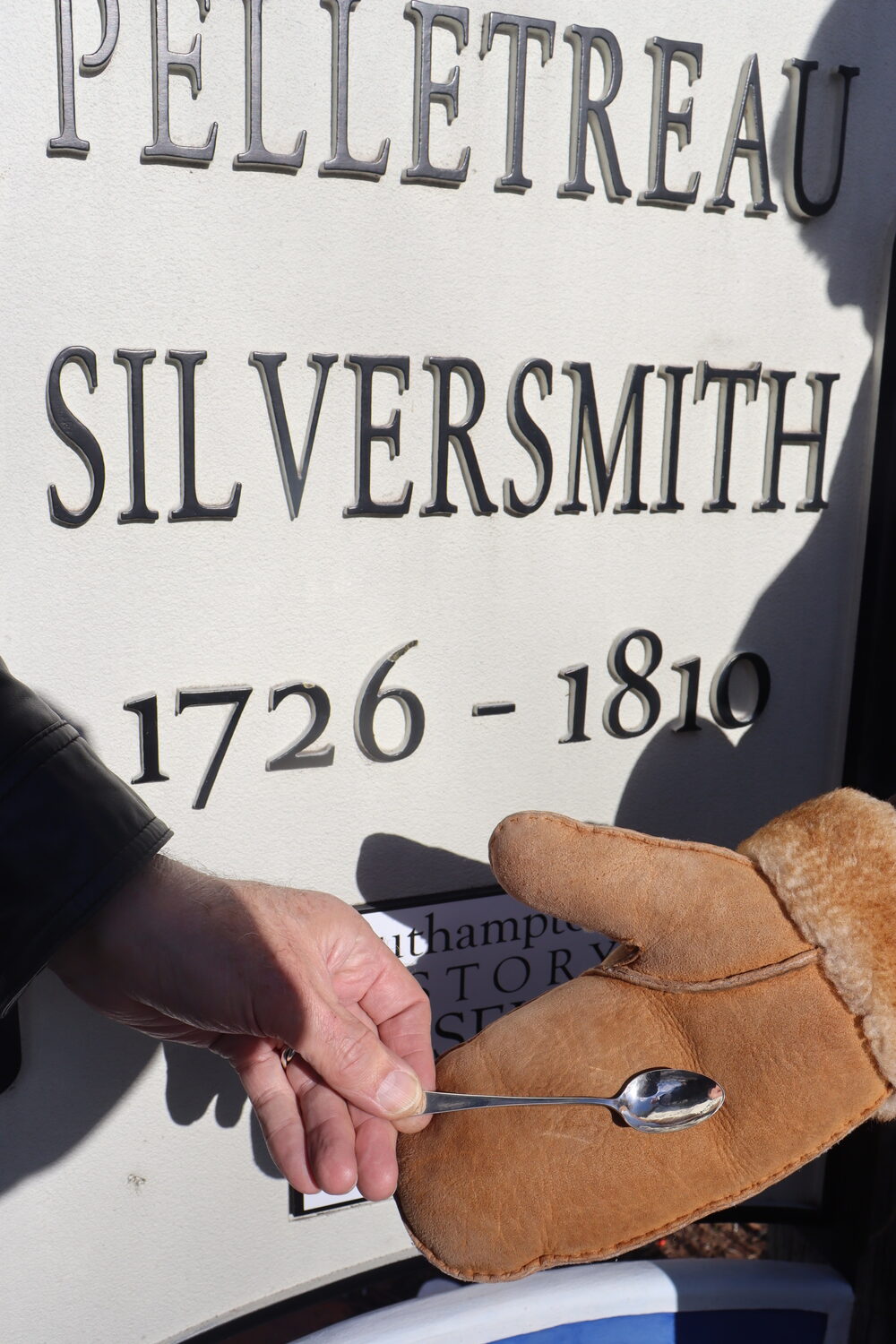
Noel Gish and Kathryn Curran purchased a 1700s-era silver spoon that had been made by Elias Pelletreau, and had it restored by resident silversmith Alyssa Saccente. CAILIN RILEY
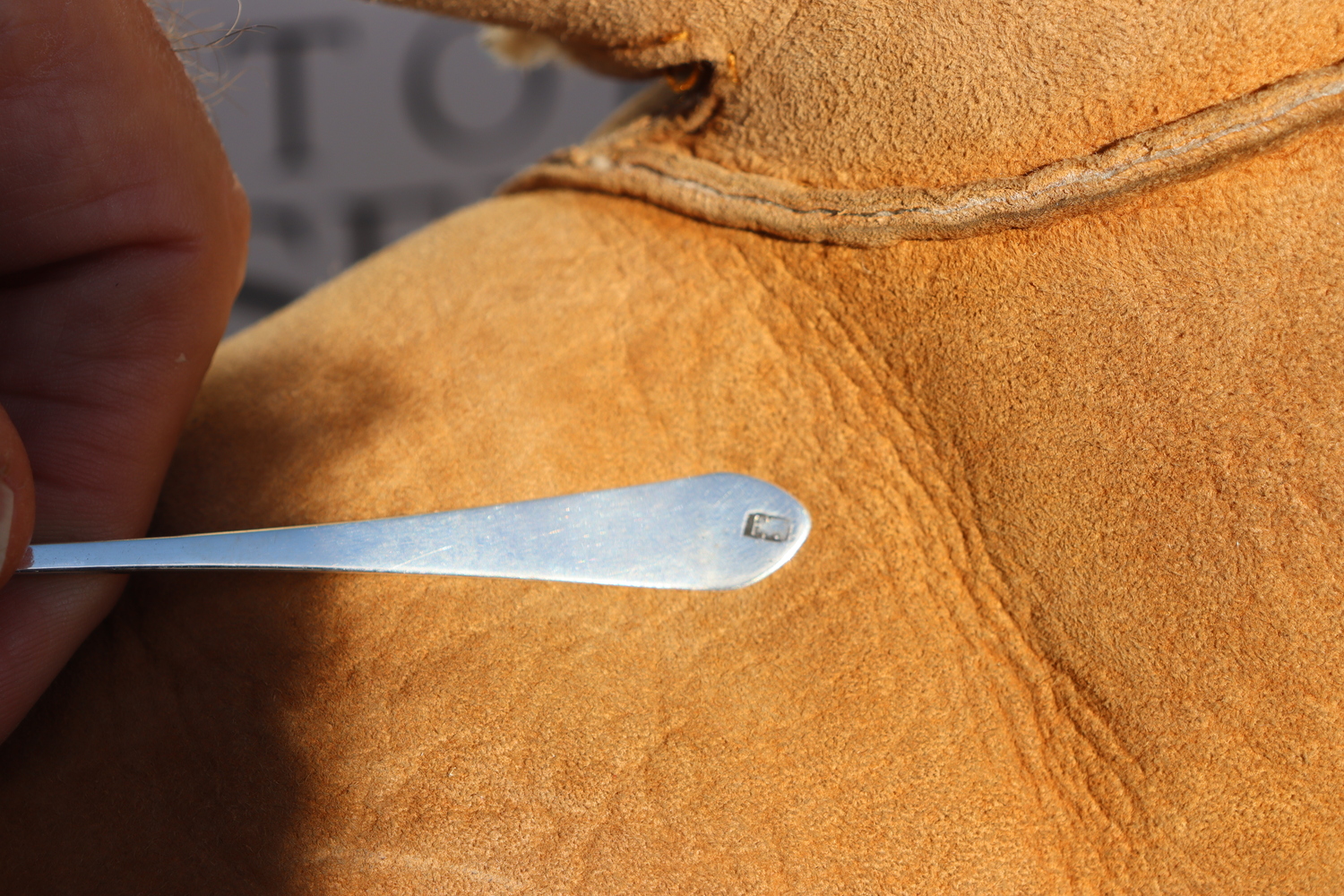
The small inscription at the bottom of the spoon handle identified it as a genuine Pelletreau spoon. CAILIN RILEY
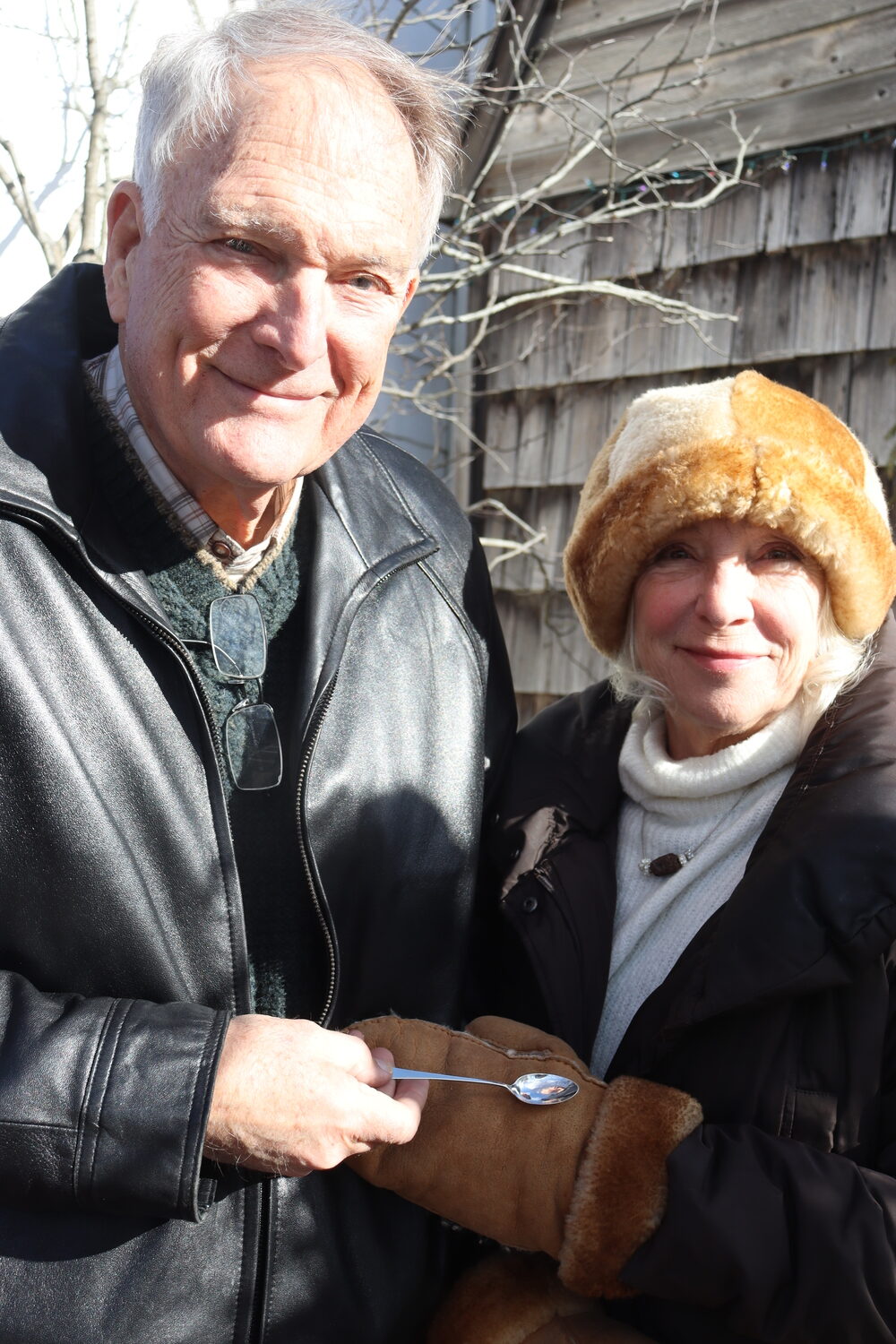
Noel Gish and Kathryn Curran purchased a 1700s-era silver spoon that had been made by Elias Pelletreau, and had it restored by resident silversmith Alyssa Saccente. CAILIN RILEY
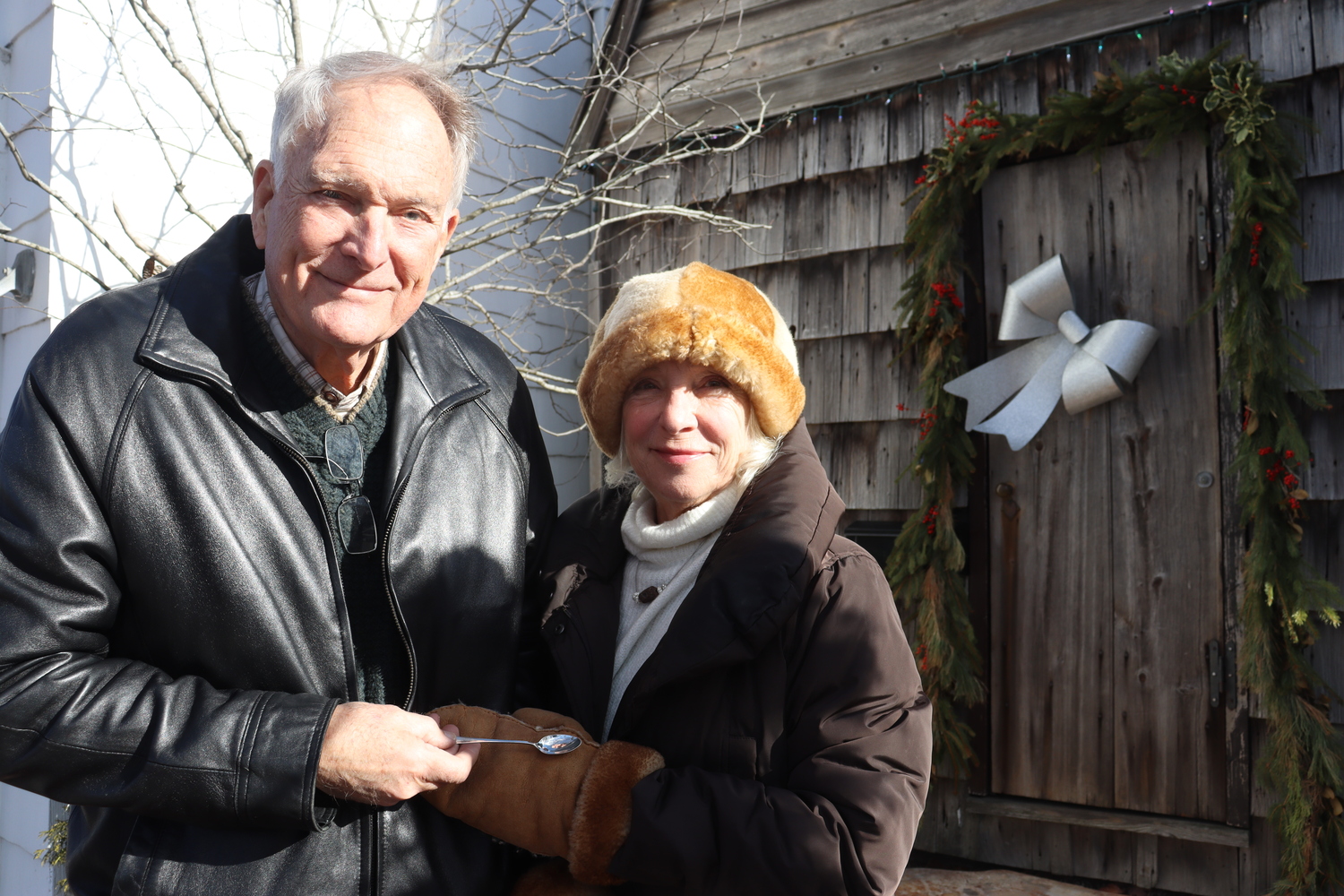
Noel Gish and Kathryn Curran purchased a 1700s-era silver spoon that had been made by Elias Pelletreau, and had it restored by resident silversmith Alyssa Saccente. CAILIN RILEY
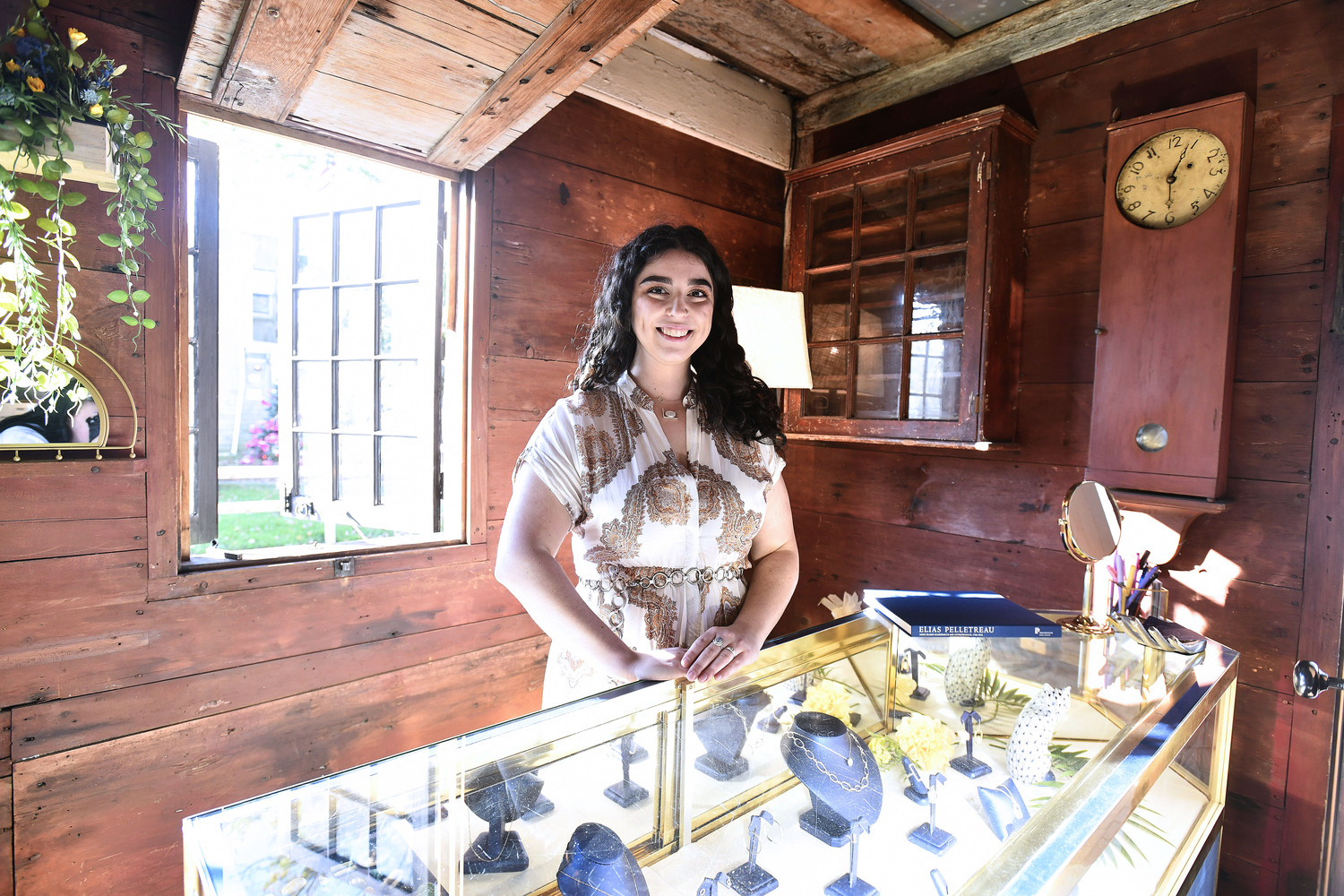
Silversmith Alyssa Saccente in the Pelletreau Shop in 2021. DANA SHAW
When it comes to Long Island history, Noel Gish certainly falls into the category of expert.
The Jamesport resident had a long career as a history teacher in the Hauppauge School District, has authored books about Long Island history, and for many years played a big role serving on the board of the Suffolk County Historical Society.
His interest in and enthusiasm for the history of his home extended to many other areas of his life as well. Three decades ago, while perusing an estate sale, Gish took a close look at a pile of old silver cutlery. Two spoons drew his interest, because they bore a small but simple inscription on the bottom backside of the handle: the letters “EP.”
That detail may have escaped many others, but Gish knew that those letters were the initials of famed Southampton Village resident Elias Pelletreau, who operated a silver shop on Main Street, which remains open for business to this day.
Gish said he considers Pelletreau, who died in 1810, to be the “Paul Revere” of Long Island, because of his status as a colonial patriot, who supported breaking with England when the Revolutionary War began.
Pelletreau’s career as a silversmith was just as noteworthy. His work is in the Museum of Fine Arts in Boston, The Metropolitan Museum of Art, the Yale University Gallery, the Suffolk County Historical Museum in Riverhead, Smithtown Historical Society, the Southampton History Museum collection and numerous private collections.
Gish also points out that one of the more notable purchasers of Pelletreau silver was none other than William Floyd, who signed the Declaration of Independence for Suffolk County and New York State.
“That says something about Pelletreau’s work and reputation in the 18th century,” Gish said.
When the British occupied Long Island from 1776 to 1783, Elias Pelletreau took his family to Connecticut, as did many other patriots in 1776, to avoid the British military control. He returned to Southampton at the end of the war, when he took up his craft again and died in Southampton in 1810.
Gish held on to the spoons he’d been lucky enough to procure in that yard sale for many years but recently decided it was time for the smaller of the spoons to be fixed up.
That spoon, which Gish said had likely been used as a salt or condiment spoon, had been chewed on by the owner’s dog, bearing small teeth marks on the bowl of the spoon.
Gish wasn’t sure if the damage could be totally reversed, but fate seemingly intervened.
As luck would have it, the Southampton History Museum reopened the Pelletreau Silver Shop several years ago and has a resident silversmith, Alyssa Saccente.
Gish said it was his partner, Kathryn Curran, who serves as director of the Robert David Lion Gardiner Foundation, who suggested they take the spoon to Saccente and create a historical full circle moment.
In addition to being the silversmith-in-residence, Saccente also sells jewelry she makes, by hand, in the shop as part of her Gatta Zaffira Jewelry line. She said she was thrilled to take on the spoon restoration project and spoke about what it was like to restore that spoon, in the same exact location where it was first made more than 250 years ago.
“I was really honored to be approached with this endeavor, and I think Kathryn and Noel were just as happy to have the work done here, as I was humbled and excited to be able to take the spoon back to its former glory,” she said. “The moment had a real gravity to it that you could feel in the best way. It almost felt like the building knew one of its previous occupants was back home.”
Saccente said she used many of the same time-honored techniques that silversmiths like Pelletreau used in the 1700s to restore the spoon — with an assist from modern advantages like power tools and electricity.
“The damage to the spoon was severe enough that it needed some real TLC, but, thankfully, it was nothing too catastrophic,” Saccente said. “The dog’s teeth didn’t puncture all the way through the metal, so I had a decent place to start from.”
It took time and patience, but eventually the job was completed — and Saccente reflected on the experience.
“The fact that the spoon was able to get the care and attention that it did, in the place that it was born, using the same techniques, really felt like a true full circle moment for this object,” she said. “One of the best parts of my job is being able to facilitate happy moments like this for people as the resident artist for the Southampton History Museum. It felt like the Pelletreau silversmiths were with me on this journey and helping guide me on as I got closer to the finish line.
“The connection that craft makes between artists and the people that we make things for is something that can’t be overstated,” she continued. “Even though I have the honor of being able to work in this lovely historic building every day, working on this spoon in particular made me feel like I was truly stepping back through time to the workshop of the past. It is so special that we have a place in our community like the Pelletreau Silver Shop, that has such long-standing ties to history and craft.”
Gish said Saccente’s work was a “complete success,” and that he was “more than pleased” with the way it all turned out. He said the special history of the shop and its place in the village today was a testament to that history.
“The Pelletreau shop, where Alyssa works, dates almost unchanged from 1686,” he said. “The small dwelling has been a silversmith shop, then a cobbler shop, then it became a gift shop, then a book shop in the 20th century, before returning to the silver shop and the Pelletreau era. This small building at 80 Main Street in Southampton is one of, if not the oldest continually operating trade shops in America. The Pelletreau shop and its preservation is part of the great history that is Southampton and Long Island.”


 Cailin Riley on Jan 14, 2025