


 1 Photo
East Hampton Town spent just over $29 million from the Community Preservation Fund in 2015 to purchase 86.5 acres of land
East Hampton Town spent $29 million from its Community Preservation Fund coffers in 2015, to preserve 86.5 acres of land, including several developed properties that will be cleared of structures and returned to their natural state.
In all, the town closed on 32 deals during 2015. The average price paid per acre of land overall was just over $335,000, though individual sales ranged from less than $100,000 an acre to over $1 million per.
The highest per-acre price paid was for the acquisition of .77 acre of land, and an additional .5 acre of underwater lands, on East Lake Drive in Montauk, for $1.35 million, from Lawrence and Roslyn Saltzman. The deal extrapolates to a per-acre cost of $1.6 million.
Several purchases came in at per-acre prices of between $800,000 and $900,000, like the 2.6 acres of pristine but developable dunelands off Cranberry Hole Road, purchased from the Rattray family for $2.25 million.
The largest single purchase was the 18 acres of woods and wetlands on Mile Hill Road in Northwest, owned by several members of the Whelan family. The town paid the family $4.8 million, or about $259,000 per acre.
The Whelan purchase included lands that are already developed with residential structures, which will be razed, allowing the property to return to a natural state.
That component has become increasingly common as the town turns its sights from land preservation to the protection of water quality and abating the impacts of coastal flooding. Last year the town, for the first time, began soliciting owners of waterfront properties to sell their land for preservation.
“We made an effort to reach out to property owners of wetlands lots in the Harbor Protection Overlay Districts surrounding Lake Montauk and other harbors,” Supervisor Larry Cantwell said. “And we acquired a significant number of parcels as a result.”
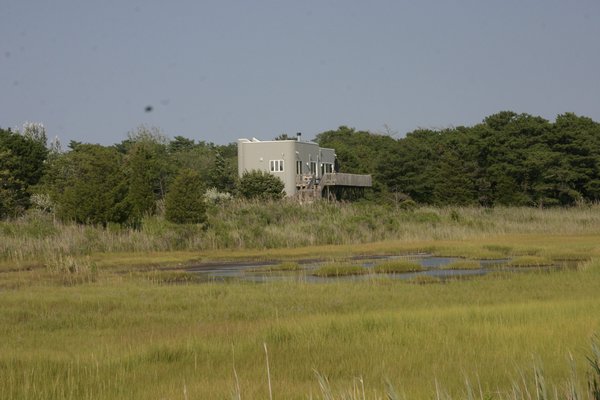
In one such deal, the town paid Susan Casper $1.3 million for a 3.3 acre lot and house that juts into the tidal marshes of Northwest Harbor. The house and its underground septics are to be removed and wetlands and upland areas revegetated with native species.
The town’s CPF took in $28.89 million in revenue in 2015, a drop of $2.7 million from 2014, and less than it spent on acquisitions, but goes into 2016 with a balance of $41 million in the fund.


 Michael Wright on Feb 16, 2016