


 5 Photos
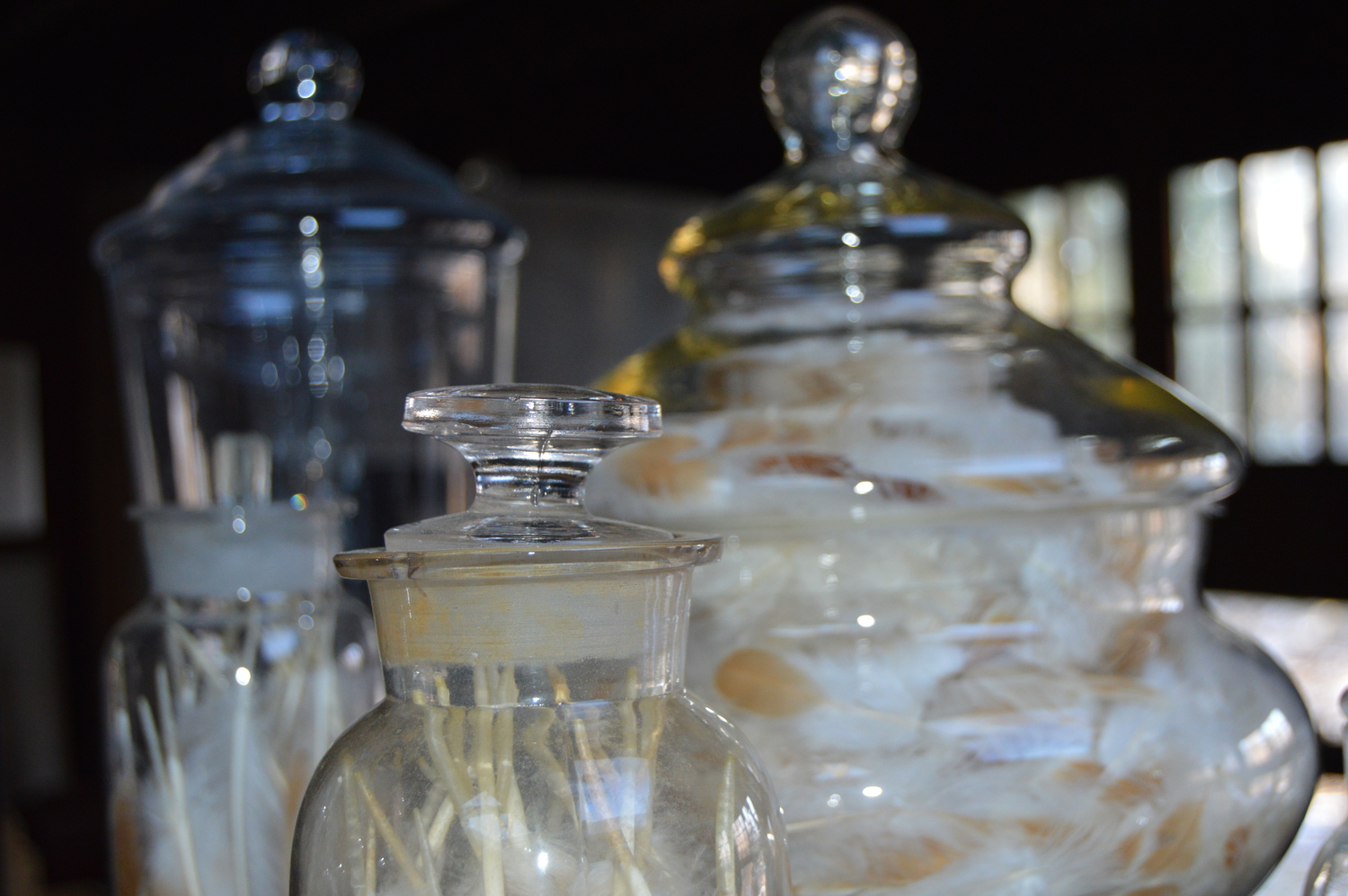
Bottles abound at Hope Sandrow's studio. TOM GOGOLA
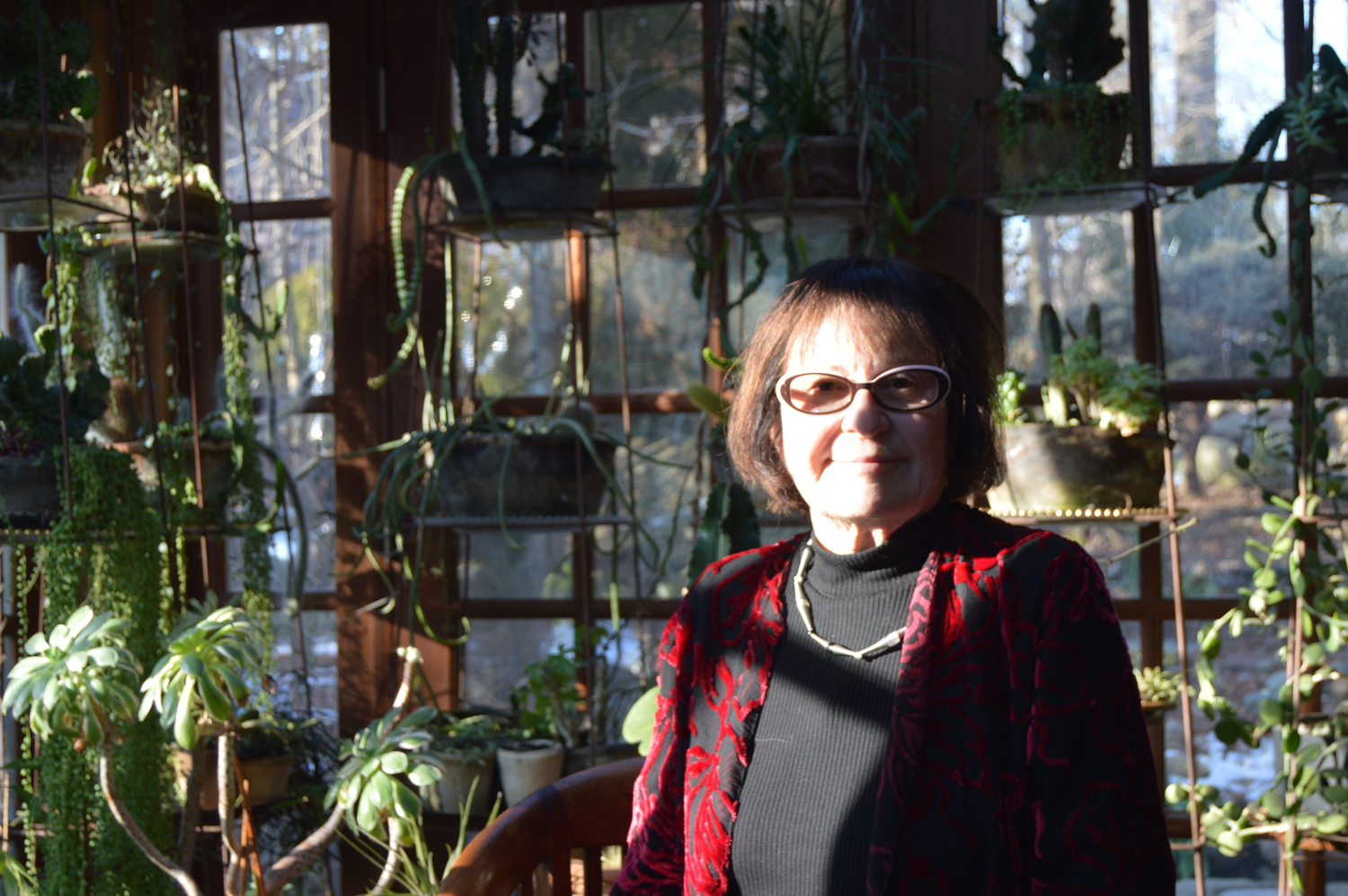
Hope Sandrow amid the succulents. TOM GOGOLA
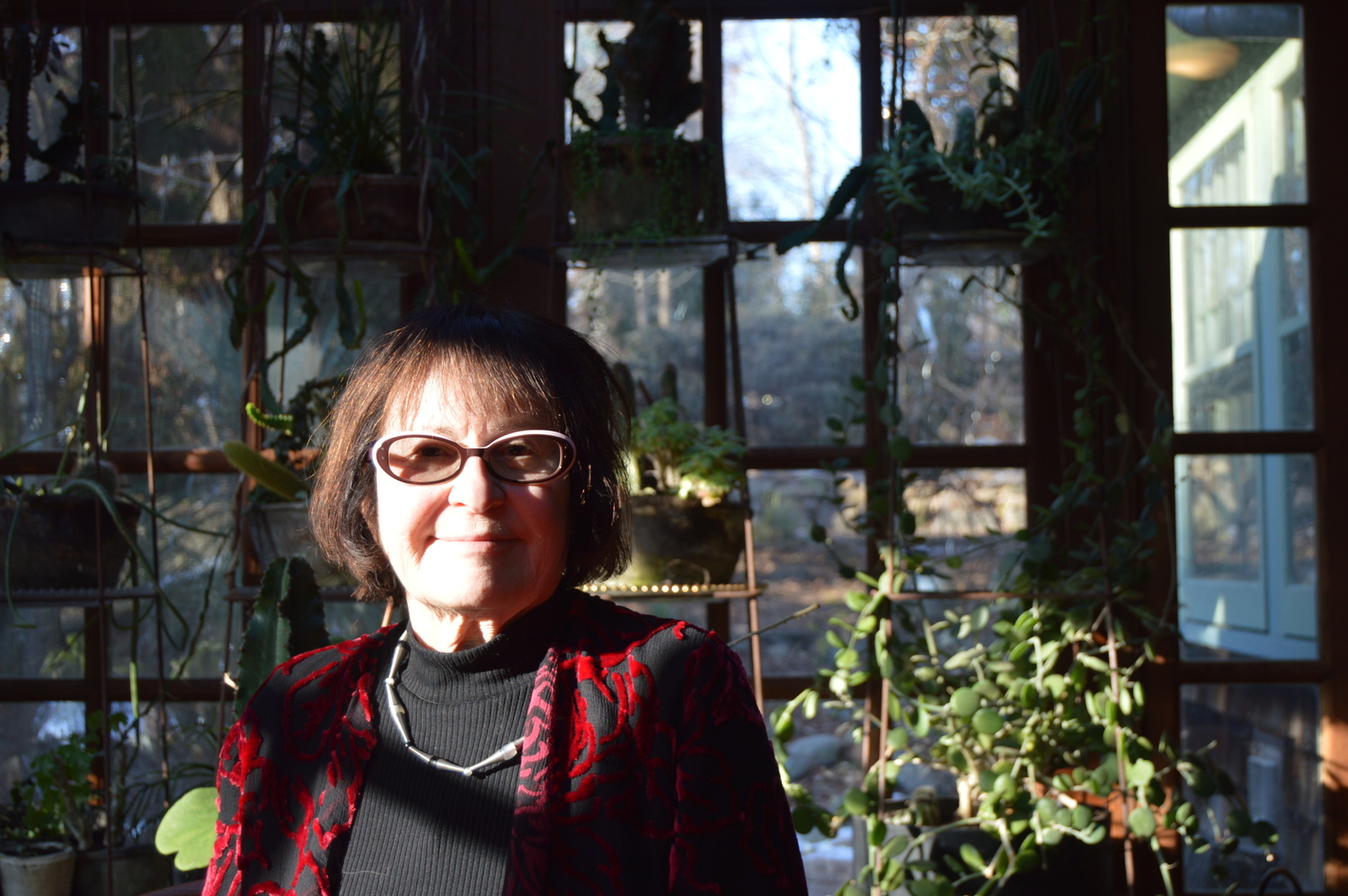
Hope Sandrow amid the succulents. TOM GOGOLA
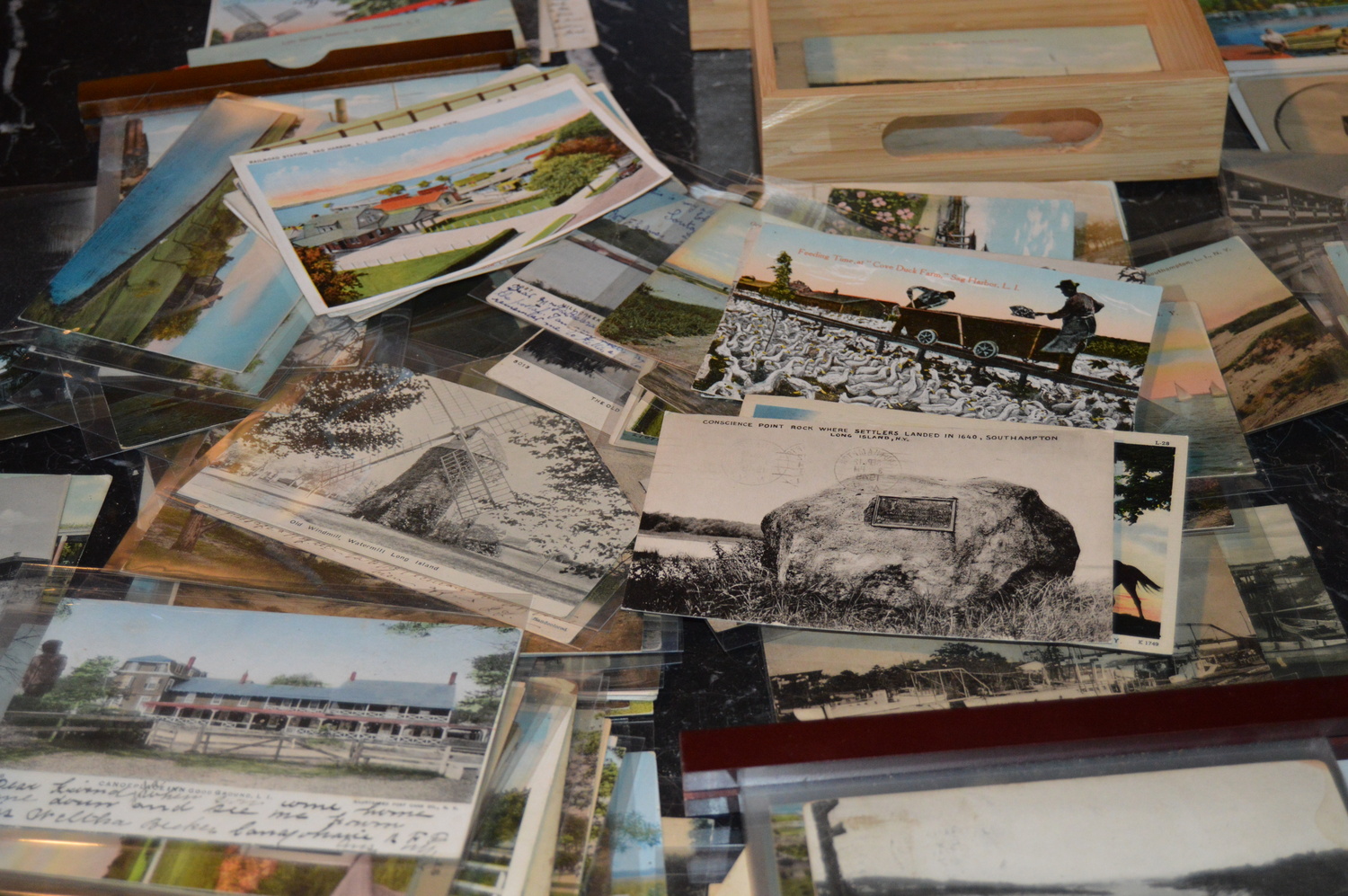
The postcard collection is vast and historical. TOM GOGOLA
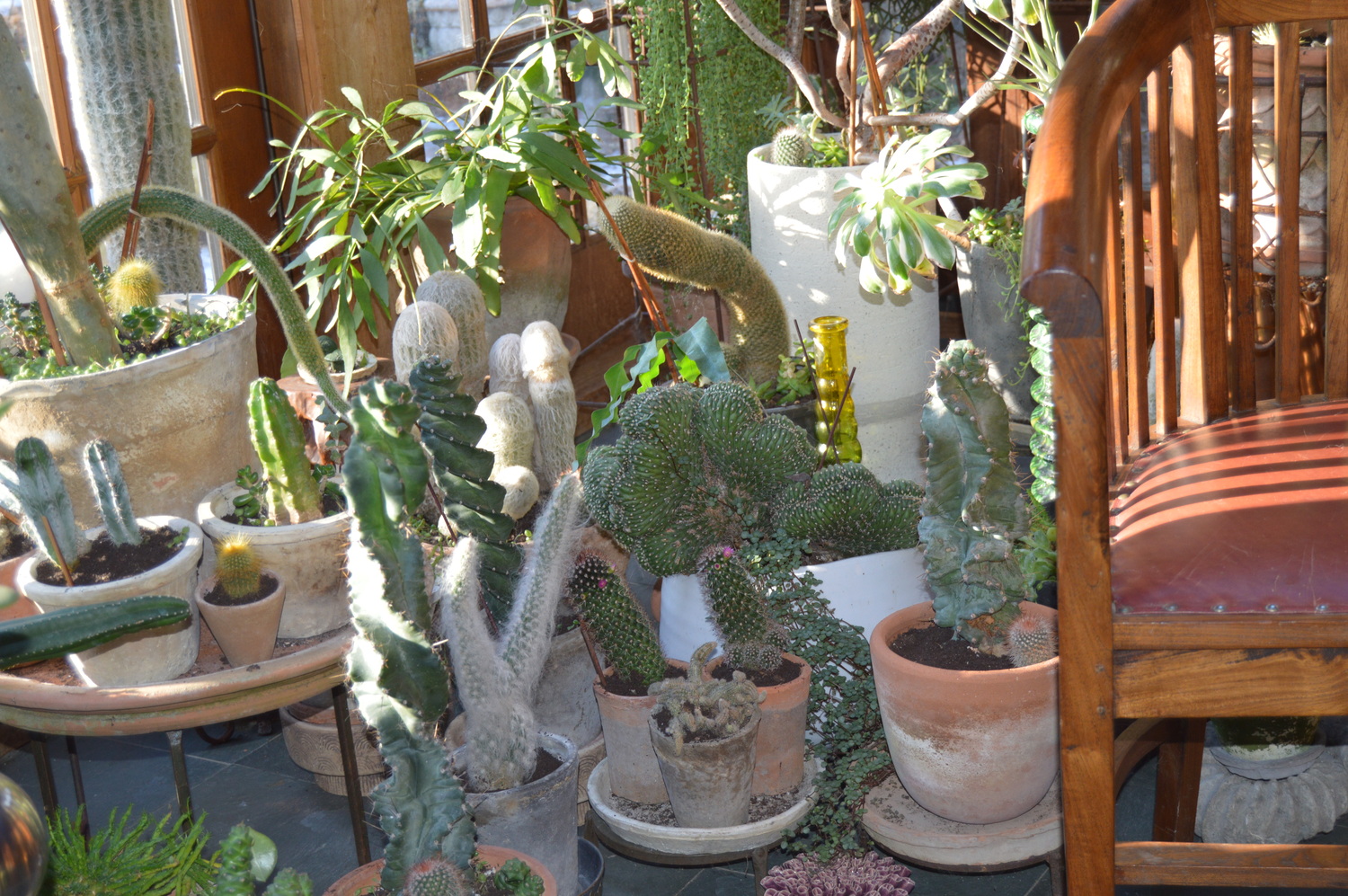
The succulents on display. TOM GOGOLA
Hope Sandrow was seated among the succulents at her Shinnecock Hills home studio on a recent sun-dappled afternoon that found the light shimmering through the windows and the multimedia artist offering illuminating insights into her life’s work and practice.
At first blush, the studio area off the kitchen in the historic 1891 home she shares with her husband, the composer Ulf Skogsbergh, may seem to be nothing more, or less, than an indoor garden filled with cacti and other plants dripping and dangling from numerous clay pots.
But it’s actually an immersive work-in-progress called “I Won’t Carry Your Water. I’m Not Your Succulent,” which has numerous points of reference guiding the installation that include Sandrow’s imperative to bring the natural world inside and the outside world into her studio.
The plants are themselves a mix of what she calls “immigrant plants” and numerous native prickly pear cacti, which she describes at one juncture as part soft and part prickly and “just like life itself.”
“Their condition is similar to ours,” she adds of the nonnative plants in the exhibit. “They adapt to a new site, a new space.”
There are 132 clay pots in the exhibit, which is not some random detail but actually references the age of the home in which the plants are displayed.
The terra cotta-hued pots in the exhibit harken back to ancient female fertility figurines, while white-hued pots represent western ideals around women’s beauty and gray-black hued pots reference her own aging, the graying of her hair and “status changed to an old woman no longer fertile,” according to an artist statement.
“It’s a practice of mine,” Sandrow said, to connect past with present and create works steeped in the natural and otherwise history of New York and Long Island.
At another level, the installation pays homage to Jane Colt, who owned this property during the suffragette era in the early 20th century and was a flower arranger and gardener in the area — “two of the things women could do” during that time, said Sandrow. “Women were always encouraged to do house plants.”
It is also a tribute to her grandmother, depicted in a nearby photograph in the dining area.
The installation plays on the phrase “carry your water,” she writes in an artist statement. “The succulents embody critical issues such as women’s rights, climate, re-wilding” and other interrelated issues around sustaining bio-diversity “amidst natural declining (bio)diversity.”
The installation is further rooted in Sandrow’s studio practice that is animated by “identity, activism and political consciousness.”
The installation was more directly and viscerally influenced, she said, by the U.S. Supreme Court decision last year to overturn Roe v. Wade and the Trump Administration’s attempts to “turn back the Clean Air Act and the Clean Water Act,” she said.
There’s a great and oft-told story about Hope Sandrow and this home, where she has lived since 1976, and the day years ago that she was outside taking a walk and a rooster followed her back to her house.
The encounter was revelatory, inspirational and illuminated the “surrealist idea of the chance encounter,” Sandrow said. Inspiring, to the extent that she then got some hens who not only started to produce eggs — many of which wind up donated to the Shinnecock Nation in what she calls her “social practice” — but are also sort of avian archaeologists in their own right, scratching at the sandy earth here and revealing all sorts of small items in the process — wood carvings, old apothecary bottles, crystals and other ephemera scratched by chickens from the land that was once part of the Shinnecock Nation.
“The chickens unearth what was here before,” said Sandrow.
Those items displayed in a studio room in bell jars along with other works in progress that include a huge collection of old postcards from the Shinnecock Canal area and environs. There are also numerous large bottles filled with chicken feathers collected from her flock of hens which are part of another ongoing project, along with a set of jars with chicken embryos in various stages suspended in a liquid.
A collection of stones is displayed and was drawn from what Sandrow believes was a nearby quarry is another attraction in a studio area that was at one time the horse barn attached to the house.
And then there are the postcards — hundreds, if not thousands of them organized and piled on a table in a studio and stashed in numerous cases that Sandrow opens to reveal their contents. The postcards depict the original Canoe Place Inn, the Shinnecock Canal as it once existed — largely free from development — and other features of Southampton life going back to the 19th century.
Sandrow is an active member of her community and had been opposed to the recent and nearby redevelopment of the Canoe Place Inn by the Rechler Group. Her activism around that project, she said, brought with it a couple of sinister encounters with at least one local who supported the project.
Sandrow shared with a reporter a piece of paper which she said local police deemed to be a death threat that was left in her mailbox.
The threat was contained in a single sheet of paper with the letters of her first name descending down the page with the words “Hold On Pain Ends.”
Sandrow also relayed an incident where a Canoe Place Inn supporter who had been occasionally stalking her, approached her at one point to tell her in a not very friendly manner that he was concerned for her safety. She believes the letter writer and that person may have been the same.
The postcards are a way to encapsulate and own that recent past while pushing back, in a sense, against what Sandrow said was a failure of local government and their representatives to follow standard planning practice when the Canoe Place Inn proposal was under review and consideration by state, county and local officials. A lawsuit to try to stop the development did not prevail.
The result was a project, she said, that “sacrificed the quality of the water” in the canal and adjacent bays in deference to a deep-pocketed developer, and represented a betrayal, to her, of the natural history of the area as embodied in the postcards she is collecting.
She recollected that even though public opinion was running against the proposal, “they went ahead and did it anyway.”
“Art directs life,” said Sandrow by way of explaining the postcard collection, “and life directs art.”
The larger themes that animate Sandrow’s practice take shape and come into a kind of focus after a few visits to the Sandrow homestead and walks around the property, where the chickens roam freely and where outside art installations seem to pop up around every corner.
There are persistent and consistent themes that emerge in Sandrow’s work, which aims to connect the past with the present, the outdoors and the indoors, and a symmetry between Sandrow’s biography with the larger script that’s been written about this area of Southampton Town.
She talks about how the betrayal of a treaty that was signed with the local Shinnecock Nation in the late 19th century coincided with her family’s journey to the United States during the Soviet pogroms, a kind of parallel track of suffering that invokes the Bob Dylan line about how “behind every beautiful thing, there’s been some kind of pain.”
“The time frame parallels my great-grandparents fleeing here with only their lives and children,” Sandrow said. “In my early life, I was influenced by the fact that my parents’ parents had fled from Ukraine in the 1890s.” . “I grew up in a climate of antisemitism,” she said, “and can understand how other people can be targeted just because of their race or religion.”
Her great-grandparents settled in Philadelphia and ran a grocery store there. Sandrow reflected on how her grandmother had imbued in her a commitment to community engagement that animates both her activism and her art as she recalled Philadelphia’s Society Hill area as “the only place that Jews could live in Philadelphia.”
The family helped to bring other of their family members to the United States to save them from the Soviet pogroms. “That was the spirit that I was brought up with.”
Her forbears, she said, “were not liberal but ‘repair the world’ types.” Sandrow’s tried to do her part, she said, to repair her chosen local world.
She was born in 1951 in Philadelphia and grew up in Cherry Hill, New Jersey, before moving to New York City to pursue a career in art. She had been accepted into Drexel University, but said that “my idea of life was different from what they were teaching, which was to make money, as much money as possible.”
“I didn’t quite fit into college,” she said with a slight laugh reflecting on a life in art and vice versa.
But she was drawing and painting ever since she could remember. Before moving to New York, she attended the Philadelphia College of Art and found the climate unbearable. She left in 1975. “The sexism and harassment was overwhelming.”
This was an era, recollected Sandrow, brimming with history, strife and opportunity, as she ticked off the political assassinations of John F. Kennedy, Dr. Martin Luther King Jr. and Robert Kennedy in the 1960s and the advent of the Equal Rights Amendment and the Roe v. Wade decision that would follow.
Despite whatever progress had occurred for women since the time of Jane Colt, the 1970s was not a good time for women artists. Rather, says Sandrow, it was a time when the “opportunities for women were dismal.”
She may have been headed for a career as a dental assistant, she said with a laugh, before her art life began to manifest with immersive projects that, for example, unflinchingly explored New York City’s female homeless population through photography.
Sandrow had herself been victimized by sexual violence in the 1980s and that horrific experience helped to inform her approach to that project.
“I decided to investigate other women,” she said, after she was victimized. What factors, she wanted to know, led them to a life on the streets. “I can’t make art,” she recollected of that project and how it came to be, “unless I saw what was happening on the ground.”
Violence against women, she suggested, was tangential to a larger problem in a society that she says has a problem with understanding, let alone empathizing with, how someone might wind up living on the street.
Sandrow founded the Artist & Homeless Collaborative in the mid-1980s to document homeless women, along with other artists of the era who contributed to the project. That project was highlighted in a look-back retrospective at the New York Historical Society in 2021.
More than 30 years later, Sandrow said she’s “devastated that some of those same prejudices” are still afoot when it comes to homeless persons of all genders, including in her chosen community.
Seated among the succulents, Sandrow hearkens back to the previous century to again describe how her work is shaped by her past, and later sends a follow-up note explaining that “I Won’t Carry Your Water” was itself influenced by her 1998 exhibit “Water Life” at the Whitney Museum at Phillip Morris in New York City.
In that note she also offers an artist statement that notes the provenance of “succulent” comes from the Latin word “suculentus” — meaning to suck, which fairly characterizes Sandrow’s views on the long and grinding reach of patriarchy.
Other definitions of succulent include “full of interest, juicy or temptingly tasty and rich in desirable qualities,” and that latter characterization could well be applied to Sandrow and her enormous contributions to American art, which are part of the permanent collections at both the Metropolitan Museum of Art and the Whitney Museum of American Art.
The artist’s statement attending the succulent-featuring exhibit also includes a flash of exuberant pushback, a common enough theme that emerges after a series of conversations with Sandrow about the intersection of art, identity and politics: “I’m not your succulent Justices Roberts Alito Barrett Gorsuch Kavanaugh Thomas!”


