


 2 Photos

July 25: Southampton Village Police and a volunteer from the Evelyn Alexander Wildlife Rescue Center of the Hamptons in Hampton Bays trapped a wayward fox near Bowden Square in Southampton Village.
A State Supreme Court justice has ruled that the Southampton Town highway superintendent’s signature is required on union contracts affecting Highway Department workers—but not other town employees.
In June, Highway Superintendent Alex Gregor refused to sign a settlement between the town and the Southampton chapter of the Civil Service Employees Association, or CSEA. The settlement agreement would have added 34 administrative titles to the existing union contract, approved raises for six positions, accelerated pay raise schedules for those employees, and reduced health insurance contributions for some employees, among other adjustments. Mr. Gregor said he saw the settlement agreement as a “giveaway.”
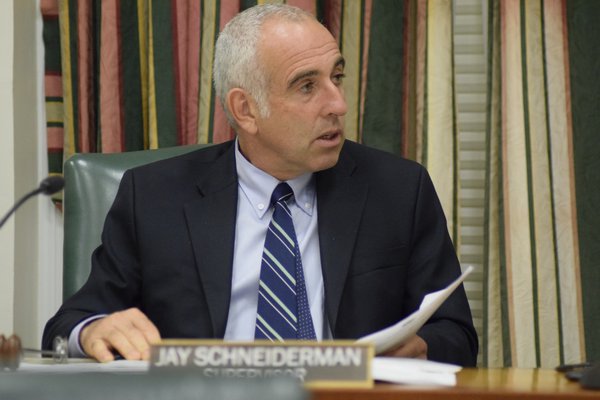
According to the union contract, the settlement approval requires four signatures—those of CSEA President Laura Smith and labor relations specialist James G. Wall, on behalf of the union workers, and those of Town Supervisor Jay Schneiderman and Mr. Gregor on behalf of the town.
Union officials filed a grievance after the settlement was blocked, and the issue went to the State Public Employment Relations Board to determine whether the settlement, which was approved by the Town Board in March, actually needed Mr. Gregor’s signature. But Mr. Schneiderman opted to take the matter to court to further clarify whether Mr. Gregor’s signature should be included on any collective bargaining agreements in the future—he argued that there was no need for the highway superintendent to sign off on such contracts.
On October 17, State Supreme Court Justice Joseph Santorelli ruled that Mr. Gregor’s signature was indeed needed for contracts affecting Highway Department workers. Of about 298 employees in the CSEA bargaining unit, approximately 59 work in the Highway Department.
“I agree with that decision wholeheartedly,” Mr. Gregor said. “The supervisor said he thought the court should give some clarity to the issue on whether or not the highway superintendent’s signature matters. The court said, yes, he speaks for the employees that are under his charge. I’m glad the supervisor got the clarity.”
The supervisor said the town will provide the promised benefits to town workers, with the exception of those in the Highway Department. But Mr. Schneiderman said the town is considering appealing the court decision.
“What this judge said was that [Mr. Gregor] does not have the power for most of the town’s workforce,” the supervisor said. “This judge said he does have the power with these 59 employees under this contract. For the most part, he lost the case.”
Mr. Gregor said he is against the town appealing the judge’s decision. “They didn’t include the membership—there was no vote on the settlement,” he said of the CSEA. “Shame on [the Town Board] for wasting the taxpayer money and not sitting down and working with the players involved. For them to try to ask for clarity, get it, and because they don’t like it they’re going to appeal—is kind of arrogant.
“The highway superintendent has always signed for the blue-collar workers,” he continued. “This isn’t something I created. I’m elected to do a job, and I take it seriously. I answer to the taxpayers, and I’m going to do my job. I wish my fellow elected officials would do the same.”
Mr. Schneiderman continues to argue that Mr. Gregor should not have veto power over the Town Board.
“The Town Board can’t diminish its own power—which is what it basically did in this contract,” the supervisor argued. “It gave him veto power. That’s why I think we’re going to have to appeal. Maybe there’s a way of resolving it without the expense of the lawyers.
“I know he’s been going around tagging it as a big victory, but for the most part, the town won. He gets a small victory where it pertains to highway employees. But for the most part, the judge agreed with the town’s position.”
The legal expenses for both sides are being paid by the town.


 on Nov 8, 2016