


 3 Photos
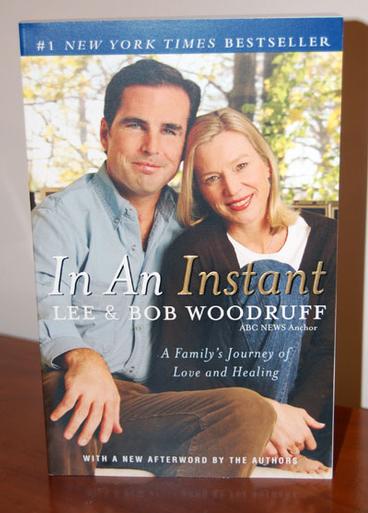
"In An Instant
" the book Lee Woodruff co-authored with her husband
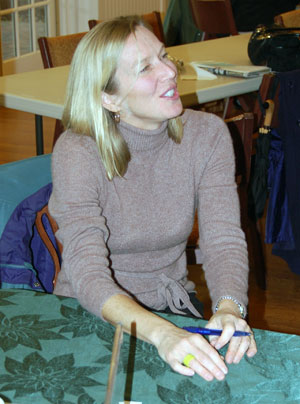
Bob Woodruff of ABC News.
An instant.
That’s all the time it took for a roadside bomb to go off in Iraq and change the lives of Bob and Lee Woodruff and their family forever.
In their dual-memoir “In An Instant: A Family’s Journey of Love and Healing,” ABC News reporter Bob Woodruff, who suffered a traumatic brain injury while embedded with U.S. troops in Iraq nearly three years ago, and Lee Woodruff, his wife and an accomplished writer in her own right, recount how they pieced their lives back together after the blast that nearly killed Mr. Woodruff.
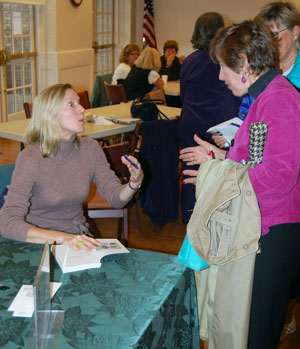
Ms. Woodruff told her story to Rogers Memorial Library patrons on October 28, sparking sympathy and sadness from the audience but also laughter as she recalled the lighter moments during her husband’s ongoing recovery.
Everyone has a moment in his or her life when everything changes in an instant, Ms. Woodruff said.
“It doesn’t have to be a bomb in Iraq,” she said. “It could be that phone call about a bad mammogram.”
Ms. Woodruff started her family’s story at the end, letting the audience know that her husband is doing fine now, and was reporting in Alaska that week, though she admitted she didn’t know exactly what he was reporting on. She explained that is typical of their relationship, because her husband is constantly traveling for work. “Oh great! You’re going to the Arctic for a week? See you later,” she joked.
It was Mr. Woodruff’s eighth visit to Iraq when he was hit by the roadside bomb.
The explosion blasted him in the head with rocks, just missing his eyes and carotid artery.
Ms. Woodruff explained that insurgents often pack improvised explosive devices, or IEDs, with rocks. They also use glass, nails or incendiary materials, she said.
After the IED went off, insurgents began shooting, but military medics refused an order not to land under fire and came to Mr. Woodruff’s rescue, Ms. Woodruff said. Army surgeons also conducted brain surgery under mortar fire to save his life, she added.
Though Mr. Woodruff survived the blast, it still left him in a coma for five weeks. Ms. Woodruff said “expected” was written on Mr. Woodruff’s medical chart because he was expected to die.
It wasn’t until the third week of the coma that he showed any awareness of visitors around him. Ms. Woodruff said it finally happened the first time their daughter Cathryn visited him in the hospital. Cathryn kissed her father, and a tear rolled down his cheek, Ms. Woodruff said. “When that tear came out of his eye, I screamed for the nurse,” she recalled.
Two weeks later, Ms. Woodruff walked into her husband’s hospital room to find him sitting up in bed, awake and alert, but talking in mostly gibberish. He had to relearn how to speak, read and write.
Even though Mr. Woodruff is back to work with ABC News, his brain injury still affects him. He has aphasia, a difficulty recalling words.
Ms. Woodruff said others may not always notice his aphasia, but she does. “As somebody who’s been married to this guy for 20 years, I notice every little thing,” she said.
Mr. Woodruff also used to get by on just three hours of sleep a day, but since his injury he needs at least six hours and is often fatigued, she said, explaining that it’s because his brain is working much harder to do the same things it used to do with ease.
The Woodruffs have used their family’s story to raise awareness of U.S. troops that have returned from Iraq and Afghanistan with brain injuries. “What happened to Bob is what happens to our troops every day,” Ms. Woodruff said. Brain injuries aren’t always physical, she noted, saying that post-traumatic stress disorder is just as real and just as emotionally painful as a physical injury.
Ms. Woodruff said she was humbled by the lengths ABC News went to make sure her husband had the best possible medical care following his injury, but U.S. troops don’t always get the care that they need. “We owe them the highest level of care,” she said.
Ms. Woodruff’s next book, “Perfectly Imperfect: A Life in Progress,” is planned for an April release.


