


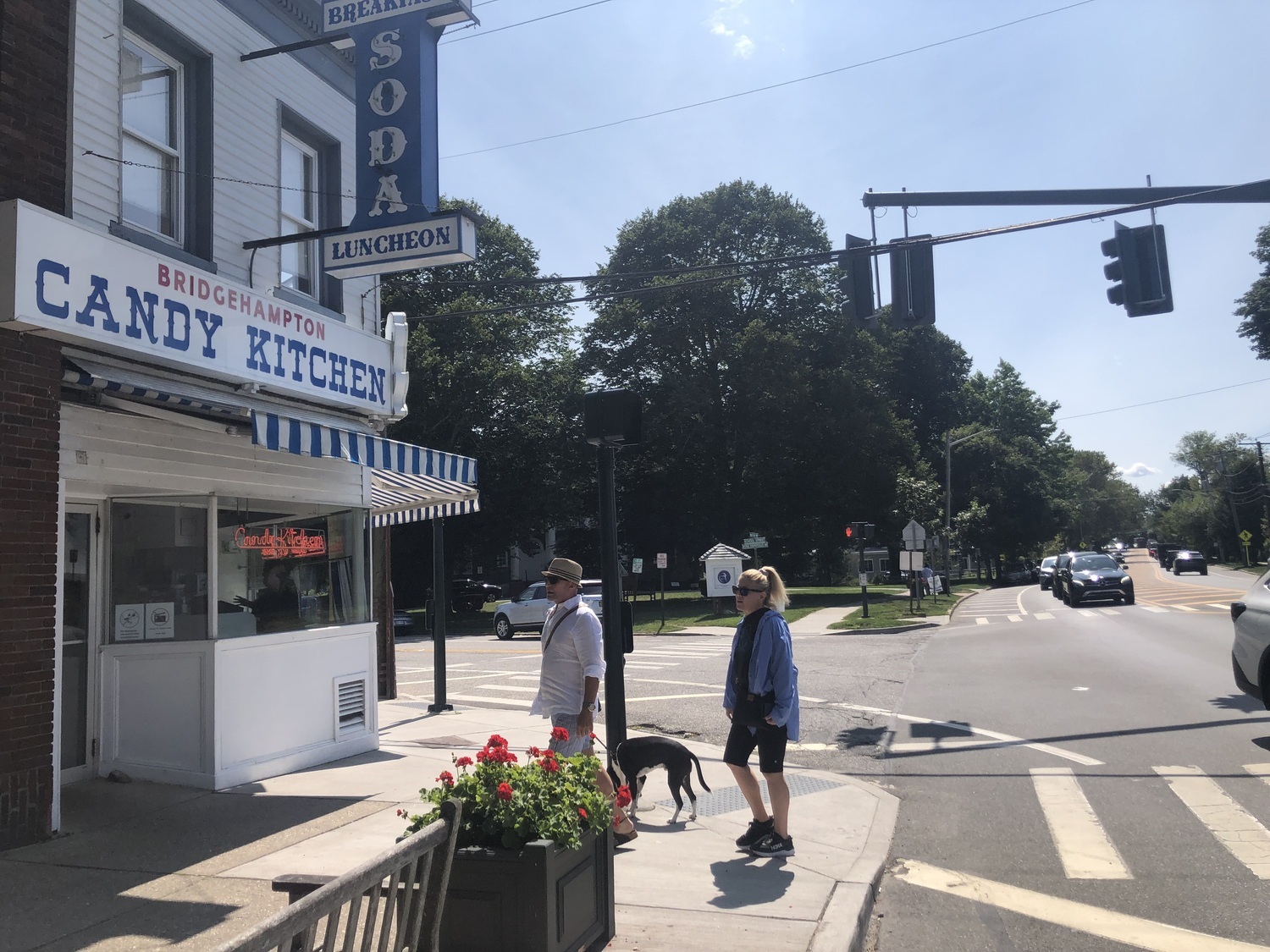
 2 Photos
The Candy Kitchen in Bridgehampton. CALIN RILEY
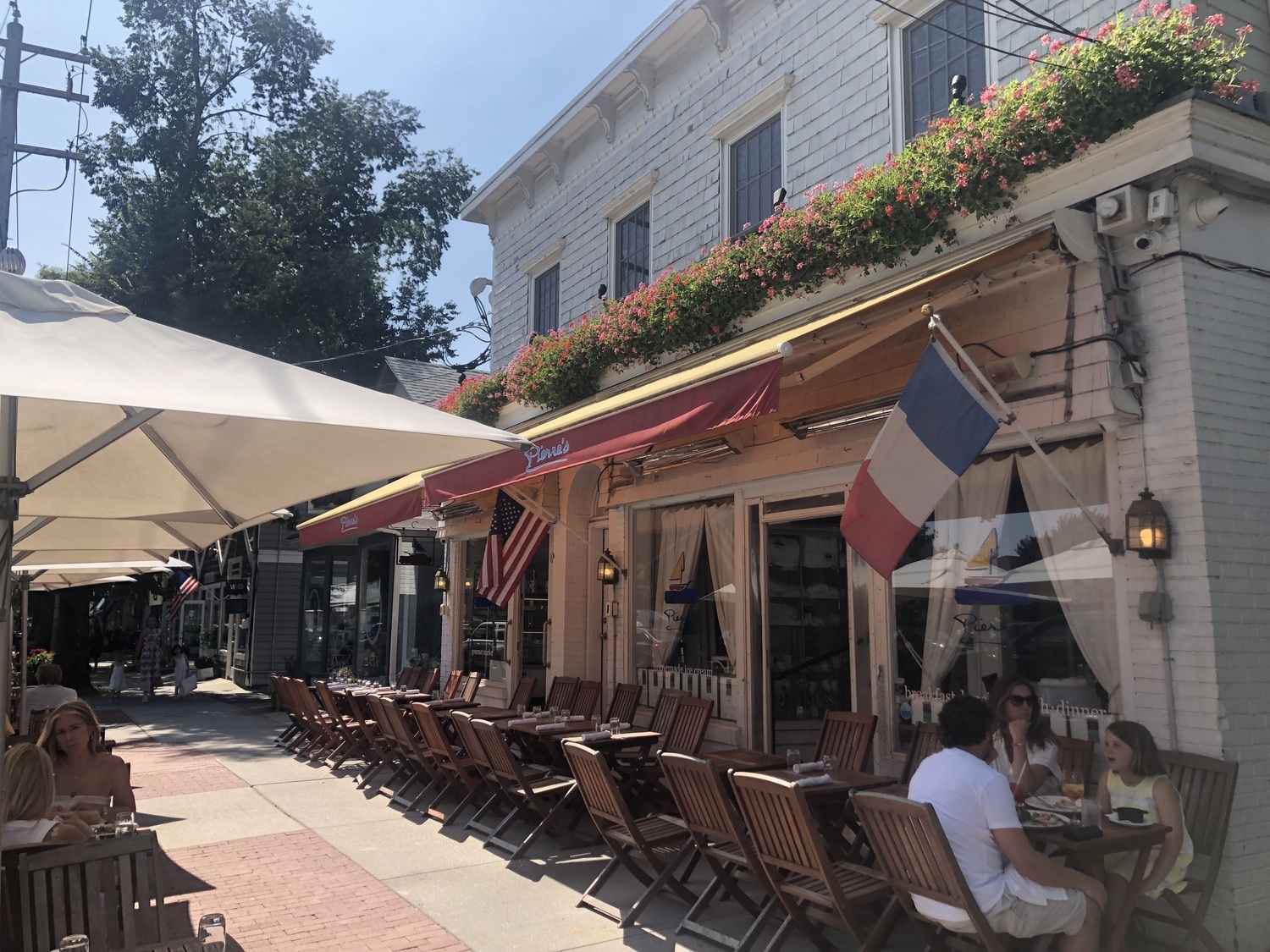
Pierre's in Bridgehampton. CAILIN RILEY
It was a long time in coming, said Ed Wesnofske, but worth the wait as the Southampton Town Board passed a resolution in late December creating a Bridgehampton Main Street Historic District.
“It’s good to have it out of the way,” said Wesnofske, who chairs the Southampton Town Landmarks & Historic District Board. “It’s been a long process since the initial steps were taken back in 2017” to create the district, he said.
The occasion, said former Town Supervisor Jay Schneiderman when the board unanimously approved the resolution, also represented a first for the Town of Southampton in creating a historic district.
Numerous hurdles had to be cleared along the way, including a COVID-era delay, staff changeover at the town attorney’s office and “a lot of little bureaucratic hangups along the way that kept it from getting done very quickly,” said Wesnofske.
Another hurdle in the process was the town code itself, which was changed to eliminate a prior requirement that creating a historic district required a petition signed by at least 20 percent of the owners of a tentative district, he explained.
“The problem was that much of Main Street, Bridgehampton is in ownership of out-of-towners, sometimes basically of the investor type,” Wesnofske said, “so getting consent and permission would have been very complicated, so the code was revised to eliminate” the petition requirement.
There were all sorts of ambiguities in the code that had never been tested.
“Once thing it said was that you had to put in an application [but] no application had ever been put in to create a historic district,” Wesnofske said.
A Bridgehampton Main Street Historic District was contemplated in the town’s 1999 Comprehensive Plan Update, but as Wesnofske recalled, around 2003 there was “controversy and confusion, and the town pulled the rug out on the process of having a historical district created.”
Fast-forward to 2017, when Schneiderman suggested to the landmarks board that the issue ought to be revisited.
“From there, we began to proceed slowly,” said Wesnofske.
The board brought in Town Historian Julie Green to research and prepare the contours of the district. Green had a familiarity with Bridgehampton already, and her work, he said, saved the town from having to hire another historic district consultant — which it had done three times already.
“We didn’t need another round to say there were historical buildings in Bridgehampton,” he said.
At the outset, the Bridgehampton Citizens Advisory Committee wanted a historic district that included residential streets around the core Main Street area and was critical of a proposal where only Main Street would be in the defined district. But the CAC eventually came around and co-sponsored the resolution when it was proposed by the Southampton Town Board.
The town-sponsored Bridgehampton CAC disbanded en masse in 2021 and reformed as an independent organization.
The landmarks board would take a less-is-more approach in what Wesnofske called a “first step and phase one of a Bridgehampton Historic District,” noting that there are structures and historic houses on the eastern side of Montauk Highway as it runs through the hamlet, but those houses and structures weren’t included in the final map.
Another early-settlement area in Bridgehampton, near Bridge Lane — the road that gives the hamlet its name — was also left out of the district along with an area around Ocean Avenue which could, said Wesnofske, be “incorporated into a local historic district.” The board also contemplated and rejected including parts of Butter Lane in the district.
One structure of note that is in the district is the neon museum known as the Dan Flavin Art Institute, which is housed in the original firehouse in Bridgehampton and is located just off of Montauk Highway near Corwith Avenue. The museum reached out with general concerns about how being looped into the district might impact its operations, especially as relates to the exterior of the facility.
Wesnofske said that any exterior changes to structures and homes within the district would be subject to review. “All properties, all people are getting a letter indicating that they are in the historic district,” he said, that spell out the requirements for any proposed changes to the designated buildings, which are subject to review and approval by the landmarks board.


