


 9 Photos
Paleontologist John Hankla Visits Students At Westhampton Beach High School
Paleontologist John Hankla Visits Students At Westhampton Beach High School RACHEL VALDESPINO
Paleontologist John Hankla Visits Students At Westhampton Beach High School RACHEL VALDESPINO
Paleontologist John Hankla Visits Students At Westhampton Beach High School RACHEL VALDESPINO
Paleontologist John Hankla Visits Students At Westhampton Beach High School RACHEL VALDESPINO
Paleontologist John Hankla Visits Students At Westhampton Beach High School RACHEL VALDESPINO
Paleontologist John Hankla Visits Students At Westhampton Beach High School RACHEL VALDESPINO
Paleontologist John Hankla Visits Students At Westhampton Beach High School RACHEL VALDESPINO
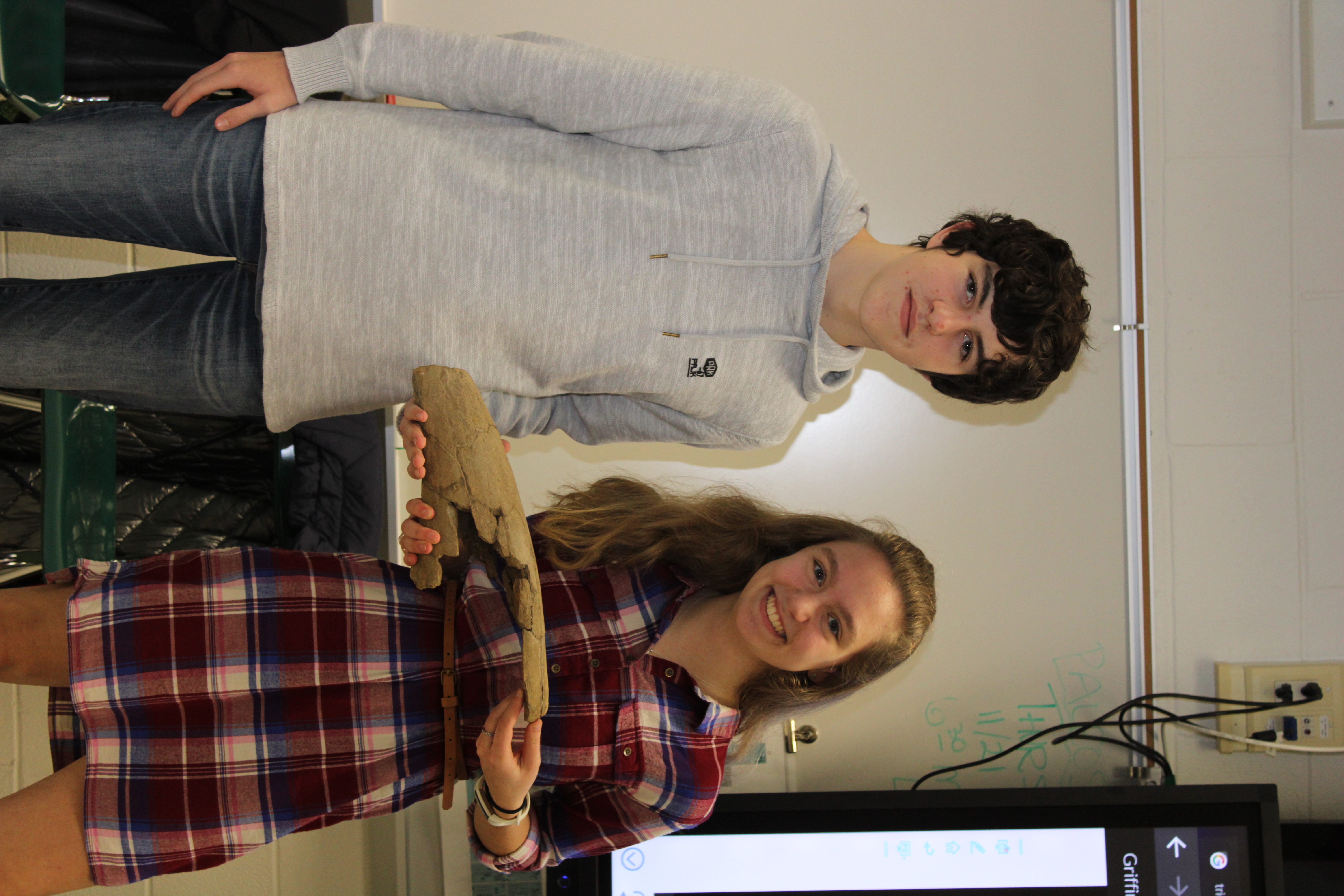
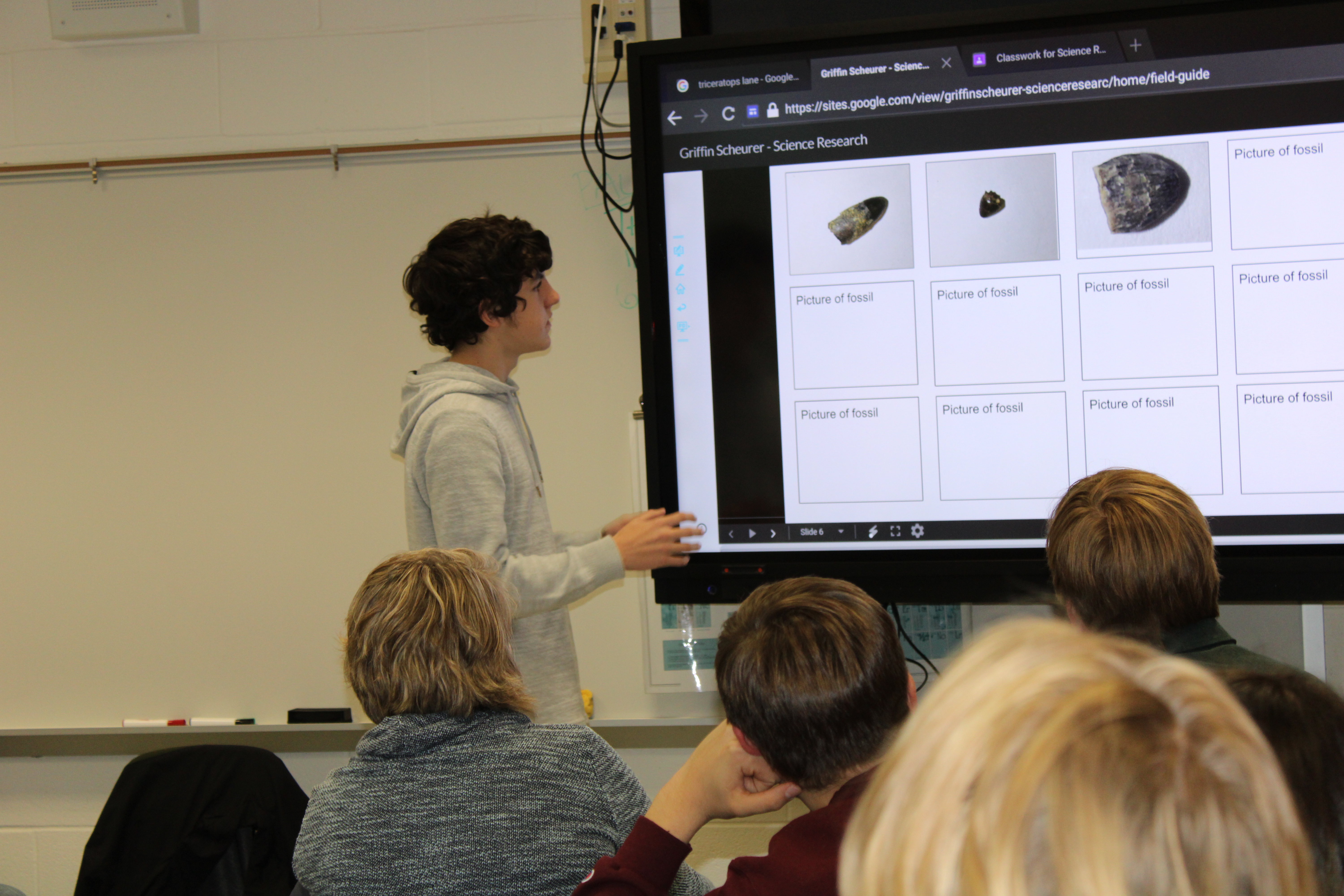
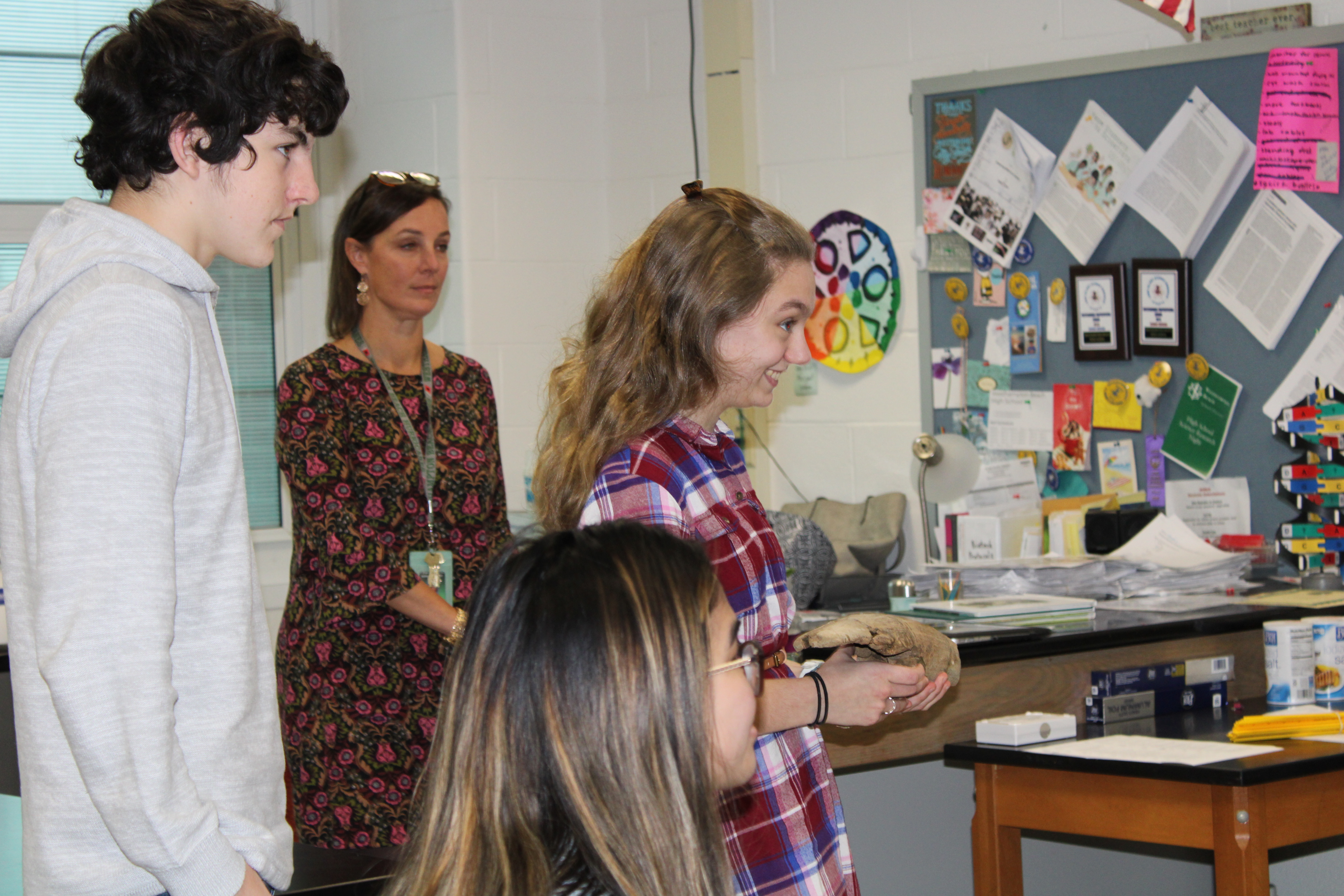
Westhampton Beach High School Sophomores Griffin Scheurer and Julia Blydenbuergh with the triceratops horn they've been studying. RACHEL VALDESPINO
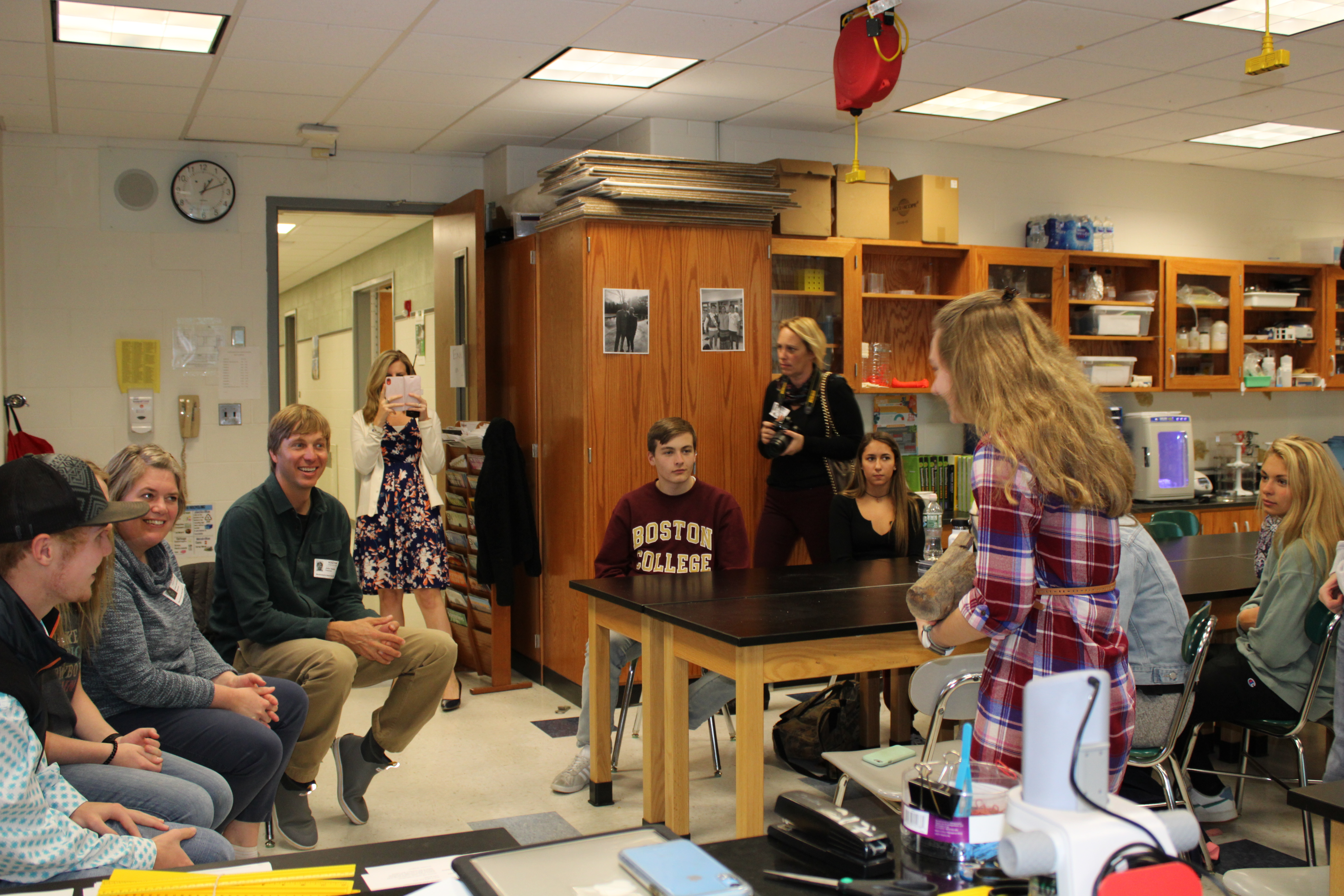
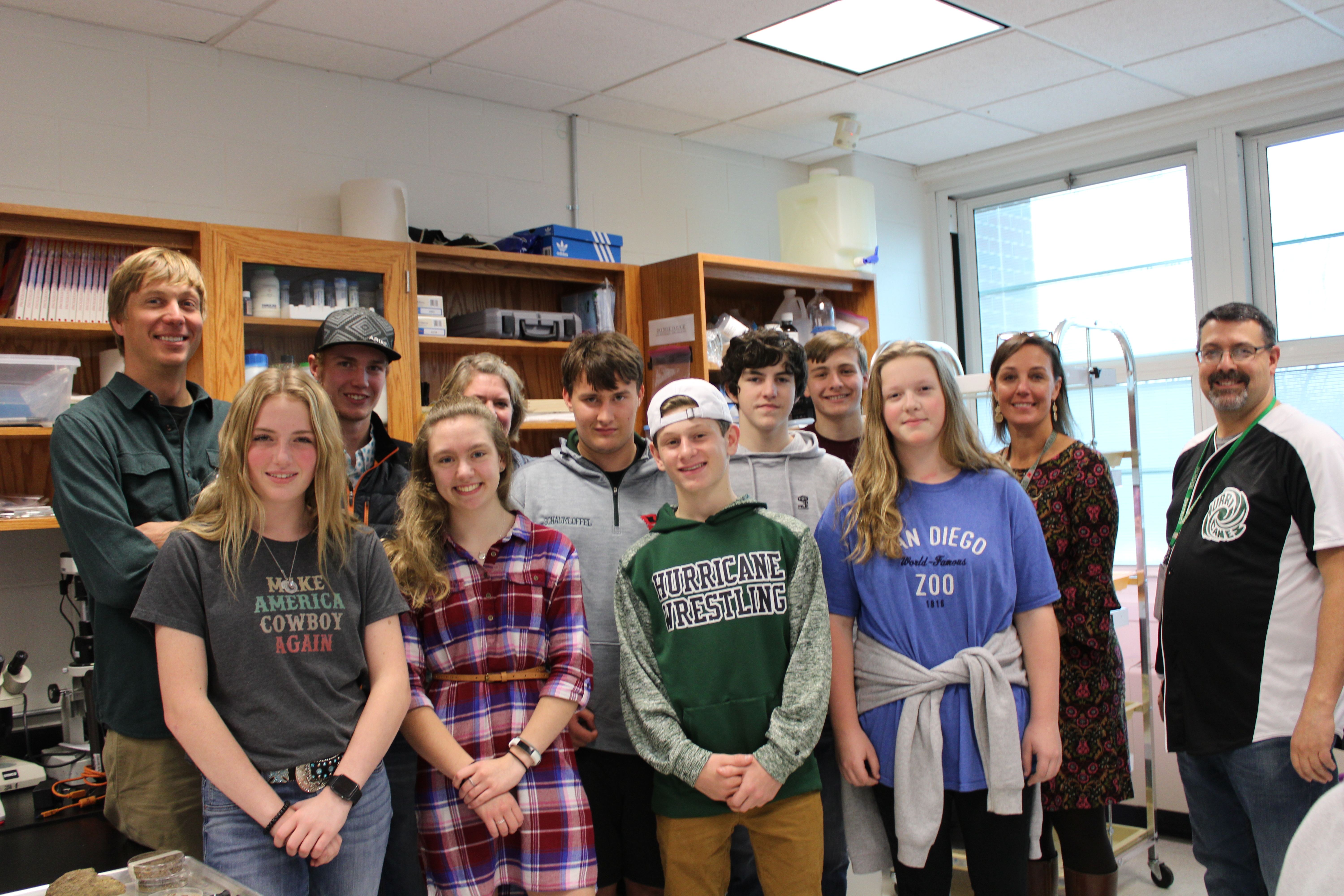
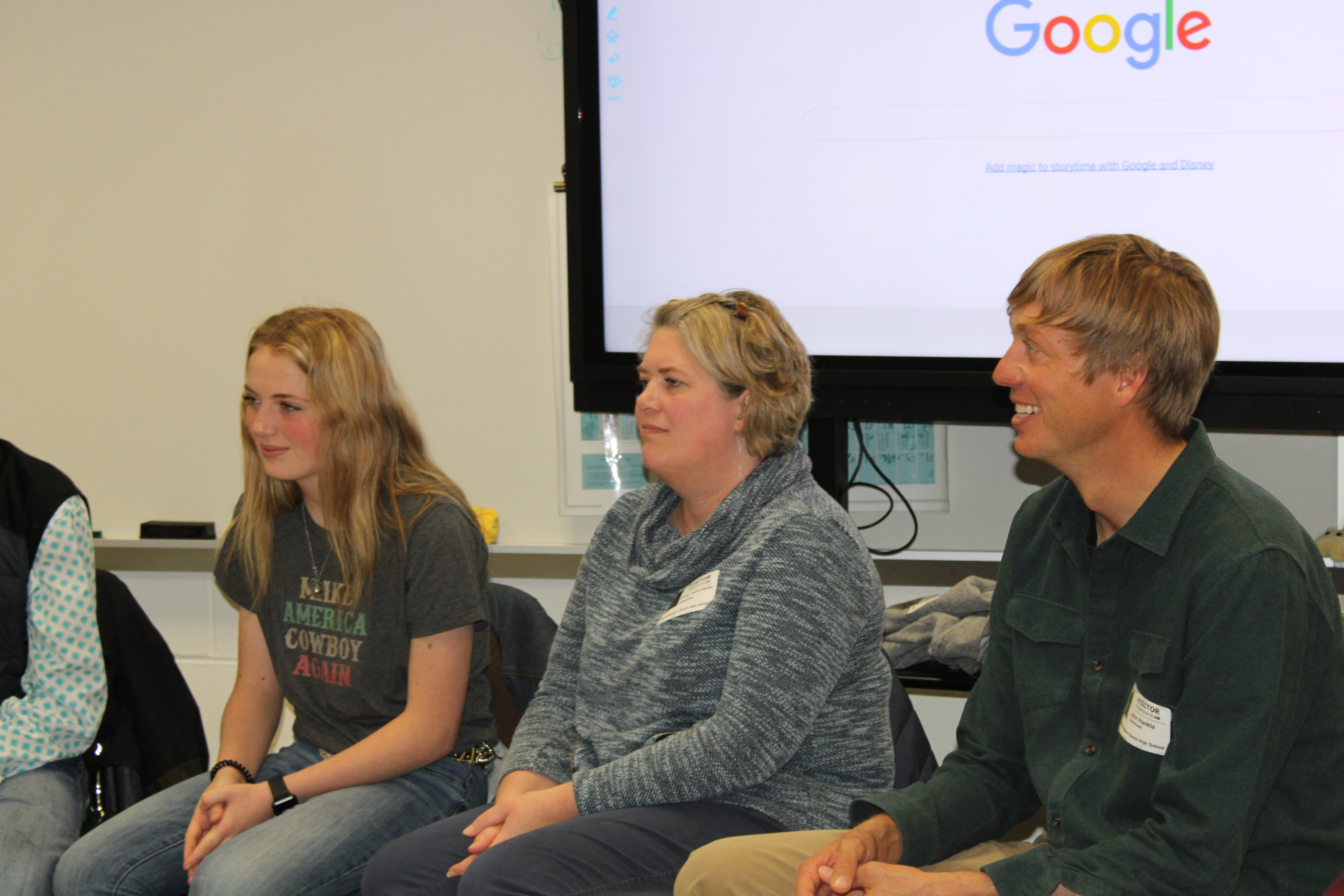
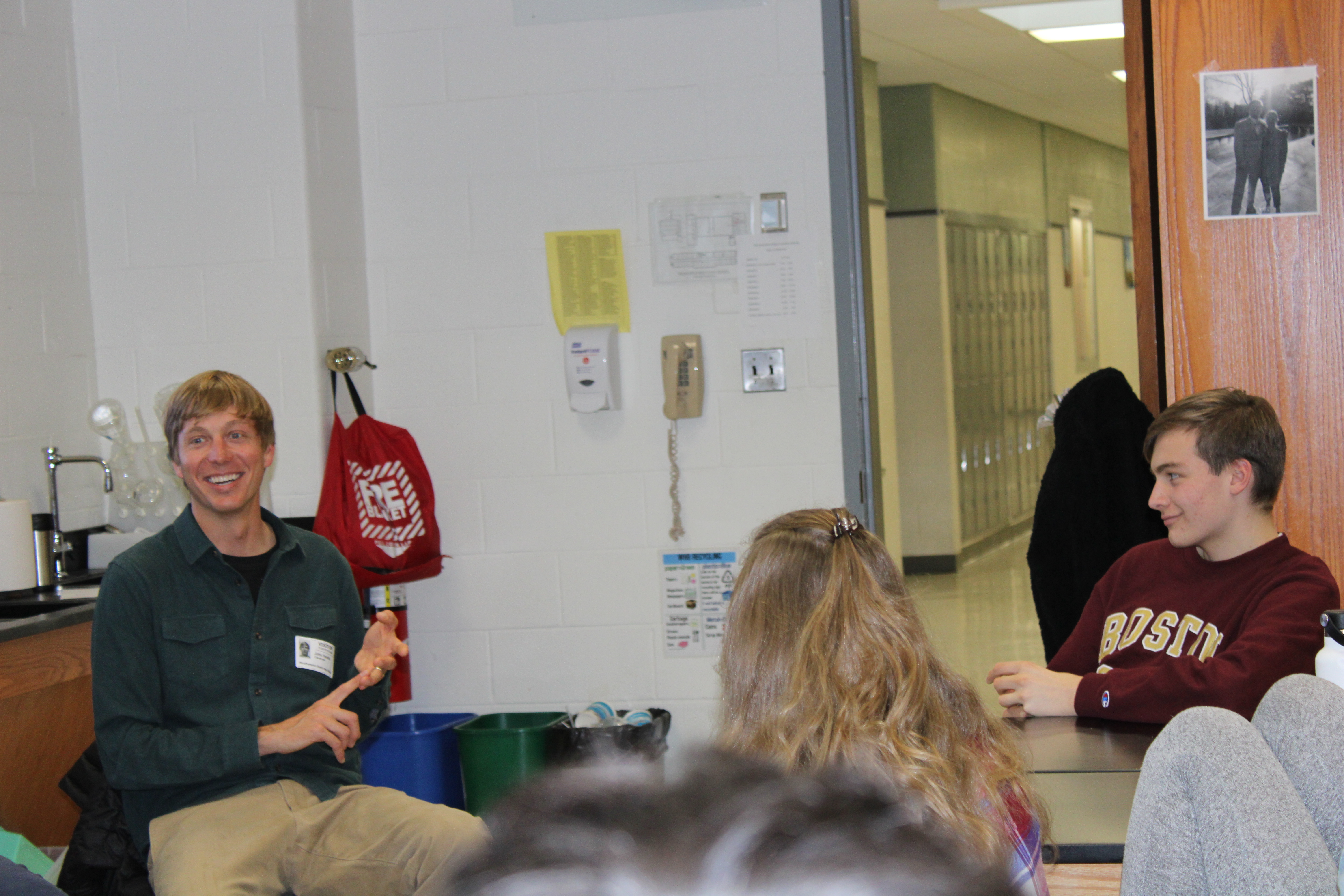
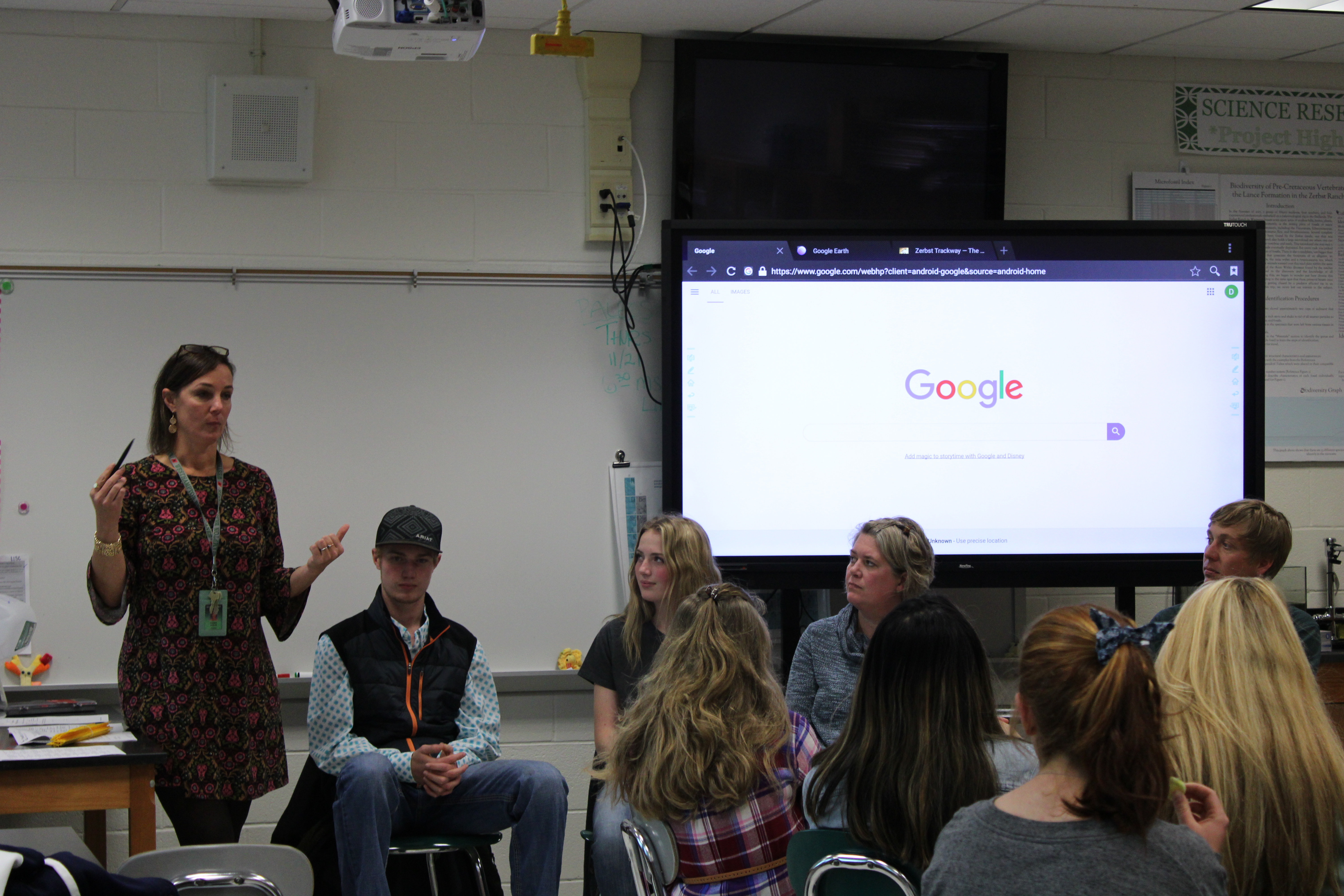
Paleontologist John Hankla visited science research students in Dr. Dianna Gobler’s class at Westhampton Beach High School on Friday, November 22.
Mr. Hankla reconnected with students who had previously participated in the district’s PALEOS field research program. The PALEOS program is an annual trip to the Zerbst Ranch in Wyoming, where students are given the opportunity to work alongside paleontologists in the field — one of whom was Mr. Hankla.
“They get so fired up out there in Wyoming that they come back to school and they want to continue doing research,” Dr. Gobler said.
Sophomore Griffin Scheurer has been on the trip twice. “I’ve just kind of always had a connection with dinosaurs,” Griffin said. “Since I was little, I had all the books, toys and all that. When I got into middle school and saw this, I said, this is what I wanted to do for so long, and it gave me an opportunity to actually step into the field and see, do I actually want to do this?” he said.
Griffin plans on pursuing paleontology in college.
Julia Blydenburgh, also a sophomore, has also always been interested in science. She was a part of the PALEOS program as well.
“I was always into science but not necessarily paleontology,” Julia explained. “I had friends that had come back from the first trip — it changes you, just the experience alone is amazing. I said to myself, I guess out west is pretty cool, so I’ll give it a try. And, after coming back, it completely changes your outlook on life and on science, too.”
Julia says she definitely wants to continue studying paleontology, but is unsure if she wants to pursue it in college.
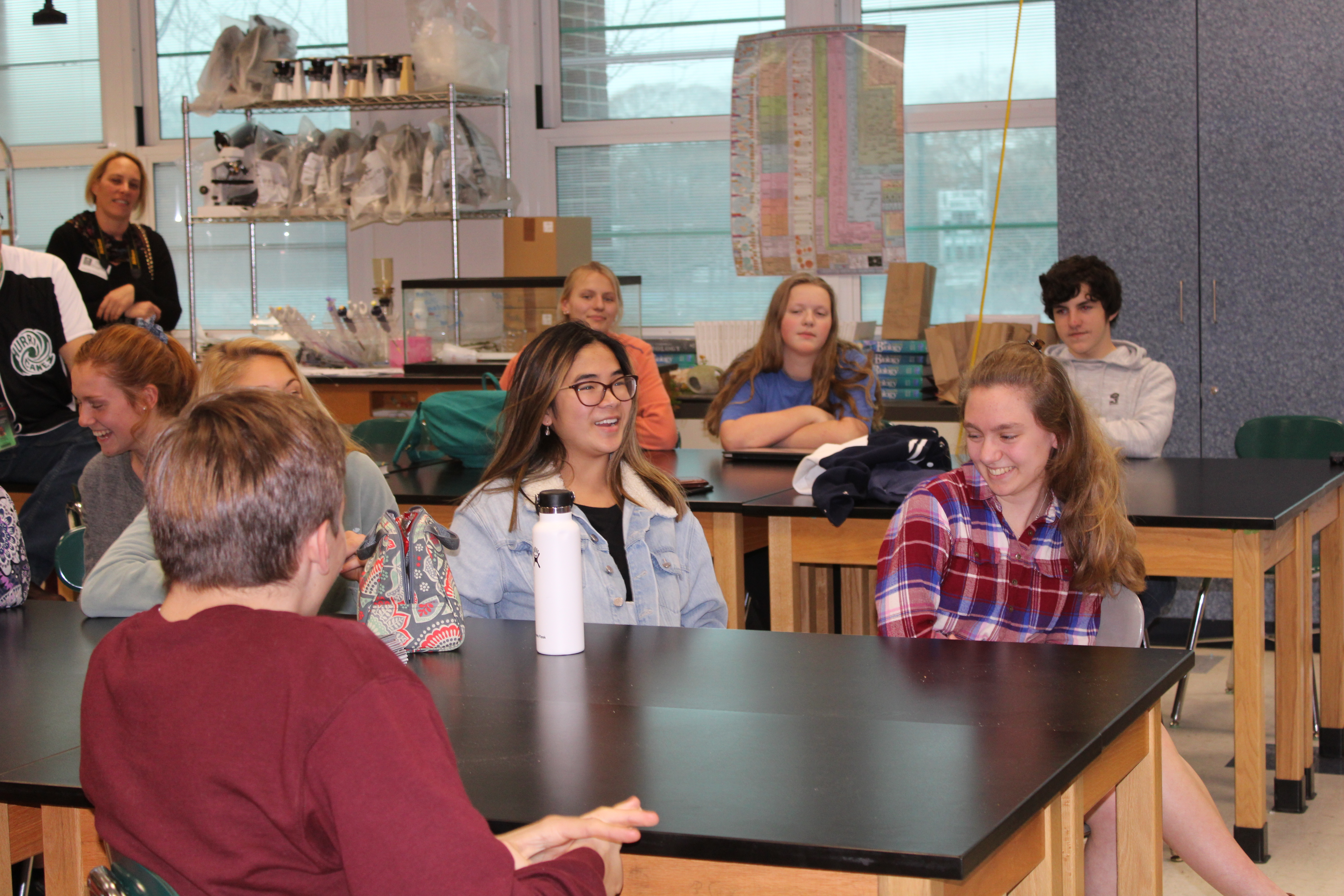
Students in Dr. Gobler’s class were also able to discuss the research initiatives they’re working on with Mr. Hankla.
“I think young people have this imaginative intellect that, if we’re not really careful, we grow out of the older we get. And that is my job is to get fossils and use them to understand ancient life,” Mr. Hankla said.
He added: “When you give the kids a job of looking at a vast barren grassland with cows on it — and it’s land far away from the coast — and you give them a job of finding the alligator fossils and finding the fish fossils and the dinosaur fossils and the palm trees, and putting together a coastal ecosystem, that takes a little imagination to create the ancient world in your mind that you really want to know about. And you have to do that first before you can understand the ecosystems in the past.”


