



 11 Photos

"Angel's Wings" by John Buchbinder.

"Brain Waves" by John Buchbinder.

"Double Rays" by John Buchbinder.

"Erosion" by John Buchbinder.

"Stormy Weather" by John Buchbinder.
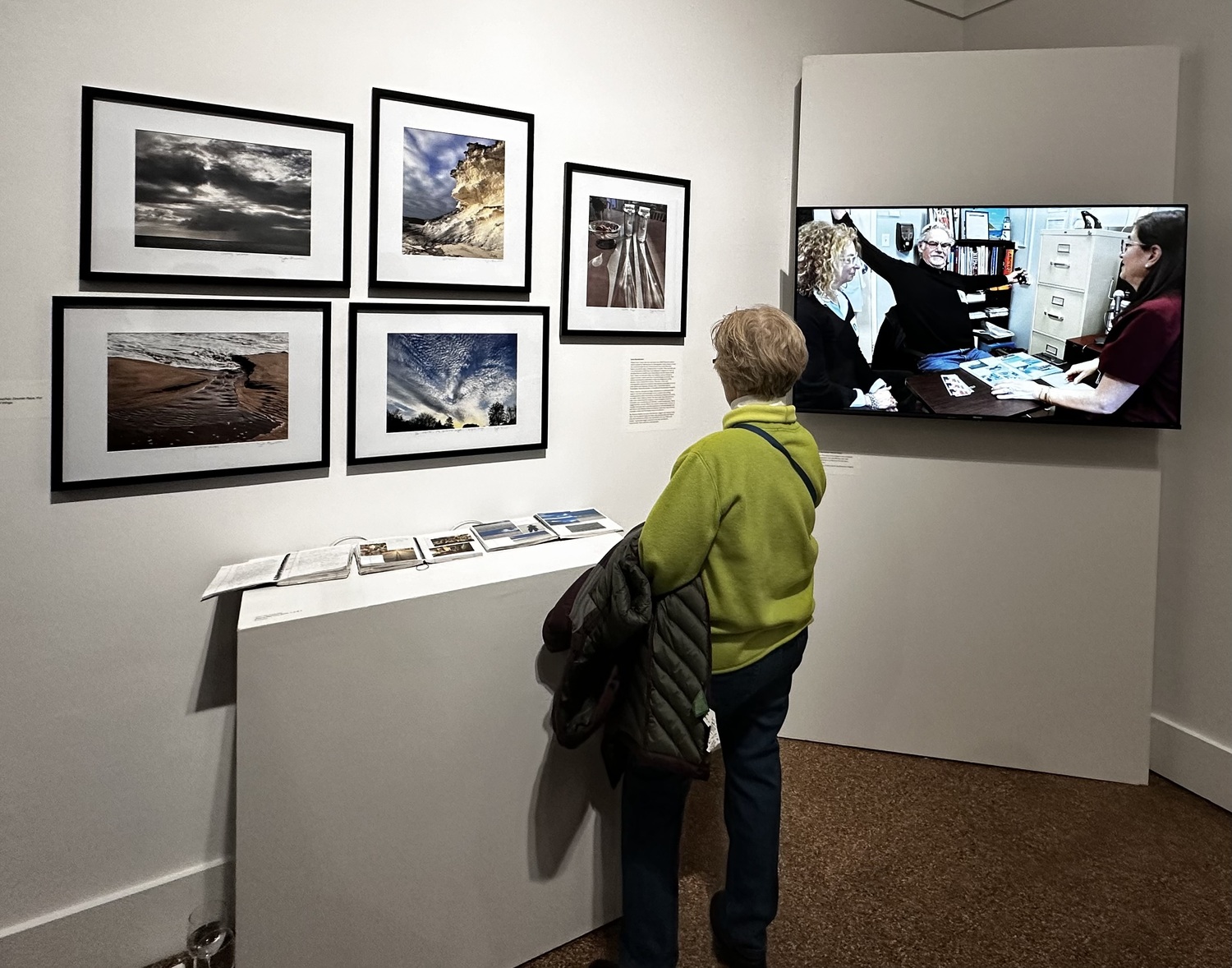
A visitor admires John Buchbinder's photography, which is on view as part of the exhibit "Look at the Book" at the Southampton Arts Center. COURTESY NIKKI SHOMER
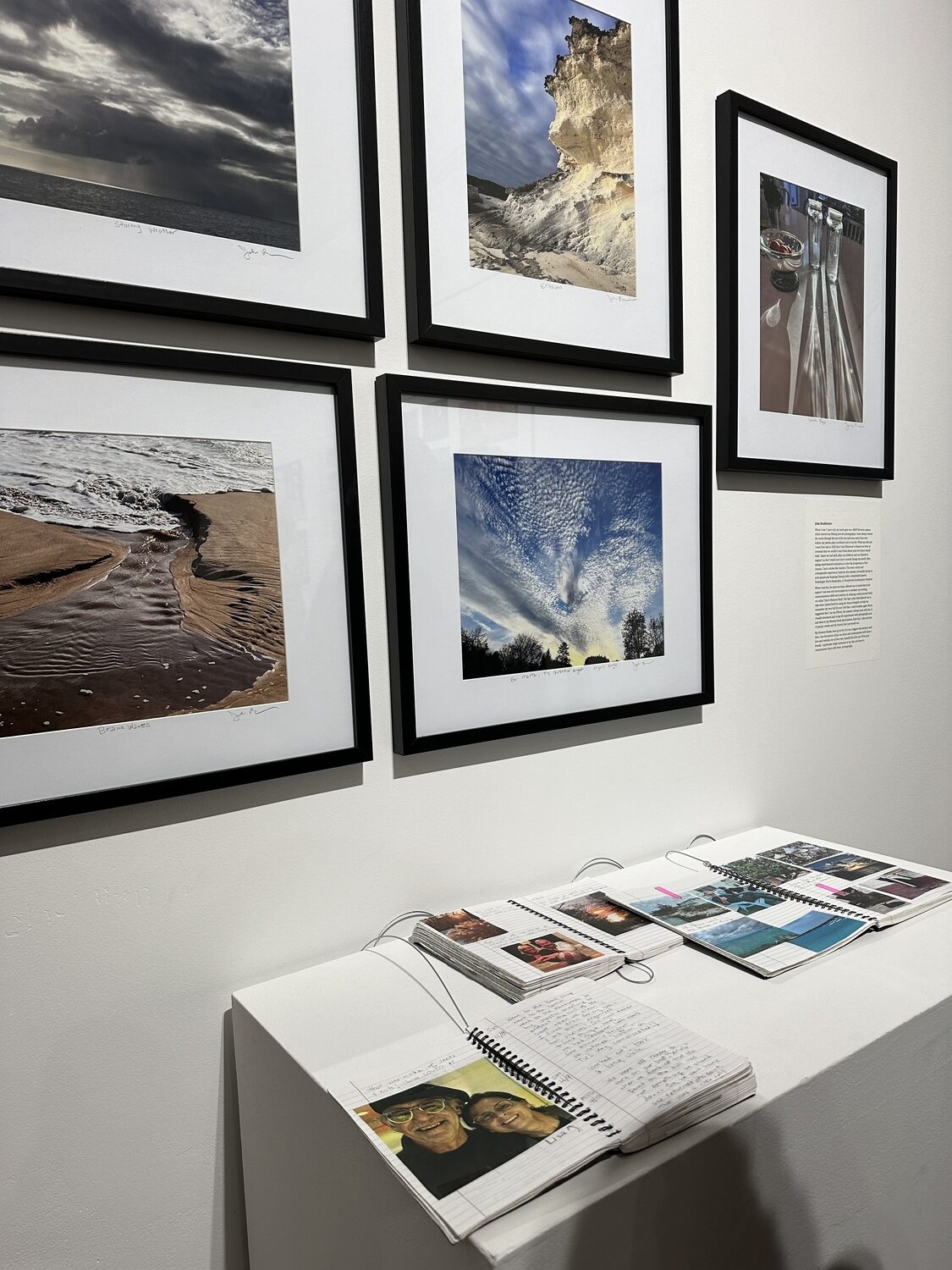
John Buchbinder's photography is on view as part of the exhibit "Look at the Book" at the Southampton Arts Center. COURTESY NIKKI SHOMER
John Buchbinder and Nikki Shomer. COURTESY NIKKI SHOMER
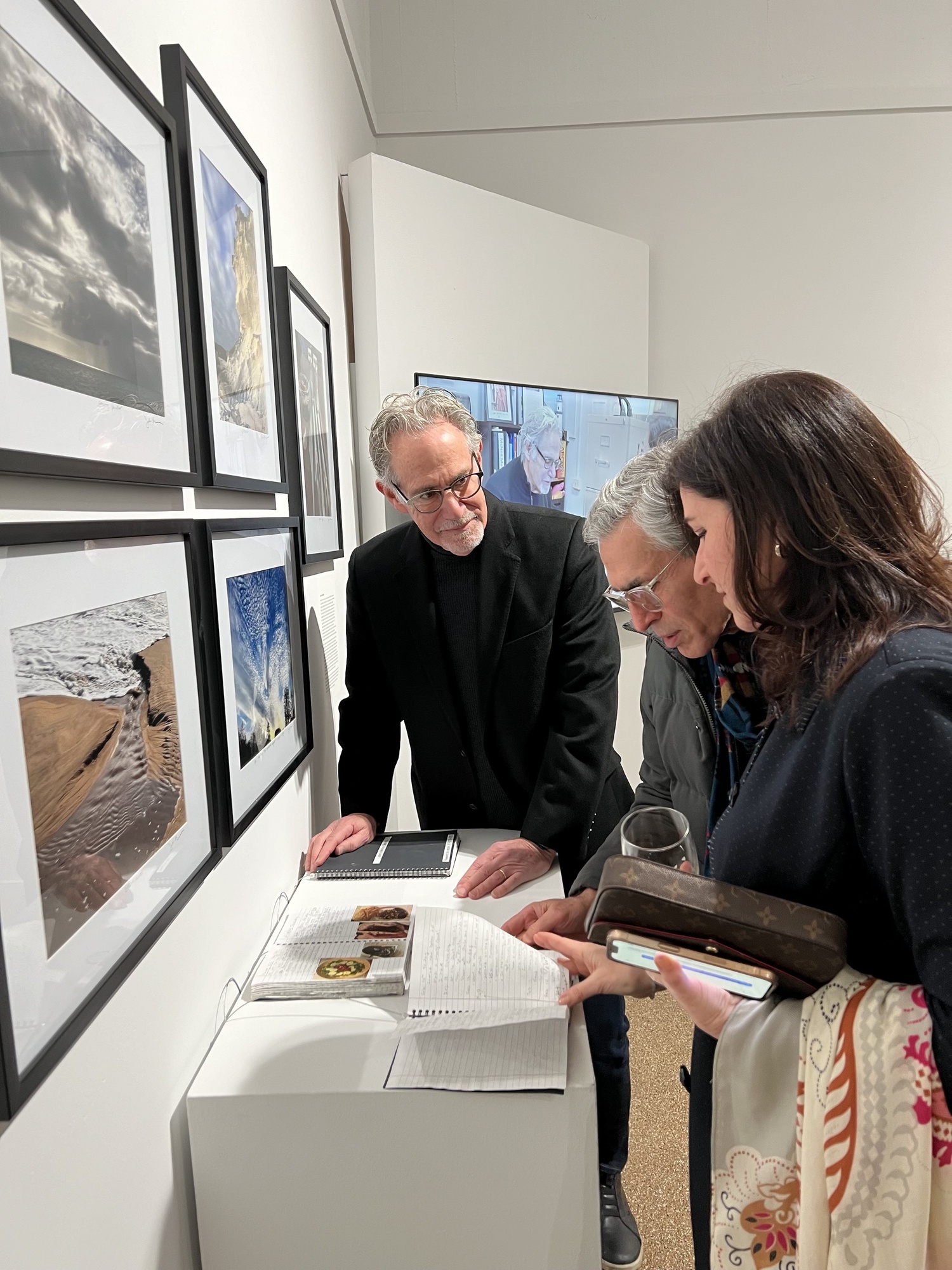
Peter Strugatz flips through one of John Buchbinder's memory books, on view at the Southampton Arts Center in the exhibition "Look at the Book," as Marta Kazandjian and the photographer look on. COURTESY MARTA KAZANDJIAN

Nikki Shomer and John Buchbinder at the opening of "Look at the Book" at the Southampton Arts Center. COURTESY NIKKI SHOMER
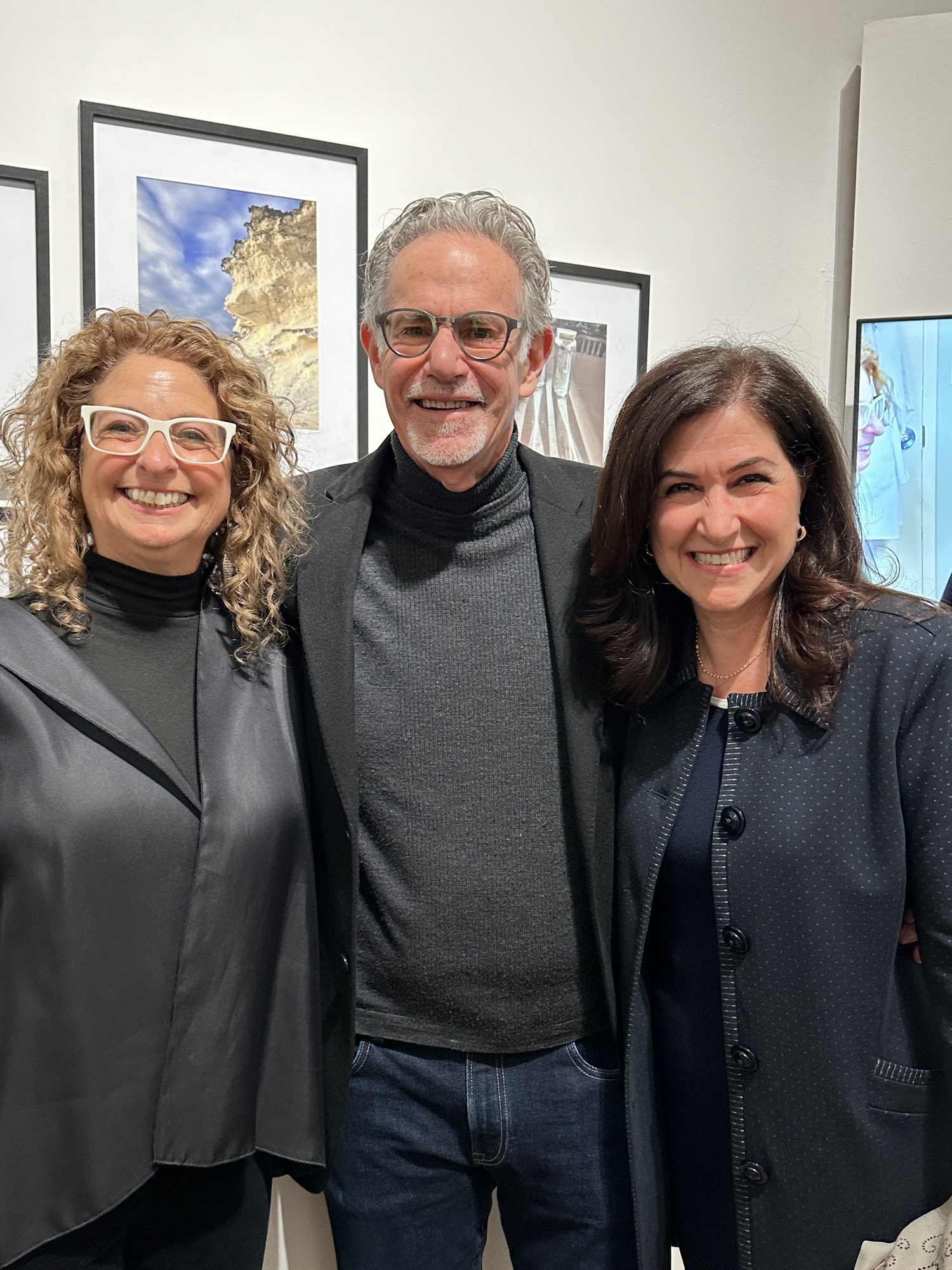
Nikki Shomer, John Buchbinder and Marta Kazandjian at the opening of "Look at the Book" at the Southampton Arts Center. COURTESY NIKKI SHOMER
Eidetic memory — or, more colloquially, photographic memory — is the ability to recall a past scene in detail with astonishing accuracy, just like looking at a photograph and describing it.
For photographer John Buchbinder, the pictures that he captures allow him, in some ways, to step back into his memories — experiencing the sights, smells, sounds and tastes again and again — which is particularly important, and revelatory, because he has Alzheimer’s disease.
“It has been life-changing for us,” his wife, Nikki Shomer, said on Monday, sitting next to her husband at home in East Hampton, their backdrop a wall of family photographs. “This has given us a different kind of sense of hope about life, and John getting recognition for a talent he’s had his whole life and a passionate way of expressing himself. It’s amazing to us.”
“It’s fun,” Buchbinder said.
Through May 4, a selection of the photographer’s work will remain on view in “Look at the Book,” a group exhibition at the Southampton Arts Center. There, on Sunday, the artist and his wife will sit down for a discussion with Marta Kazandjian, a swallowing disorders specialist who heads the speech pathology and swallowing department at Stony Brook Southampton Hospital, about how Buchbinder’s work helps prompt his memory and his ability to speak.
“I feel so grateful for the patients that I have the privilege of working with, but certainly John is one of those people I’ll never forget, because this has changed his life,” Kazandjian said of Buchbinder’s treatment plan. “He feels a purpose. He’s functioning at a very high level, despite the severity — you have to understand the severity — of his illness.”
A Photographer Is Born
While growing up in Connecticut, Buchbinder was gifted a B&W Brownie camera by his uncle. He was 7 years old and he carried it everywhere.
“And that started your passion?” Shomer said.
“Yeah,” Buchbinder replied.
“All through his childhood, he was shooting,” his wife said.
“It’s wonderful. What can I say?” Buchbinder said. “Sometimes it’s good and sometimes it’s really good — the photographs. It’s really wonderful.”
He graduated from the first male class at Vassar College, and then studied art and Italian in Florence, Italy. When he returned to the United States, he earned his Master of Fine Arts in photography from Pratt Institute and went on to manage the dark room for Abraham & Straus department stores, as well as working as an assistant fashion photographer.
During that time, professional photographers began asking Buchbinder — who had learned basic building skills from his parents — to construct dark rooms in their studios. Dark rooms led to bathrooms, which led to kitchens, and soon, he started working as a general contractor, renovating historic brownstones and townhouses across New York’s five boroughs.
A marriage, two daughters, Inga and Siggy, and a divorce later, Buchbinder met Shomer in 1996. She described their life together as a “joyous ride.”
“It’s a second marriage for both of us,” she said, “and the second time was clearly the charm.”
“Yeah,” he said, rubbing his wife’s back.
“And we just feel very, very lucky that we met each other,” she said, “because we’ve lived a remarkable, wonderful, fun life together.”
The Diagnosis
In 2016, the couple retired and moved from Brooklyn to East Hampton full-time, and immersed themselves in their new lifestyle. They had no trouble filling their days, Shomer said, between traveling, spending time with friends and sailing. Buchbinder even joined the East End Classic Boat Society, in which they both found community.
But, just four years later, Shomer noticed her husband asking the same question multiple times in a short span, or repeating stories to his daughters. An Alzheimer’s diagnosis shortly followed. He was 66.
“What was your emotional reaction? How did you feel, Sweetie?” Shomer asked.
Buchbinder was silent for a few seconds. “I didn’t really …” he started.
“It was hard, right?” his wife prompted.
“Yeah,” he said. “It’s hard.”
“It was. It was hard for both of us, and then it was hard to tell the girls,” she said. “They’re very close to their dad, very different people, but they adore him. Over time, we started to share it with our nearest and dearest.”
Buchbinder began an experimental medication to slow the progression of the disease. It felt like a ray of hope, his wife said, until he started suffering terrible headaches and searching for words to say. One day out on the water, when the veteran sailor had trouble docking the boat, Shomer knew something was wrong.
They soon learned that he was experiencing stroke-like reactions to the medication and, as a result, lost his ability to communicate.
“It was a profound effect on him at the beginning,” Shomer said. “There were various measures taken to help him and then eventually we found our way to Marta — and that was a game changer.”
“She’s wonderful,” Buchbinder said. “She gets me.”
Finding a Tool Through Art
When Kazandjian first met Buchbinder in 2022, she evaluated and treated him as a stroke patient, she said. He had difficulty organizing his thoughts and word finding, but he could still comprehend language.
The primary issue, she said, was his severe amnesia — which he still experiences.
“If I tell him something that I want him to remember, in about 30 seconds, he’s unable to recall that information,” she said. “But when he sees a photograph of something, he’s able to retain that information much longer.”
This discovery came after Buchbinder started keeping a daily journal in a spiral-bound notebook to help him remember. They called it “John’s Memory Book” and, after observing his strong visual and visual perception skills, Kazandjian suggested adding photos.
It started with labeled pictures of his friends at the boat society, she said. And when they saw success, they added more and more.
“What was shocking to me, and I remember presenting this to the neurologists, was that when John sees his pictures, he actually remembers what happened,” she said. “He remembers being there.”
Using his iPhone, Buchbinder takes photos of the people, places and beauty that he sees as he moves through each day — from pictures of his family and the ocean to dinners with friends and a hawk perched on a white windmill blade, a stark contrast against a crisp, blue sky.
“This is a beautiful thing: It’s a sun and it’s dark and it’s beautiful,” Buchbinder said, pointing to a photo of rays peeking through the clouds. “That’s one of the things that I really, really love.”
He flipped to another page. “There’s all kinds of stuff,” he said, looking at a photo of windblown sand. “This is just ripples.”
In his twice-weekly sessions, Buchbinder tells Kazandjian about his photos — in detail — from pointing out the colors he likes to simply explaining why he took it. And, over time, she noticed them getting better and better.
With a little bit of networking, the speech therapist connected with Southampton Arts Center curator Christina Strassfield, who offered Buchbinder a place in “Look at the Book” on the spot, Kazandjian said.
A Rich Life — Together
On February 24, the exhibition opened — and Buchbinder saw his work in a gallery setting for the first time since graduate school.
“I was right next to him because people were coming up to him and saying, ‘Oh my God, your work is so beautiful. Tell me more about it,’” Kazandjian said. “And so to get ready for the opening, I had a cheat sheet ready for him so that he had phrases that he could read. We did so much preparation, we took photographs, so he was reviewing that in his memory book.”
His fourth memory book begins with a picture from opening night and he still makes his daily entries, which are more photos than writing these days, as the disease has progressed, his wife said.
Together, they live by a single metric: “Are we still having fun?” she said — to which the answer is a resounding “yes.”
They still travel, they still see their friends and Buchbinder still helps build boats. When Shomer loses her train of thought, her husband jokingly exclaims, “Uh oh!”
“Our life is still our life,” she said. “We live in the present, we are mindful because we don’t know what the trajectory of this disease is and what the timing is, where it will become more challenging, but for now …”
“We’re having fun!” her husband interjected.
“We’re having fun,” she said.
They turned toward each other, smiled, and burst into laughter.
John Buchbinder, Nikki Shomer and Marta Kazandjian will discuss how his photographs help prompt his memory and support his ability to speak during a talk on Sunday, April 21, at 1 p.m. the Southampton Arts Center. Admission is free. For more information, visit southamptonartscenter.org.


 Michelle Trauring on Apr 17, 2024