


 3 Photos
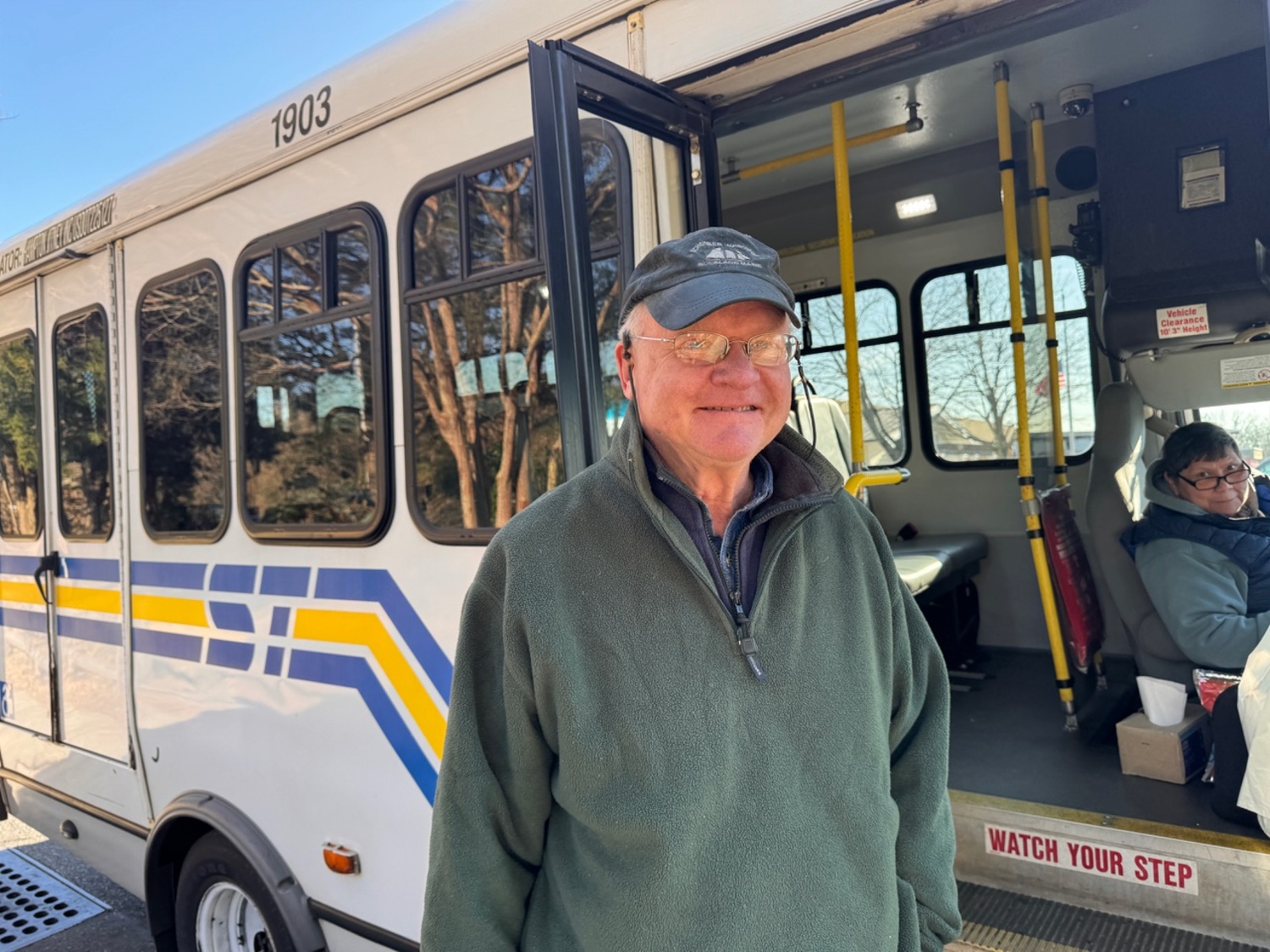
Michael Pour said he finds the current scheduled buses reliable enough to get from his home in Clearwater to run errands in East Hampton Village. He said that until cellular service in the region is improved, the on-demand system the county plans to switch to might be difficult to access for some Springs residents. MICHAEL WRIGHT
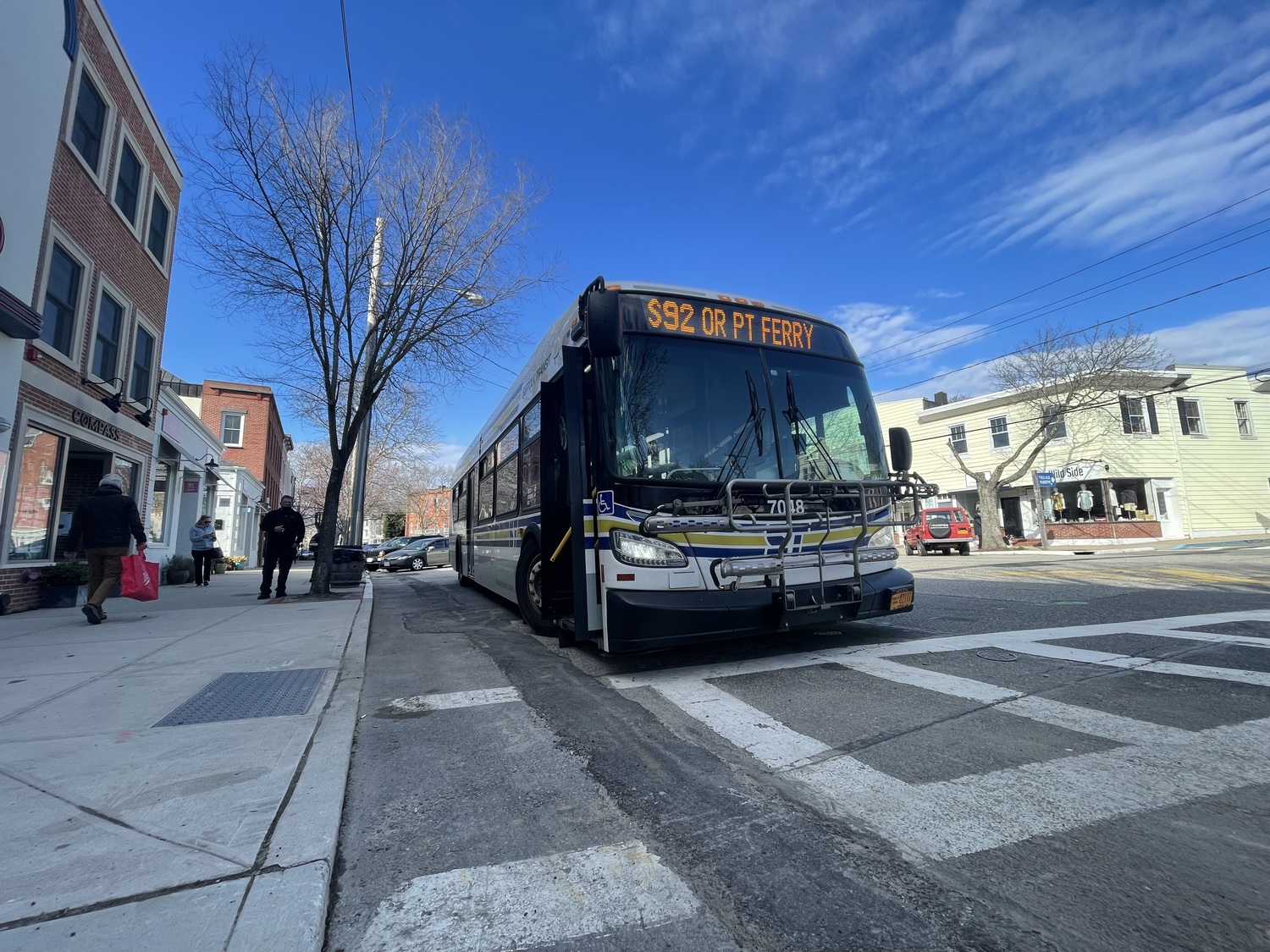
The on-demand bus system Suffolk County has been using the past year and a half for the 10A bus route, which loops from Sag Harbor to Southampton Village and back, has more than doubled ridership on the route. The county has delayed implementation of the system for the 10B and 10C routes in East Hampton because of a recall on the small buses planned for the routes. MICHAEL WRIGHT
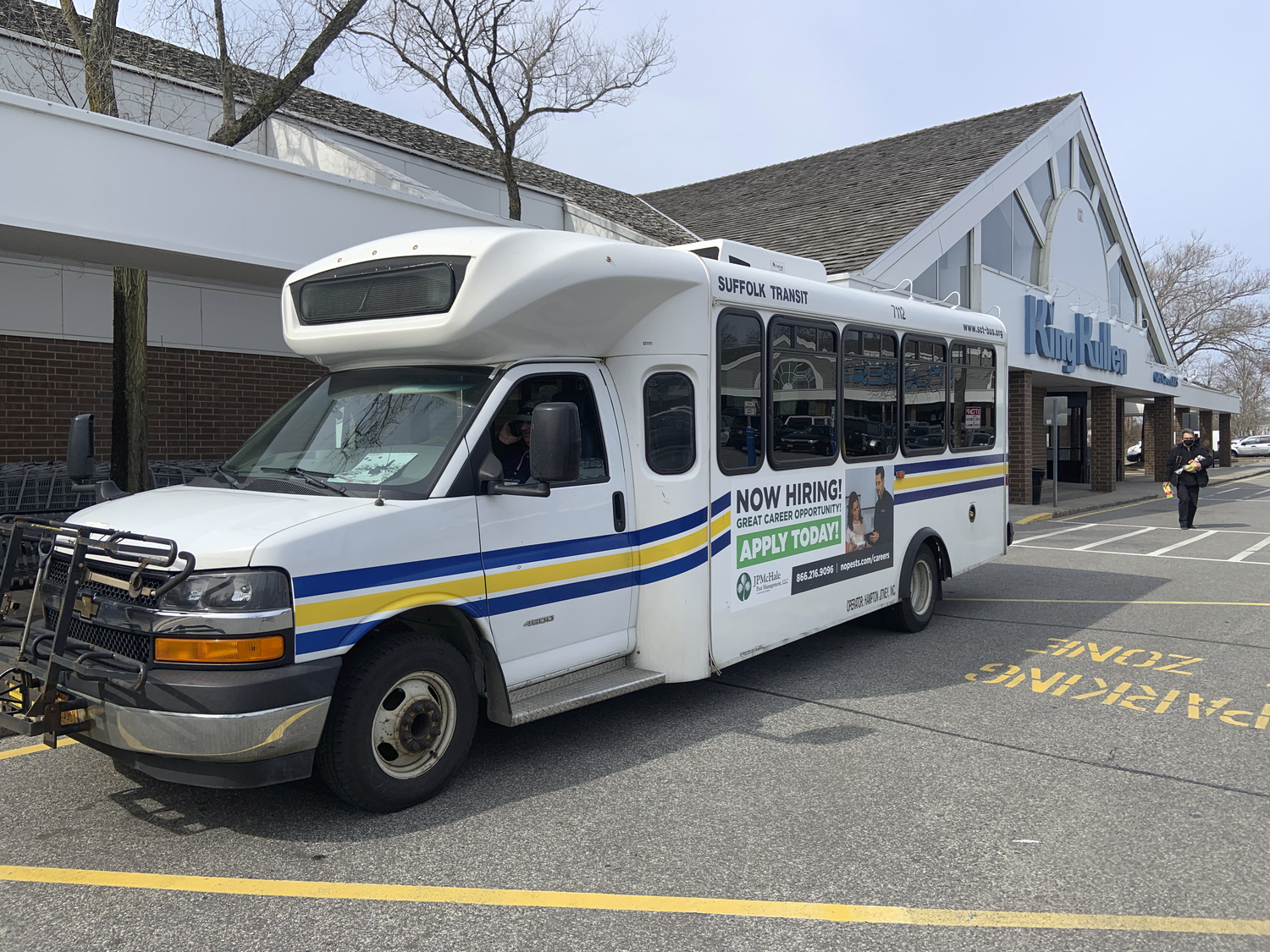
The on-demand bus system Suffolk County has been using the past year and a half for the 10A bus route, which loops from Sag Harbor to Southampton Village and back, has more than doubled ridership on the route. The county has delayed implementation of the system for the 10B and 10C routes in East Hampton because of a recall on the small buses planned for the routes. MICHAEL WRIGHT
Allowing riders of a Suffolk County bus route that loops between Sag Harbor and Southampton Village to hail buses through an “on demand” mobile phone app, rather than relying on a decidedly unreliable schedule, has more than doubled ridership on the route and cut wait times for a bus by as much as 45 minutes, according to Suffolk County Transit data.
The on-demand format was due to be expanded to two East Hampton routes this fall but has been delayed by a manufacturer’s recall on the buses that were to be employed, and is now expected to be implemented next year.
The adoption of an “on-demand” system for the 10A bus route spiked ridership on the route by nearly 115 percent since it was implemented, first as a pilot project in 2021 and now as the permanent system for the route under Suffolk County’s “Reimagine Transit” initiative that overhauled the county’s $41 million bus program countywide.
Suffolk County Legislator Bridget Fleming, who hails the 10A bus regularly to a corner near her home in Noyac for rides to her legislative office in Southampton, said this week that the number of rides on the 10A route’s buses leapt from an average of 6,100 in the years before the on-demand system was started in 2021 to more than 13,000 since it switched to on-demand.
“I’ve seen the diversity of ridership grow so much — it’s really heartening,” Fleming said. “Word has gotten out in various employment groups, and students from the high school who can take it to SYS, and people who are going for a night out in Sag Harbor — I’ve seen people dressed up to go out who see that’s it’s better than taking a $50 Uber or Lyft each way.”
The on-demand routes are somewhat more expensive to operate than the fixed routes: The costs of the 10A are up about 20 percent from the fixed route because of the need for more buses and drivers. But with the jump in ridership, the cost to the county per ride provided has actually decreased by 20 percent, Fleming said SCT has found.
“It’s not inexpensive, relatively speaking, because we are a small population, but it shows that there is an appetite for these services on the East End,” Fleming said.
And the reliability is vastly improved. Prior to the switchover, the buses following the regular route were often so far off schedule that the departure schedules nearly overlapped each other, with riders at times complaining that their bus had appeared to depart early — a cardinal sin in mass transit — though it actually had been a bus that was supposed to have departed nearly an hour earlier.
Fleming said county engineers have calculated that the average wait time for a 10A bus was reduced by 45 minutes with the on-demand system.
The buses can be hailed with a phone call for those without smartphones, but it is on the phone apps that the on-demand bus system is most efficient. Riders can order a ride, set a pick-up point on the map — the drivers will take some short jaunts off the main roads for a pickup, unlike the fixed schedule buses — and then can watch as the bus makes its way along the route toward them so that they can time their arrival at the pickup point to minimize waiting outside. The ride, which costs $2.25 regardless of destination, is paid for through the app.
The county expanded the 10A route to seven days on October 29, the first time the route has been run on weekends — another move that Fleming said she hopes will boost use of county buses.
The introduction of on-demand bus service to the South Fork was the main change to service proposed in the Reimagine Transit initiative. Along with the 10A, the on-demand buses are to replace the current 10B and 10C routes that loop from East Hampton Village north into Springs and east to Montauk, connecting back in the village where the S-92 bus, which loops from East Hampton to Orient Point.
The East Hampton on-demand system was supposed to kick off this fall but has been delayed by a mechanical recall on the buses the county was acquiring for the new program, Fleming said. But the legislator, who is leaving office at the end of this year, said she expects that once the mechanical issue is taken care of, the new bus system will be implemented — though a firm time frame has not been given.
There is no rush, one rider, Michael Pour, said this week — since East Hampton’s notoriously poor cellular service would currently make hailing a bus with a mobile app a frustrating task in much of northern Springs.
“I live up in Lion Head Beach, and there is a terrible lack of signal there, so you couldn’t reliably send for a bus — or call 911, or order pizza,” he said after disembarking recently from a 10B bus in the village, where he planned to hit the gym at the YMCA and then grab some groceries, before hopping the bus back to Springs.
“So until they fix the cell service, there’s no use in the on-demand buses,” he said, acknowledging that the new cellular tower currently being outfitted with cellular antennas could be the linchpin needed in his neighborhood when it is powered up later this winter.
Another 10B rider, Suzette Margolis, said that she is very eager for the on-demand system to get up and running, both because of the feature that allows riders to see where the buses are in their loop and also because the drivers can deviate somewhat from the route to pick up riders closer to their homes rather than requiring them to walk to the route.
Margolis, who is 59 and lives part-time on a side street nearly three-quarters of a mile from Springs-Fireplace Road, said that the walk down to meet the bus is a daunting one, especially in bad weather and with an uncertain waiting period before it will arrive. She said she had read about the on-demand proposal and the pilot program in Sag Harbor and has been eagerly awaiting the start of it in her neighborhood.
“I hope I will be able to get them to come up my street, or at least to my corner,” she said. “It should be such an easy thing to catch a bus from town to town out here, but it’s not. It would be so much easier to live here if there was good public transportation.”
As she gets ready to hand over the reins of her county seat to Legislator-elect Anne Welker, who is from Southampton, Fleming said that she is pushing the success of the 10A as an incentive to expand public transportation. She said that her successor and her staff — much of which is remaining in place when Welker takes over — will have to be very vigilant as a new administration takes over the county to ensure that funding for the local routes is kept in place.
She also said her office is working to get the South Fork Commuter Connection built into the Metropolitan Transportation Authority’s 20-year capital plan, putting a permanent funding source behind the grassroots coordination of the Long Island Rail Road and local bus contractors.
“The fact that this on-demand system has been so dramatically successful is something the railroad should consider — along the lines of ‘If you build it, they will come,’” Fleming said.
“It’s important that if people will appreciate a highly functioning transportation system to make that known, because it needs to be kept in the public view for people to trust that it’s a reliable system,” she added. “It’s not perfect, but it’s really good compared to what we once had.”


 Michael Wright on Dec 5, 2023