Sag Harbor Express

Save the Façade, Sag Harbor Architectural Board Chair Tells the Yacht Club

icon 2 Photos
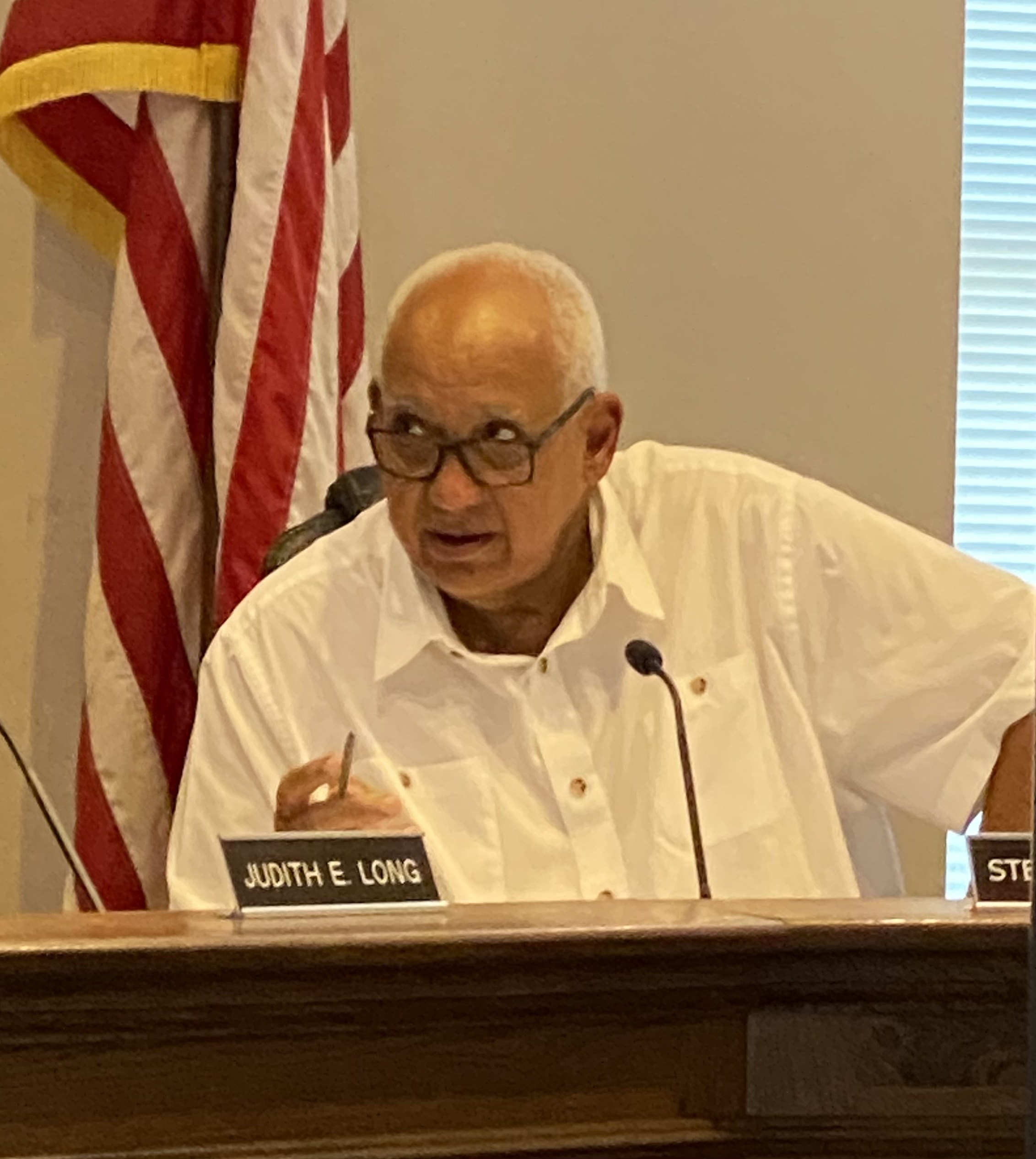
HPARB Chairman Steve Williams

HPARB Chairman Steve Williams

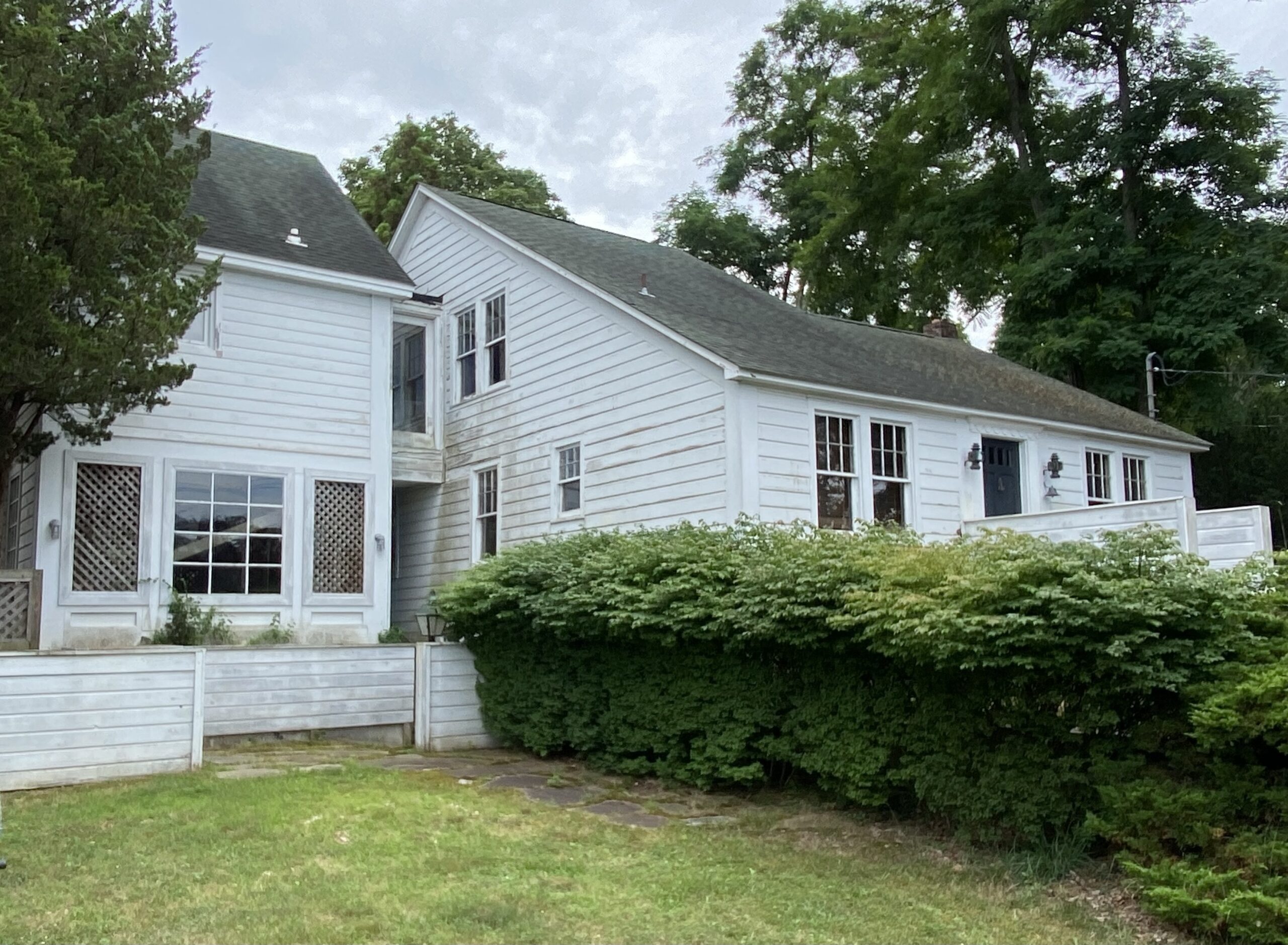
The original 1930s facade of the Sag Harbor Yacht Club property at 42 Bay Street is the section that contains the front door and the two windows to the left of it. The chair of the Sag Harbor Historic Preservation and Architectural Review Board wants to see the facade preserved as part of any new structure to be built by the club as headquarters for its affiliate Maycroft Club.   PETER BOODY

The original 1930s facade of the Sag Harbor Yacht Club property at 42 Bay Street is the section that contains the front door and the two windows to the left of it. The chair of the Sag Harbor Historic Preservation and Architectural Review Board wants to see the facade preserved as part of any new structure to be built by the club as headquarters for its affiliate Maycroft Club. PETER BOODY

Peter Boody on Nov 1, 2022

The Sag Harbor Yacht Club’s bid for permission to tear down most, if not all, of the ramshackle house it owns at 42 Bay Street and rebuild it as a new meeting space for its affiliated Maycroft Club went through a certain shift before the village’s Historic Preservation and Architectural Review Board on October 27.

In a matter of minutes, the club’s attorney and architect adjusted course as they seemed to accept HPARB Chair Steven Williams’s argument that the club could preserve the modest two-window façade of the 1930s cottage at the core of the structure and incorporate it in the future Maycroft Club project.

Williams urged the club’s architect, Lee Skolnick, and attorney, Dennis Downes, to think of the Helmsley Hotel in New York, the façade of which he said had been preserved while an entirely new 30-story building was put up behind it. “Let’s use that as a marker,” said Williams, who said he has construction experience in historic renovation in New York, including the lobby of a 1917 theater designed by Thomas W. Lamb.

The board made no decision on the application, tabling it for a required public hearing. No date was set, although Downes said it probably would be during the board’s December 22 meeting.

With its multiple additions and modifications, the club’s structure at the corner of Bay and Burke streets is within the Sag Harbor Historic District and was listed in the district’s 1994 original nominating inventory as a “contributing structure” because its age was greater than 50 years. Federal rules for national historic districts require that review boards prioritize the preservation of historic structures, Williams noted.

Downes had started off the club’s presentation arguing that building has “no historic significance other than it was built in the 1930s” and said, “What we would like to do is demo as much of the building as possible” because it was too poorly built and is too worn out to salvage.

Skolnick, who recently transformed the historic 1840s Methodist Church on Madison Street into The Church arts center for Eric Fischl and April Gornik, is himself a previous owner of the club’s property who designed additions for the owner that came after him, Downes said.

Skolnick described the house he created for artist Susan Rothenberg in the 1980s as “a charming play on a waterfront industrial building,” which later “had a lot of changes made to it, mostly for the worst.” He said he had found “a lot of the original construction” to have been inferior and that it needed to be replaced “to meet any codes, particularly energy codes.”

“We’re asking to demolish portions” of the structure “but we’re not looking to change the character of the 1980s design,” Skolnick said.

“Why not demolish the whole thing?” asked board member Judith Long.

Skolnick acknowledged that “maybe the entire structure” needed to come down.

Questioned by Williams, Skolnick said the original 1930s portion of the house is “in the worst shape” of all the sections of the house while a two-story addition in the rear and a studio addition at the side could be salvaged. As for the older section, “It’s not salvageable at all,” Skolnick said.

But that’s the portion of the structure the board is charged with protecting, Williams said. “That’s our focus,” he added.

“What is the distinguishing factor” about it, Skolnick asked.

“It’s in the register,” Williams said, referring to the 1994 historic district inventory of contributing structures.

Then came the apparent shift. “The original house,” said Downes, seeming to pivot after an exchange between Williams and Skolnick about whether the board really wanted to “promulgate” the original asbestos siding on the old section, “was a door and two windows and that’s still in existence and we’re going to keep that.”

He said the club would lift up that section and put “a correct foundation” under it and install an elevator to a second-floor meeting room.

Even though Downes soon reiterated the club would “save the façade” if it got permission to “bulldoze” the rest, Williams still seemed frustrated, telling him, “I don’t understand the big deal” with saving that small section of the structure.

Skolnick agreed “we can preserve in place the façade” and build behind it, which he said he had done with “1840s townhouses in Greenwich Village.”

“You’re not going to know the difference when we’re done,” Downes said.

Despite sounding like an agreement, Williams told the two, “I’m just saying to you I’m trying to be cooperative and understanding and you’re just asking for a little too much.” He added, “it’s not going to cost you” a lot more than the “couple of million” the whole project will cost to save the façade.

Before the vote to table the application for a future hearing, board member Megan Toy commented that she also favored maintaining the façade.

You May Also Like:

Stranded Dolphin Dies in Noyac Creek

A dolphin that was stranded in Noyac Creek near Jessup’s Neck and Clam Island in ... 9 Dec 2025 by Stephen J. Kotz

Late-Arriving Permit Means Sag Harbor Dock Replacement To Be Delayed a Year

The good news is that the State Department of Environmental Conservation has issued a permit ... by Stephen J. Kotz

‘The Secrets We Bury’

In Patricia Gillespie’s fascinating new documentary, “The Secrets We Bury,” Jean, now in her early ... by Lisa Wolf, MSW, LCSW

Flag Legends

I was surprised to find out that the Betsy Ross flag is not an official flag of the United States. The case for the Betsy Ross flag’s legitimacy is one of inter-meshing legends — and it begins in Bridgehampton. Bridgehampton had a militia in 1775. John Hulbert, its leader, recruited 68 men. Congress ordered him to escort the British prisoners taken in the Battle of Fort Ticonderoga to Philadelphia, the Continental capital. Hulbert found himself in Philadelphia in late October or early November 1775. Hulbert’s flag had 13 six-pointed stars in a blue field, six stripes deep, in a diamond ... 8 Dec 2025 by Staff Writer

MAGA's End

It would seem that Ed Surgan was somewhat taken aback by the dazzling array of letters from his neighbors castigating his views on the current administration, his acceptance of the methods being used to deport immigrants, and his need to regularly pontificate on his perception of Herr Trump’s brilliance [“Worthy of Debate,” Letters, December 4]. Because he (Surgan) is not exactly a stupid person, and has the ability to string together sentences that might be perceived as those of an educated man, despite their actual content and meaning, he condescends to preach to us as though we were all silly ... by Staff Writer

The Real TDS

Yes, Virginia, there is a “Trump Derangement Syndrome.” You need only peruse the episodic incidents in print of Ed Surgan to verify and isolate its local outbreak [“Worthy of Debate,” Letters, December 4]. To be clear, Virginia, you need not be afraid. The general public is immune to the disease, and likely to remain so. Luckily, as it turns out, as no vaccine will be made available for the next three years, when it is anticipated it will die out. A healthy diet of facts, memory, logic, skepticism, civility, and the ability to reason and think for yourself, along with ... by Staff Writer

Changing Tides

Although my elected position as Southampton Town Trustee has not officially started, I have already jumped in feet first. In my short time visiting the Trustees’ office, my observations of the environment have been of confidence, encouragement, optimism and poise, paralleled with the respect for and recognition of a significant transition. The employees have a level of patience and support that make me feel at ease, and I can recognize the dignity with which they are holding space for the outgoing board. Ed Warner and Scott Horowitz have, without a doubt, left a legacy with their work on the Board ... by Staff Writer

Lawn Madness

Yes, we have a nitrogen problem in our waterways that is devastating the ecosystem we all depend on [“The Nitrogen Threat,” Suffolk Closeup, Opinion, December 4]. Blame it on farmers, blame it on food, when farmers add less nitrogen to groundwater than lawns do. Blame it on cesspools, which do, in fact, add to the problem. But before we continue debating the new septic tanks for years on end — ripping up soil and plants, exposing soil with heavy machinery, and only for those who can afford them — let’s talk about the unnecessary over-fertilization of the ever-present, over-abundant, environment-destroying ... by Staff Writer

It Takes a Village

We owe an enormous thanks to the many, many generous people in the villages of Sag Harbor, North Haven and beyond who have contributed to the food drives for the Sag Harbor Community Food Pantry over the past several weeks, starting with the drive organized by Temple Adas Israel, followed by the drive graciously coordinated by Jessica Soeffer and Deputy Mayor Claas Abraham and the Village of North Haven, continuing with the incredible drive organized by Shawn Sachs and his team at Kidd Squid, then the food drive at King Kullen on a rainy day enthusiastically manned by Sag Harbor ... by Staff Writer

Marsden's Legacy

Sad to witness the recent tree removal at Marsden Street, in preparation for building several large houses on the site. Sad because Marsden could have been so much more. What evolved over the course of the presentations and arguments by both sides is now taking shape: the absolute least favorable outcome for the village. It is clear that the development of Marsden Street is lacking in any type of inspiration; the school lost an opportunity to expand its facilities, and the village lost the opportunity to put its best efforts into housing, perhaps for teachers and first responders. Collectively, the ... by Staff Writer