


 3 Photos
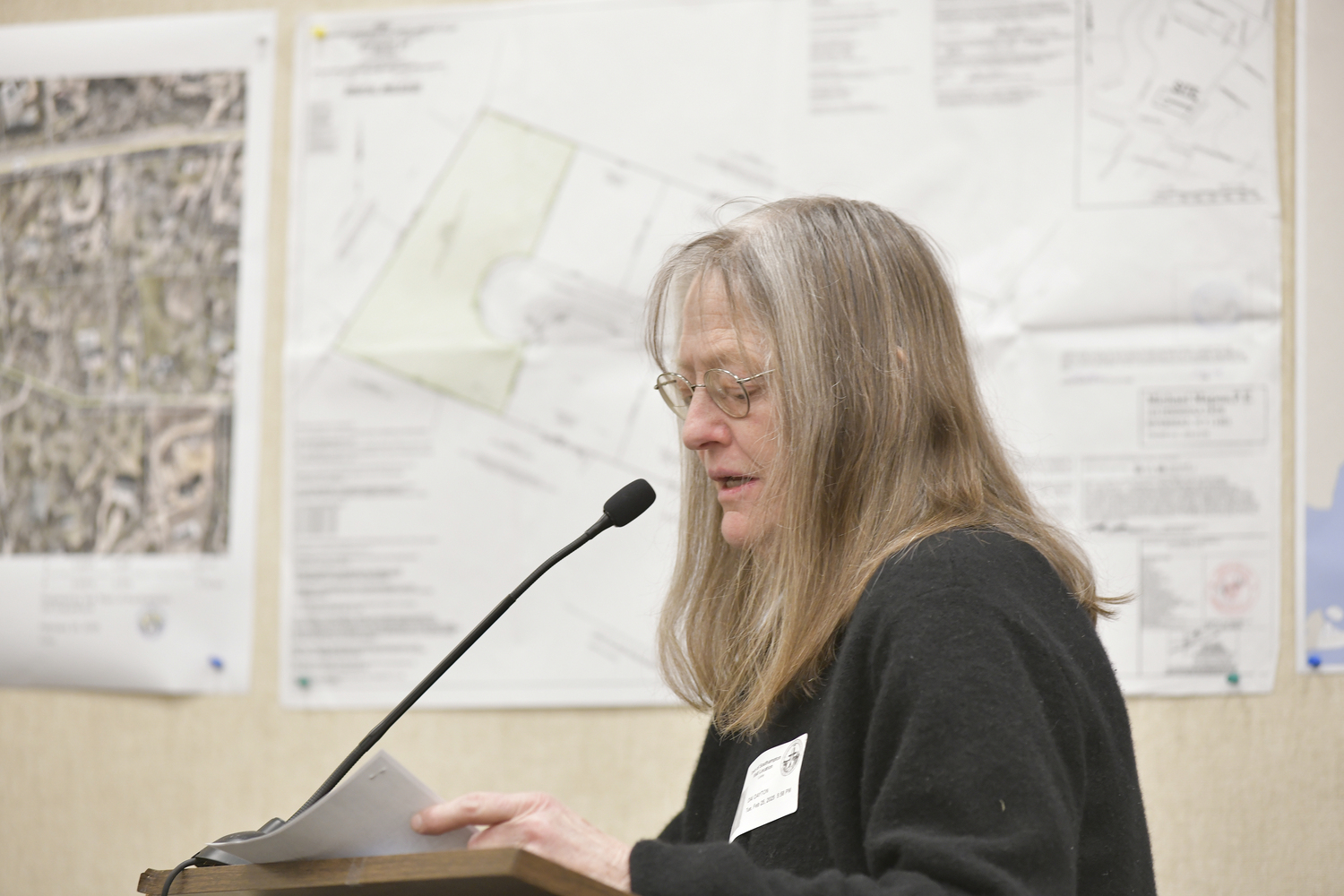
Dai Dayton, president of the Friends of the Long Pond Greenbelt. DANA SHAW

Bob DeLuca, the president of the Group for the East End. DANA SHAW
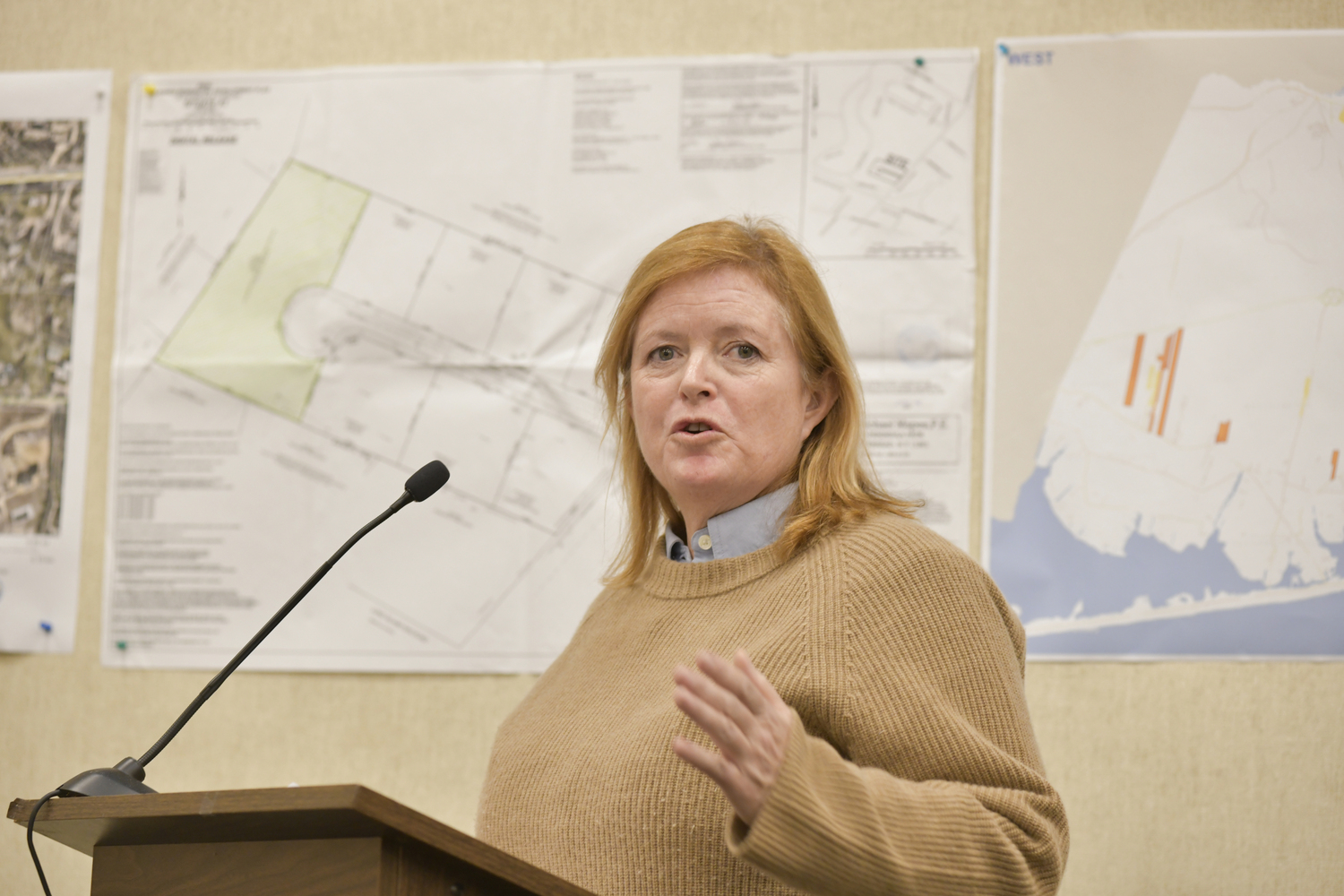
Lilee Fell, a Sag Harbor resident, speaks at Tuesday night's meeting. DANA SHAW
The Southampton Town Board on Tuesday closed a public hearing on a proposal to phase out all sand mines on residentially zoned property in town. The board did not indicate when it would vote on the proposal, which has the support of its Democratic majority.
After reading comments from the Town Planning Board, which also supported the measure, Supervisor Maria Moore said at the February 25 meeting that the board would still have to review the proposed law to make sure it meets the standards of the State Environmental Quality Review Act.
Opponents of the measure, who packed an initial public hearing, were nowhere to be found both Tuesday and last month when the board also solicited public comment.
The Planning Board, which reviewed the proposal at its February 13 meeting, had three comments, Moore said. First, it supported “the swift amortization of all nonconforming uses” in town; and second, it recommended that the amortization should be extended from residential to all zones.
The Planning Board also recommended that the Town Board use money from the Community Preservation Fund to purchase former sand mines, a measure it said would speed up the amortization process.
The amortization proposal, which was unveiled last October, would require mines that have extracted all of the sand allowed by their mining permits to close within a year. Those that still have sand left to mine would be allowed to petition the Zoning Board of Appeals for an extension of up to seven years to exhaust their allotments. They would also be allowed to argue before the ZBA that they should be given additional time.
Councilman Bill Pell, who introduced the legislation last year, suggested one change that would allow a sand mine owner 180 days to file an application with the ZBA, up from 60 days in the original version.
Four speakers urged the board to adopt the law.
Dai Dayton, president of the Friends of the Long Pond Greenbelt, told the board a sand mine operated by Sagaponack Sand and Gravel at 32 Haines Path in Bridgehampton is surrounded on three sides by land preserved as open space.
“We believe that the proposed amortization of these mines is a reasonable approach to ultimately remove industrial operations from sensitive areas such as the Long Pond Greenbelt, better protect Southampton’s drinking water preserves and restore our natural resources in the broadest interest of the public,” she read from a prepared statement.
Elena Loreto, the former president of the Noyac Civic Council, who has long battled the Sand Land mine in her hamlet, also called for the board to adopt the measure.
“You know how long we have been working with you folks on getting this whole issue resolved,” she said, adding that monitoring wells around Sand Land had detected chemicals and harmful metals. “Let’s take care of this issue right away. We don’t need more problems with the aquifer.”
Bob DeLuca, the president of the Group for the East End, thanked the board for its perseverance.
“I just want to remind the board that it was some 40 years ago that this issue first emerged in the town shortly after the Long Island landfill law was passed, and we began looking at what the other holes in the ground were doing that were here,” he said.
He cited the long zoning battle and jurisdictional squabbles with the New York State Department of Environmental Conservation. “At the end of the day, I think the town is taking strong and right action with respect to the protection of the aquifer and the protection of our community character,” he said.
Lilee Fell, a Sag Harbor resident, urged the board to follow the scientific evidence. “You have the health of the people in your hands,” she said. “Please remember that.”


 Stephen J. Kotz on Feb 26, 2025