


 5 Photos
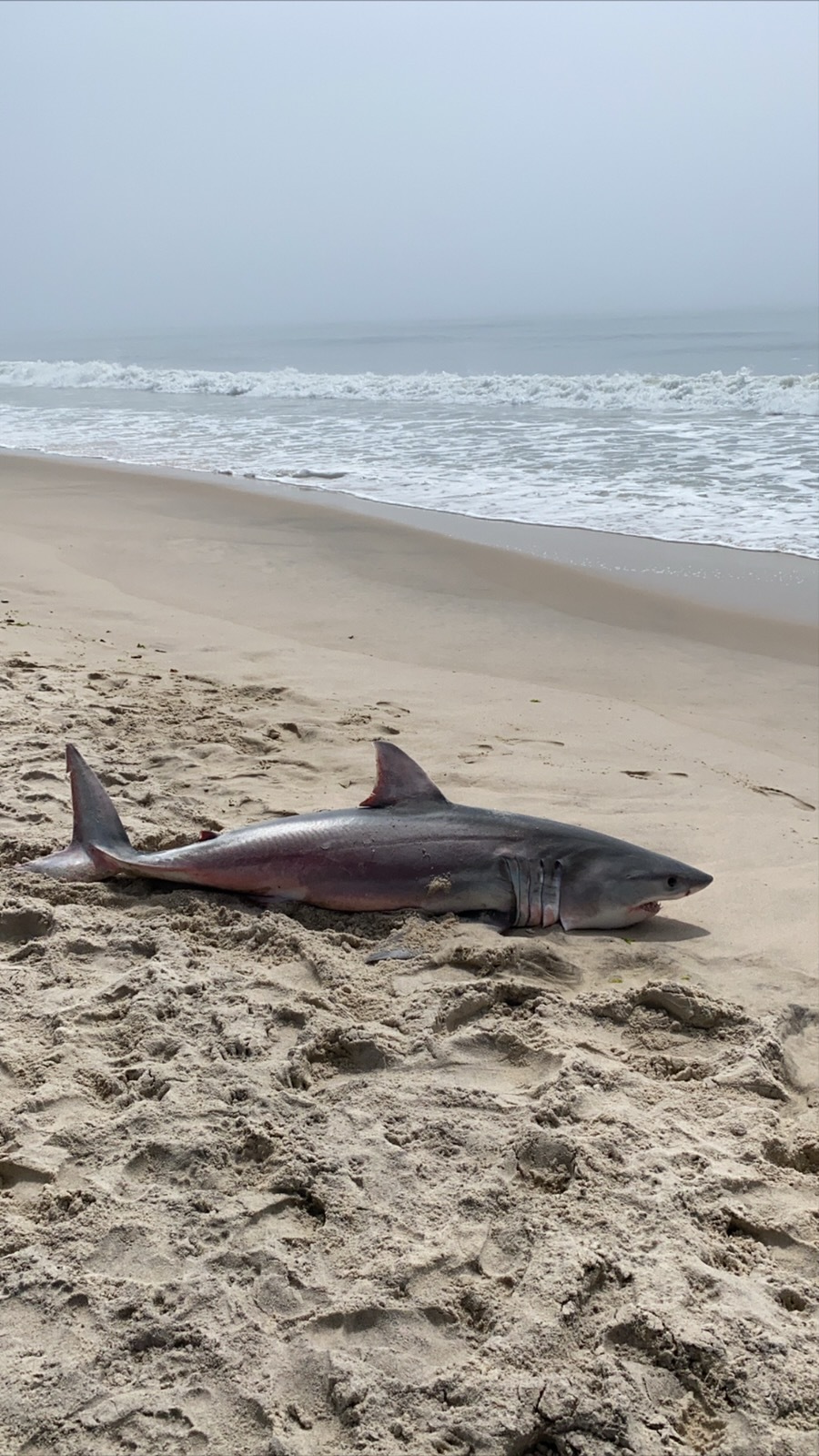
A dead juvenile white shark was found on the beach in Southampton Village last week. The occasional deaths of these young "great whites" have provided scientists with valuable specimens for studying the species that would otherwise be hard to aquire since the sharks are legally protected.
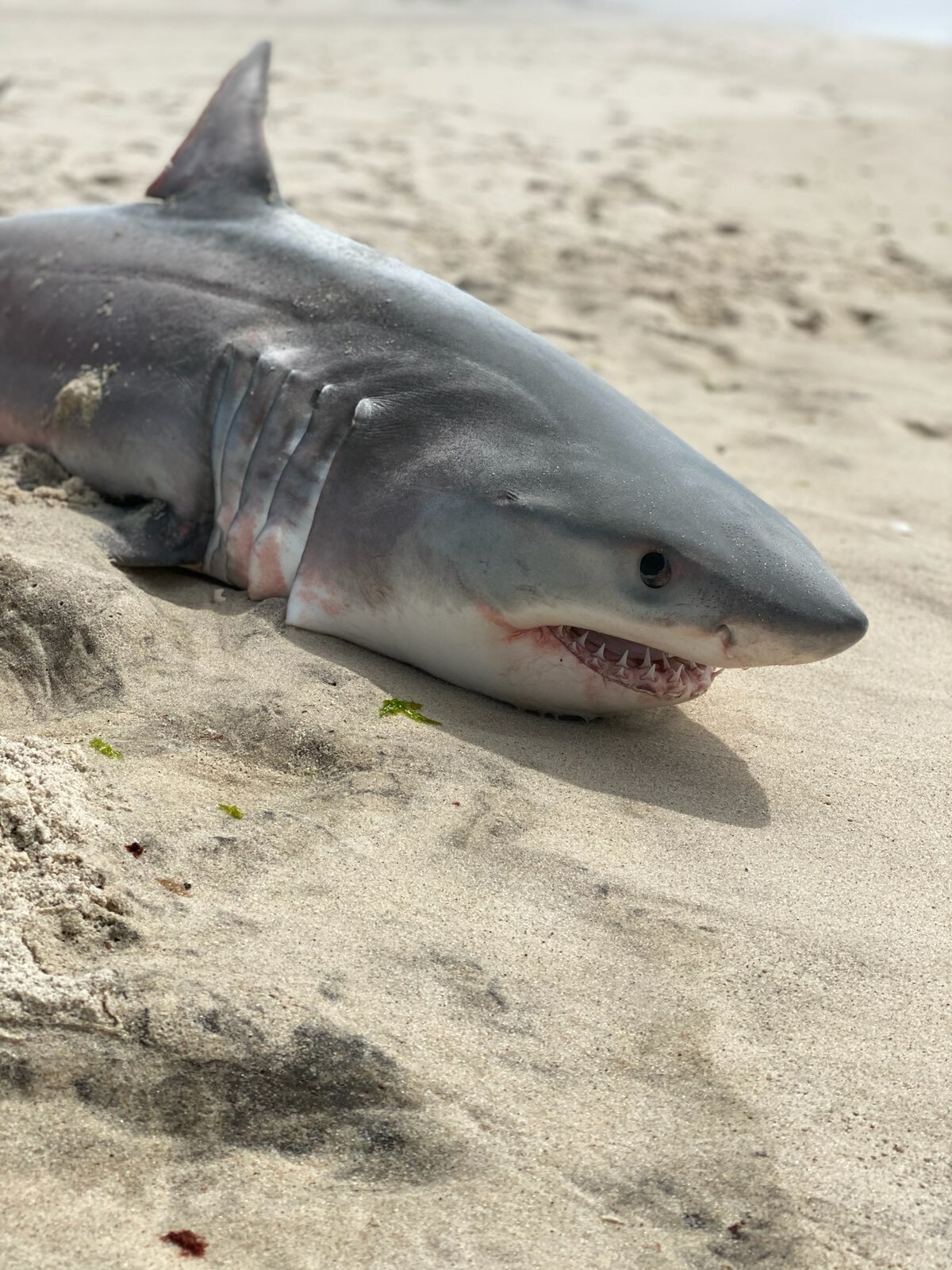
A dead juvenile white shark was found on the beach in Southampton Village last week. The occasional deaths of these young "great whites" have provided scientists with valuable specimens for studying the species that would otherwise be hard to aquire since the sharks are legally protected. Merritt Spiro
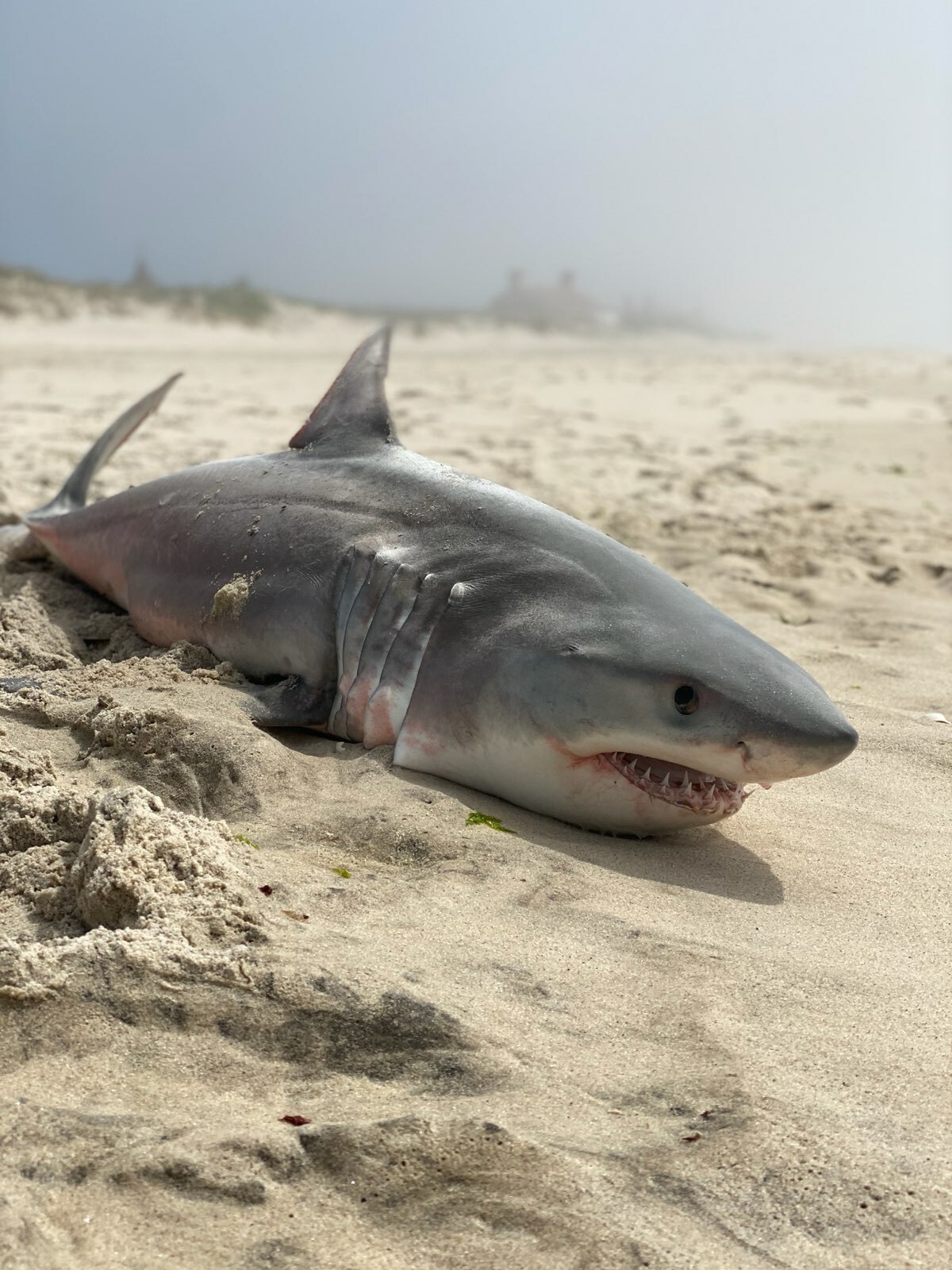
A dead juvenile white shark was found on the beach in Southampton Village last week. The occasional deaths of these young "great whites" have provided scientists with valuable specimens for studying the species that would otherwise be hard to aquire since the sharks are legally protected. Merritt Spiro
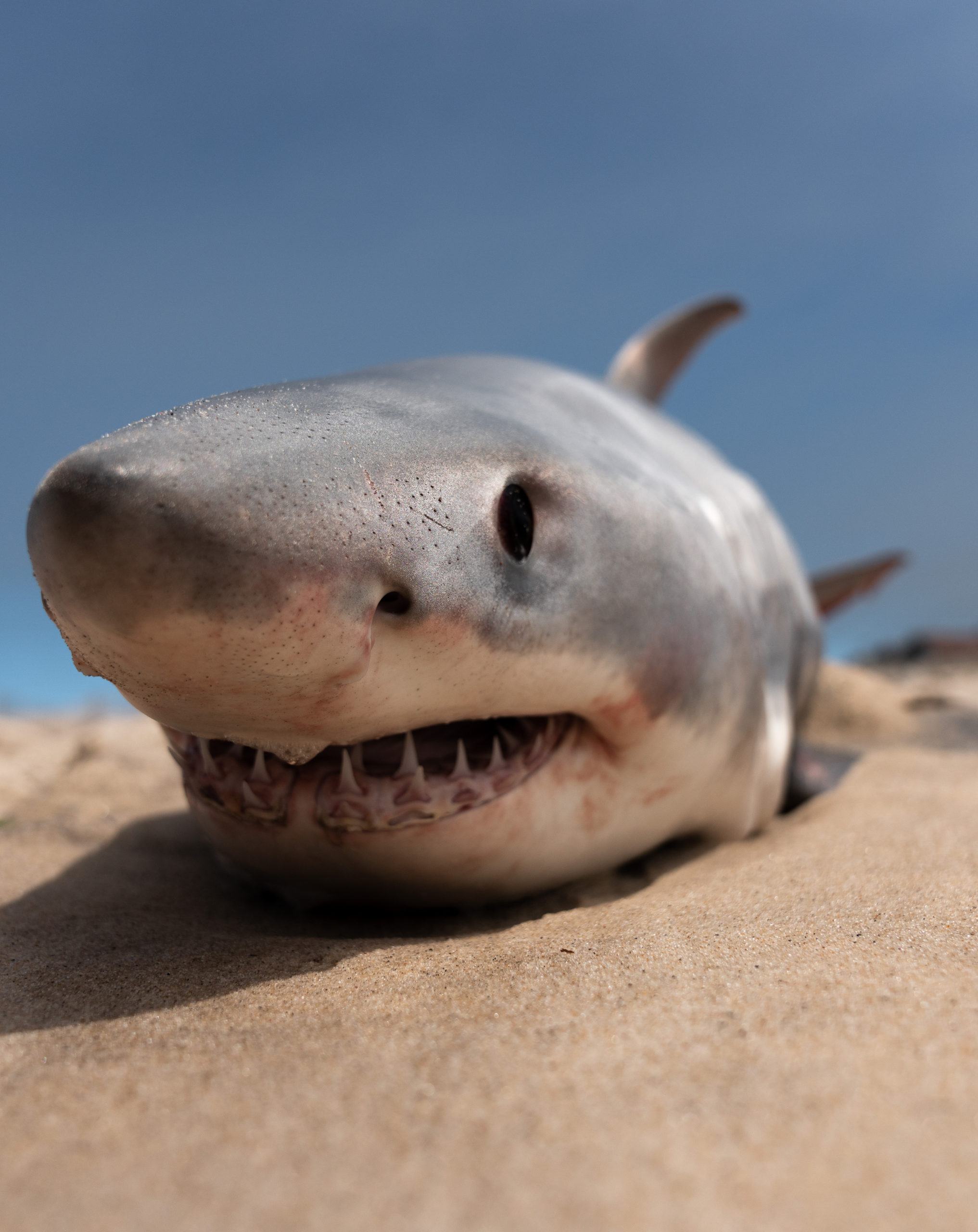
The young white shark, before someone illegally removed several of its teeth. Peter Melhado
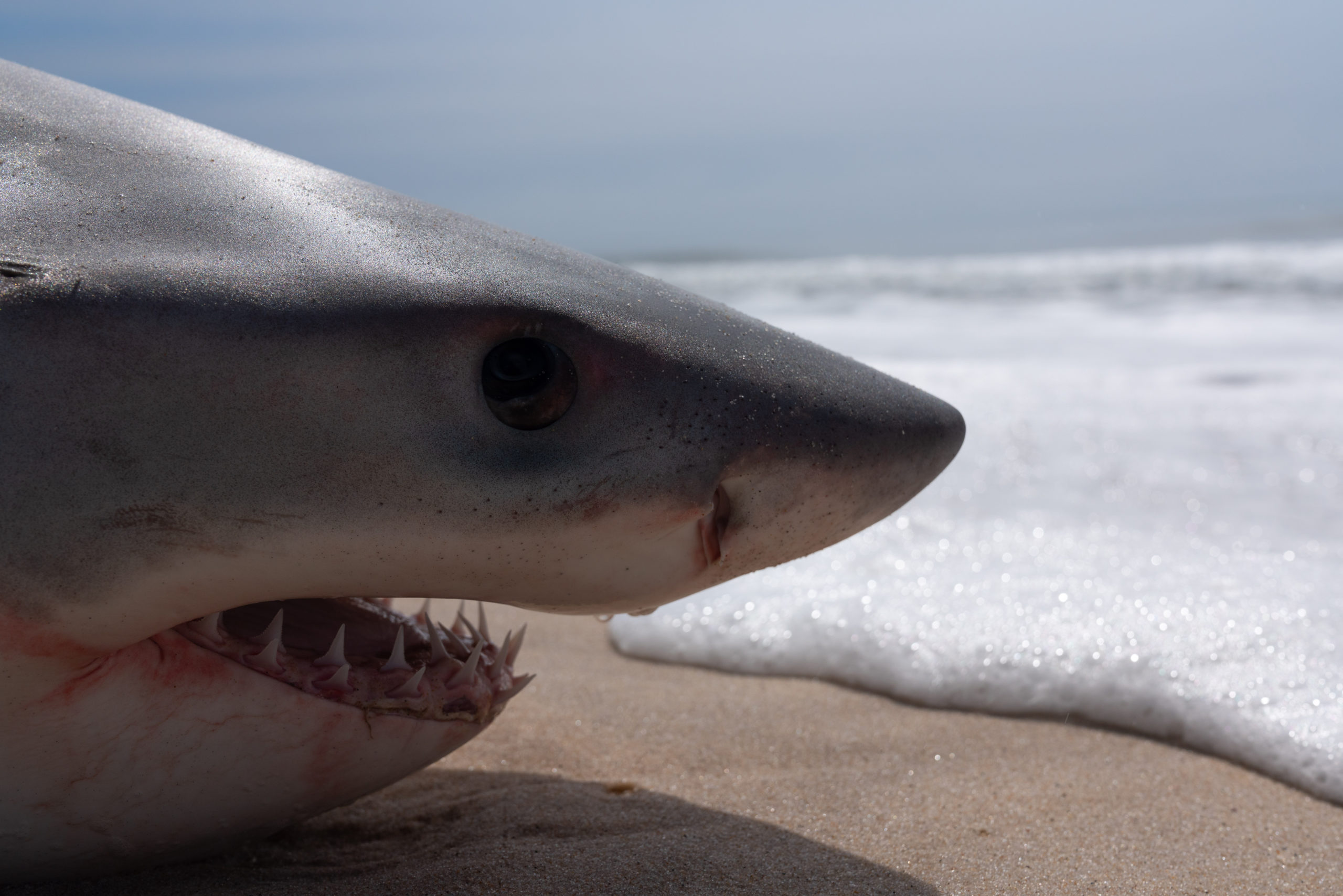
The young white shark, before someone illegally removed several of its teeth. Peter Melhado
A juvenile white shark that was found dead on the beach in Southampton Village, and several others like it that have washed up on South Fork beaches in recent years are providing marine biologists from Georgia to Cape Cod with a rare and scientifically important opportunity to study one of the ocean’s most famous species.
The carcass of the young white shark — a female about 3 or 4 years old, just under 7 feet long and weighing about 175 pounds — was found on the beach near Cryder Lane in the village on May 27.
Because white sharks are a protected species, scientists working with the New York State Department of Environmental Conservation were dispatched to collect the carcass for examination.
Typically, the sharks — at least a half-dozen dead juvenile white sharks were found on Suffolk County beaches last year — would be sent to the National Oceanographic and Atmospheric Administration’s laboratory in Woods Hole, Massachusetts, for a necropsy to be conducted to try to determine the cause of death.
But as part of a new state program called the DEC Shark Salvage Program, the shark was dissected locally by two Long Island scientists, one of them a marine science teacher at Southampton High School, and its organs preserved to be sent to other researchers working on understanding sharks better.
“The idea is to utilize the shark to the best of our ability,” said Greg Metzger, the Southampton teacher and the chief field coordinator for the South Fork Natural History Museum, which has been supporting a group of scientists on a shark research and education program. “The eyes went one place, a liver sample went to another, the heart, the spleen, we requested the fins for the South Fork Natural History Museum — basically every part of the shark is being sampled. It’s pretty neat.”
The opportunity for scientists to work with the tissues of a white shark is rare because of its protected status, meaning they cannot be killed intentionally like some other pelagic shark species that scientists can readily harvest organs from after fishing tournaments.
“Typically, when our team samples sharks, we take very small, non-lethal blood and muscle samples to measure contaminants and look at different health parameters,” Lisa Crawford, a Ph.D. student at Stony Brook University who is studying the effects of aquatic pollution on sharks over long periods of exposure, said in an email. “Having access to a dead white shark, I was able to collect a much larger sample of muscle than I typically would, which will allow me to measure more contaminants and do so more easily. I was also able to collect a liver sample, which I cannot collect from a live white shark due to the highly invasive nature of collecting a biopsy from an internal organ. With this liver sample, I can measure contaminants that preferentially accumulate in the liver tissue and make comparisons with levels in the muscle tissue. Having unique access to tissues from this dead white shark allows me to run analyses and answer questions that I wouldn’t be able to with live white sharks due to their protected status.”
Mr. Metzger said that the shark found last week was exceptionally well suited for scientific study because it was in basically pristine condition. The scientists determined that it had not been dead for very long and the cold temperatures of the ocean currently meant that it had basically been refrigerated until it washed ashore overnight. In the fall, when the sharks have most commonly been found, warm waters promote a fairly quick decaying of the carcass and its organs, making it less valuable to research.
The lone flaw in the shark found last week, Mr. Metzger noted, was that at some point before the scientists picked it up, someone had cut several of the teeth out of the jaw — which is expressly illegal, he noted.
White sharks are relatively rare in all the world’s oceans. They are protected from harvest in the United States and are listed as “vulnerable” by the International Union for the Conservation of Nature, but are not considered a “threatened” or “endangered” species.
Their numbers are believed to be gradually expanding in the North Atlantic, thanks to their protection and an explosion in seal populations along the Eastern Seaboard that are a key food source for adult “Great Whites.”
Marine scientists have discovered in recent years that the waters south of Long Island appear to serve as a nursery of sorts for young white sharks. The shallow coastal plain that mostly keeps larger sharks away and an abundant supply of prey like bluefish, striped bass and menhaden, makes it a perfect place for a small apex predator to come of age.
Larger white sharks — which are pretty much the only predator of concern for a shark that is born already about 5 feet long and weighing more than 75 pounds — spend their summer offshore or in the waters around Nantucket, where there are large summer seal populations.
“Long Island is a great place for baby white sharks to grow up because they can be top dog,” Mr. Metzger said.
The shark found in Southampton last week had a belly full of bluefish, he said.
Unfortunately, the Southampton beach is also currently dotted with another bluefish hunter: fishing nets.
Mr. Metzger said that the shark researchers are “pro-fishermen” and have noted that the white shark population is thought to be expanding, despite bycatch mortality. He made the point that some of the sharks the scientists collected and examined for the DEC in recent years were found to have died from illnesses and not fishermen — though he acknowledged that none of the young white sharks recovered appeared to have died from illness.
Officially, a DEC spokesperson said that the cause of death of the shark found last week was still being investigated.
Dr. Metzger and the other scientists working through the South Fork Natural History Museum’s shark program have been catching sharks themselves, including white sharks, using rod-and-reel and implanting satellite tags on the fish to track their movements.
They have found that the young whites arrive in Long Island waters in mid-April and stay until the end of October.
Through their own efforts and those of the Ocearch shark research program, which operates the popular SharkTracker mobile app, the shark scientists have tagged 30 juvenile white sharks since 2015.
Mr. Metzger encouraged anyone who finds a white shark on a local beach to alert the DEC through it's Shark Spotter portal at on.ny.gov/sharks or the South Fork History Museum at Sharsk@sofo.com.


 Michael Wright on Jun 3, 2020