


 6 Photos
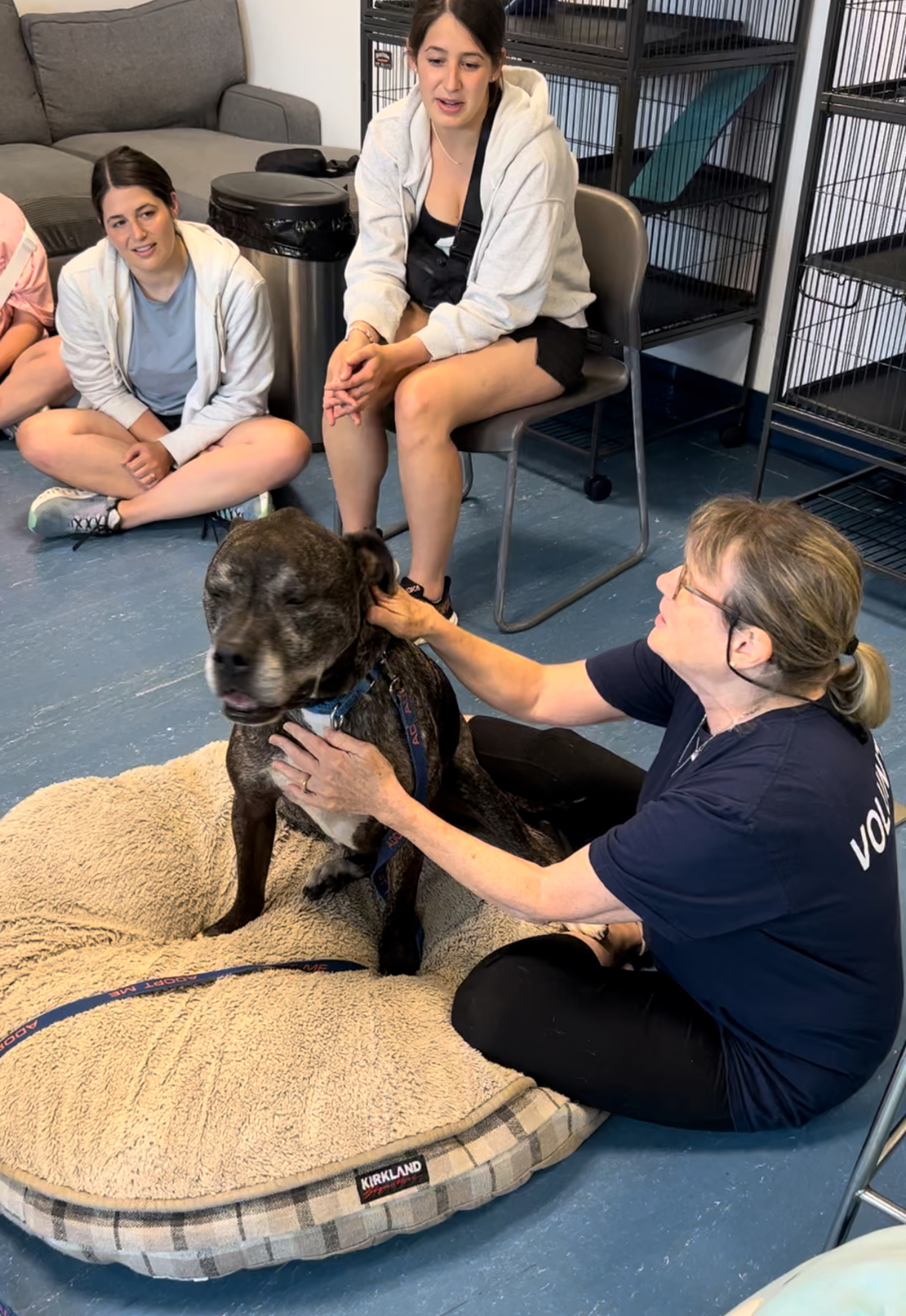
Volunteer Sue Denis practices Jin Shin Jyutsu, a Japanese healing art on animals at the shelter. COURTESY SASF
Linda Brown's fellow volunteers call her the dog whisperer for her seemingly innate ability to relate to dogs at the shelter. COURTESY SASF
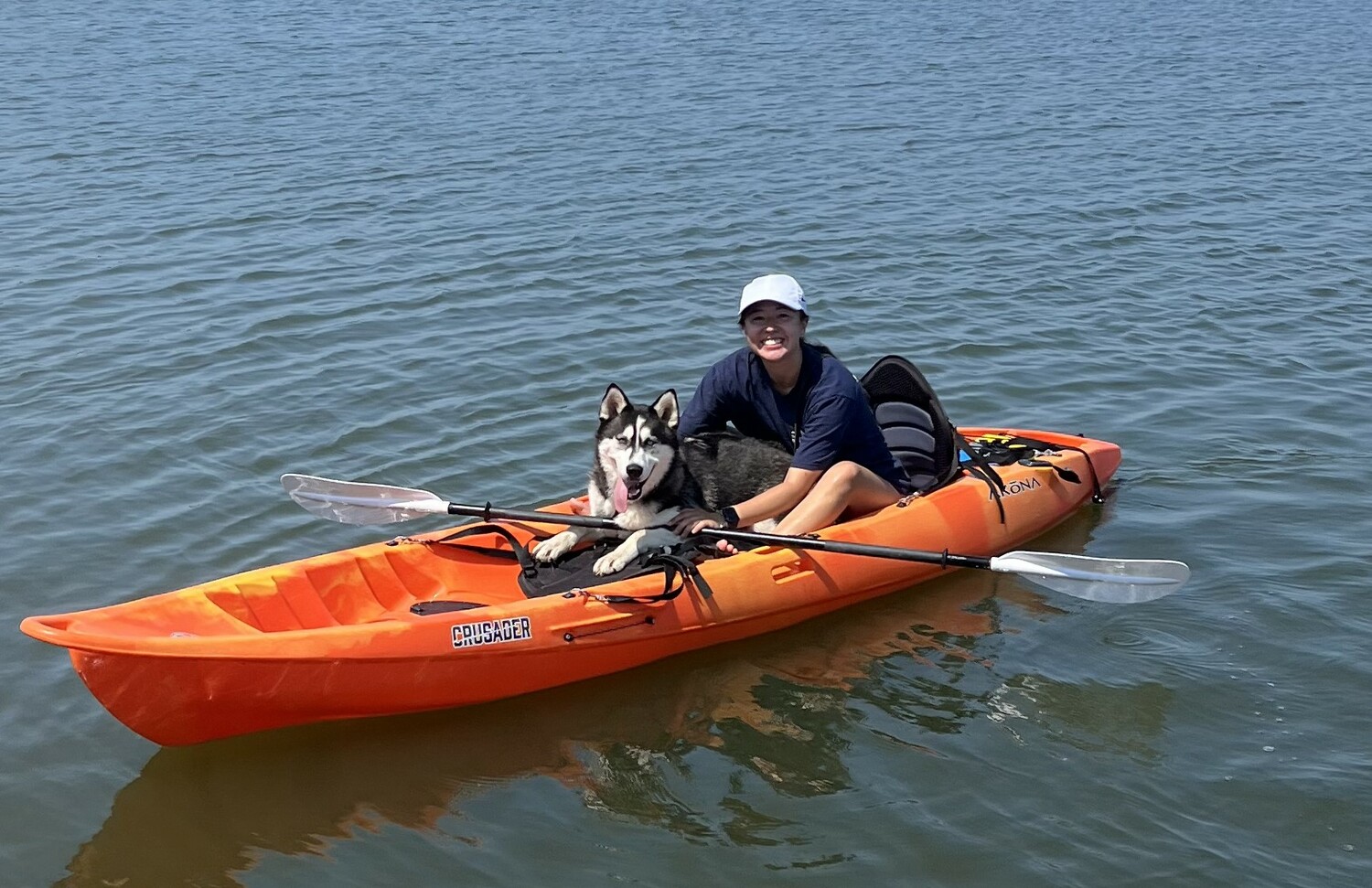
Francesca Johnson kayaks with Reno, one of the shelter's dogs. COURTESY SASF
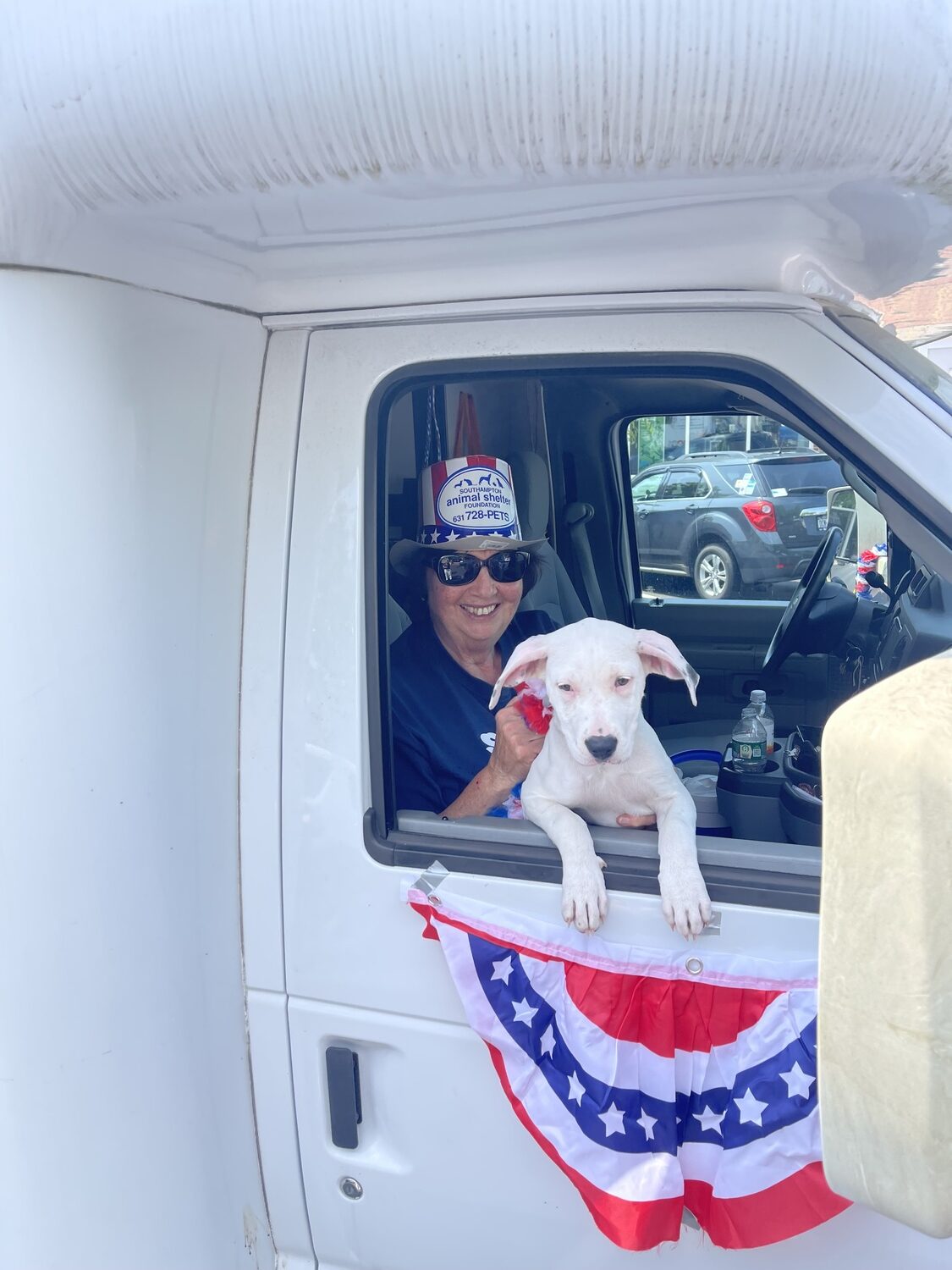
Carol Bauhs rides with a shelter dog in a Fourth of July parade. COURTESY SASF
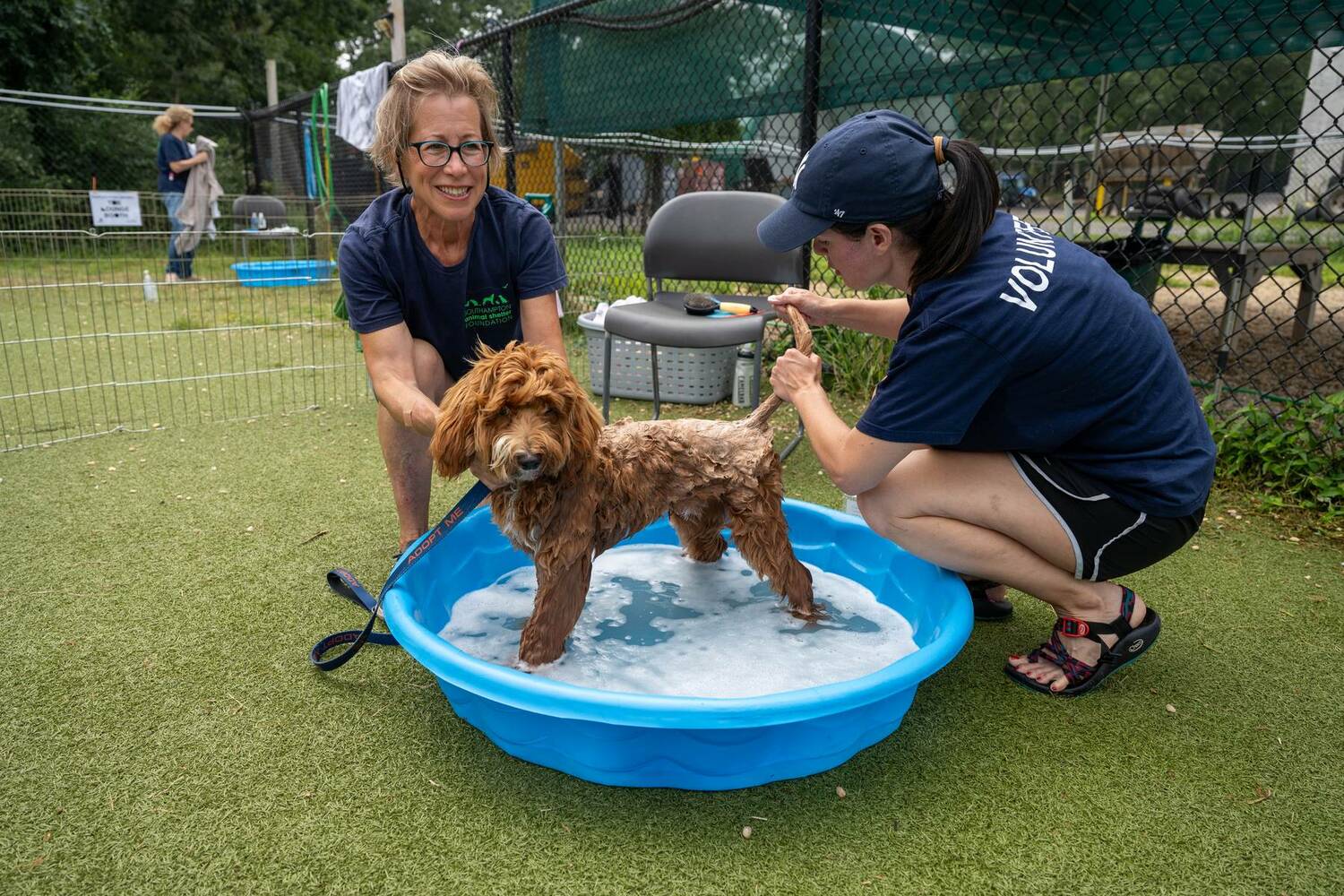
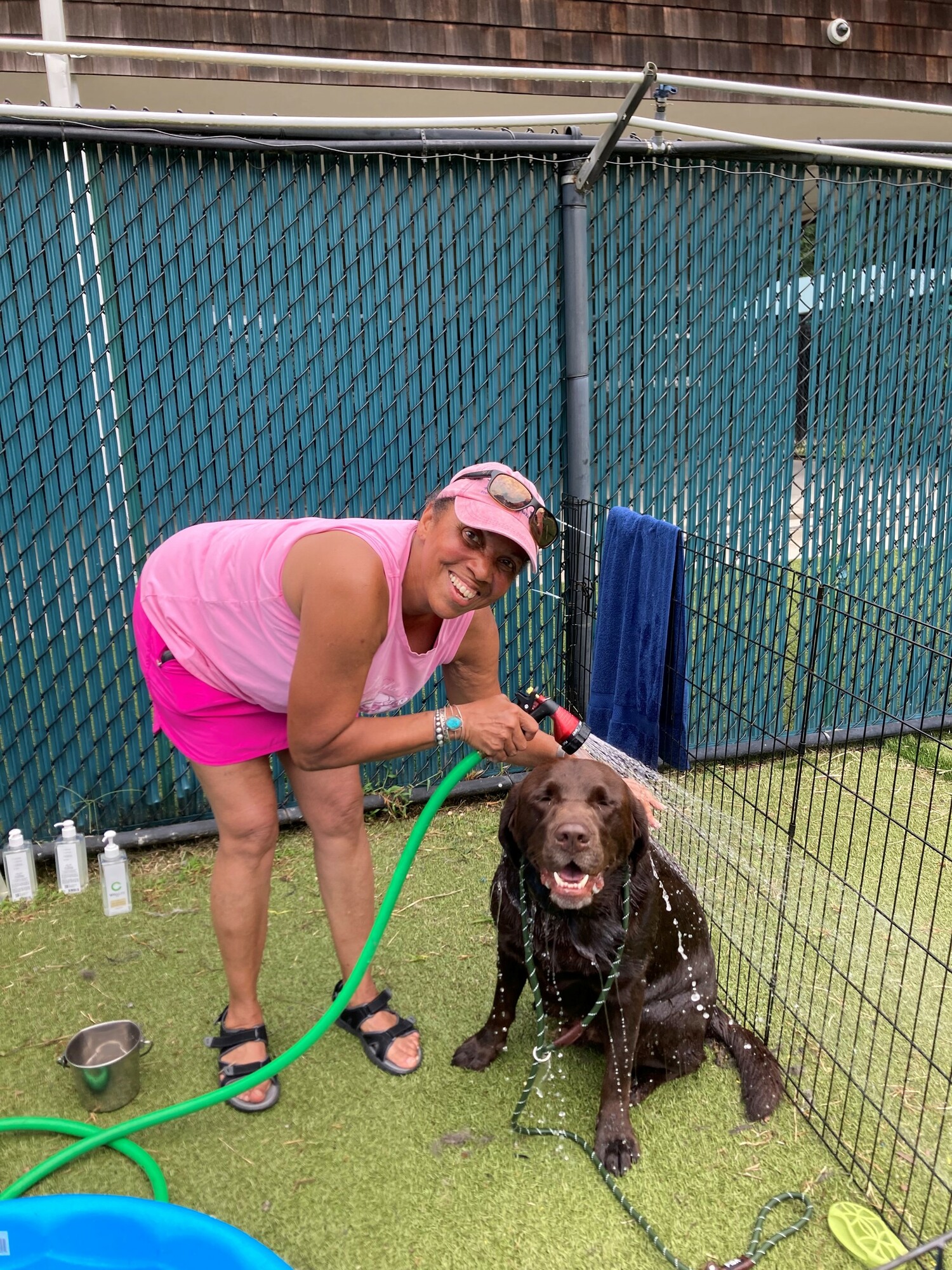
Carol Spettell, left, and fellow volunteer Loren Astle give a dog a bath. COURTESY SASF
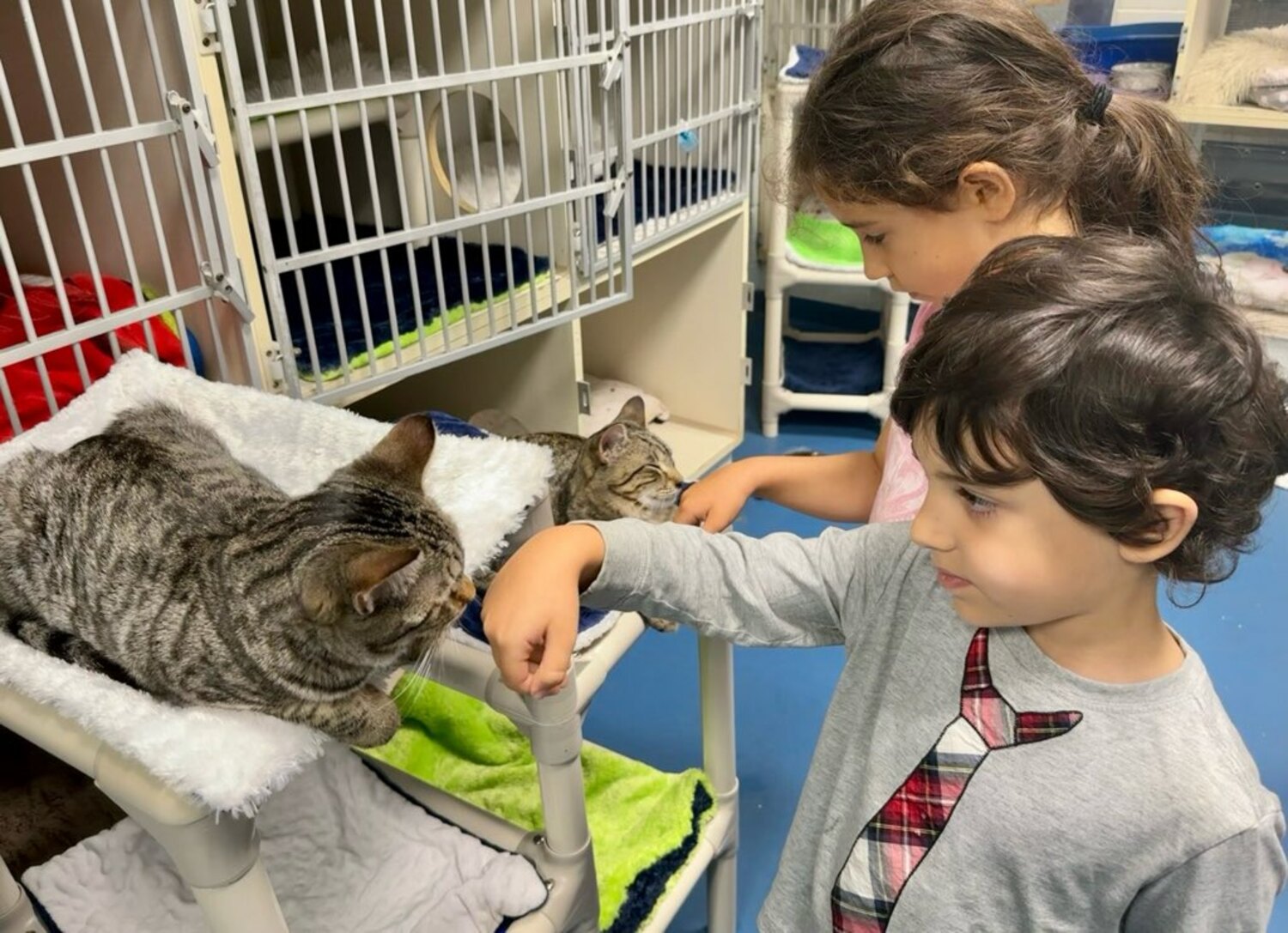
Daniel and Sophia Kennedy come to the shelter to help socialize cats. COURTESY SASF
The Southampton Animal Shelter in Red Creek Park in Hampton Bays is a busy place. Workers scurry about, tending to the shelter’s cat population, some of whom roam free in a room off to the side of the front desk. One lounges on the desk itself, apparently fond of the young woman working there. At the same time, a steady procession of dogs can be seen outdoors, either beginning or finishing one of their three daily walks.
“We’re small, but we have a very big reach,” said Kristin Hyland, who manages the shelter’s volunteer and community outreach programs. A no-kill shelter that is open to all breeds handles hundreds of animals a year, mostly kittens, but a good number of dogs as well as the occasional rabbit or other exotic pet, Hyland said.
Although the shelter is on town land and serves as the town pound for lost and stray animals, it has been run by a nonprofit foundation since 2010 when the town stepped back from the shelter business.
“One of the things I love about this shelter is nobody is here for the paycheck,” Hyland said. “We are here because we are dedicated to animals.”
But to be able to provide the animals that find their way to the shelter optimal care for both their physical and mental wellbeing, the shelter’s staff of about 20 people is augmented by a cadre of about 100 volunteers, many of whom are familiar faces at the center each week, others who fill in as time allows.
“I am very fortunate,” Hyland said. “I have amazing volunteers. They are consistent. They show up. They are a massive part of our workforce. They help us with everything.”
“Volunteers are the core of any rescue operation,” added Dr. Teresa Meekins, the center’s veterinarian. “You never have enough of them because the more one-on-one time each animal gets, the better because they are basically living in a kennel 22 hours a day.”
Volunteers come from all walks of life, Hyland said. Many are retirees, looking to find something meaningful to do with their free time. Others are high school students fulfilling community service requirements, and some, in the case of Sophia and Daniel Kennedy of Flanders, are young children.
The Kennedy children, who are home schooled by their parents, come to the shelter weekly to help socialize kittens and cats. They use a toothbrush attached to a long stick, which mimics a mother cat’s tongue, to gently stroke kittens’ fur. Or they use a feather, also attached to a stick, to encourage the animals to play.
“I like socializing the cats. I also like feeding them, and I like playing with them,” Daniel said.
Asked what she wanted other people to know about the shelter, Sophia responded, “The staff here are very caring people and they are generous with their time, their money and especially with their hearts.”
Linda Brown, who other volunteers call “the dog whisperer” for her seemingly innate ability to work with all types of dogs, is a retired registered nurse from Hampton Bays. She offered a straight-forward reason for why she became a volunteer. “When I retired, I said, ‘Let me go do something. I know what I’ll do, I’ll walk dogs, get out and get some exercise.’” She has been returning for six years and says she enjoys working with dogs that are considered challenging.
Carol Bauhs, of Hampton Bays who retired from the Suffolk County district attorney’s office in 2010, first came to the shelter when she found a mother cat and four kittens in her yard and brought them into be neutered. Soon, she found herself walking dogs.
“I liked to work with the real shy dogs,” she said. “I liked bringing them out of their shell.” Bauhs, who said her knees bother her these days, now does most of her volunteering at events, where the animal shelter sends its van and several volunteers to introduce the public to some of the animals it has available for adoption.
Another longtime volunteer from Hampton Bays is Lorry Werner, who worked with a women’s shelter in Riverhead, before coming to volunteer at the shelter. “I’ve worked with the homeless with two legs and the homeless with four legs,” she said.
Werner said she likes the shelter because it never gives up on an animal. She recounted how she used to come and read a book out loud, while sitting next to the kennel of a dog named Diamond that was terrified of people and had lived in the shelter for about five years. Eventually, she adopted the dog herself, and it lived out its life with her.
Werner said another nice thing about working at the shelter is that she has made friends with fellow volunteers. She said she, Bauhs and Brown talk frequently and volunteer at events together, turning them into social gatherings.
Hyland said the three women, between themselves, had probably volunteered at more than 1,000 over the years.
Claire Spettell retired in 2020 from Aetna Health Insurance in Connecticut and moved to her second home in Hampton Bays. Like other retirees, she said she didn’t want to sit at home, so she began to volunteer, doing laundry, working in the kitchen, and walking dogs at the shelter. Eventually, she found herself volunteering at the front desk or at events and assisting in grant-writing efforts.
“I do like the events, and I do like walking the dogs,” she said. “But another type of reward is when we are successful in getting a grant” because funding is so critical to the shelter’s operation.
Sue Denis of North Haven, a retired school nurse and family therapist, has been studying Jin Shin Jyutsu, a Japanese healing art since 1998 and has been certified to practice it on animals.
Denis, who said she always wanted to be a veterinarian, began volunteering last winter when dogs that had been traumatized by the war in Ukraine were brought to the center.
“After a session, it’s amazing how they respond,” she said of the animals that lick her face and cuddle with her.
Denis said too many people look at a dog or cat as the toy in a McDonald’s Happy Meal that can be discarded when the thrill wears off.
“They don’t realize how much an animal loves you and depends on you,” she said.
Denis said she would encourage anyone who is thinking of volunteering to do so. “Every shelter could use as many volunteers as possible,” she said. “The kindness I have seen there is extraordinary — from the people who work there and who volunteer there.”


 Stephen J. Kotz on Oct 2, 2024