


 5 Photos
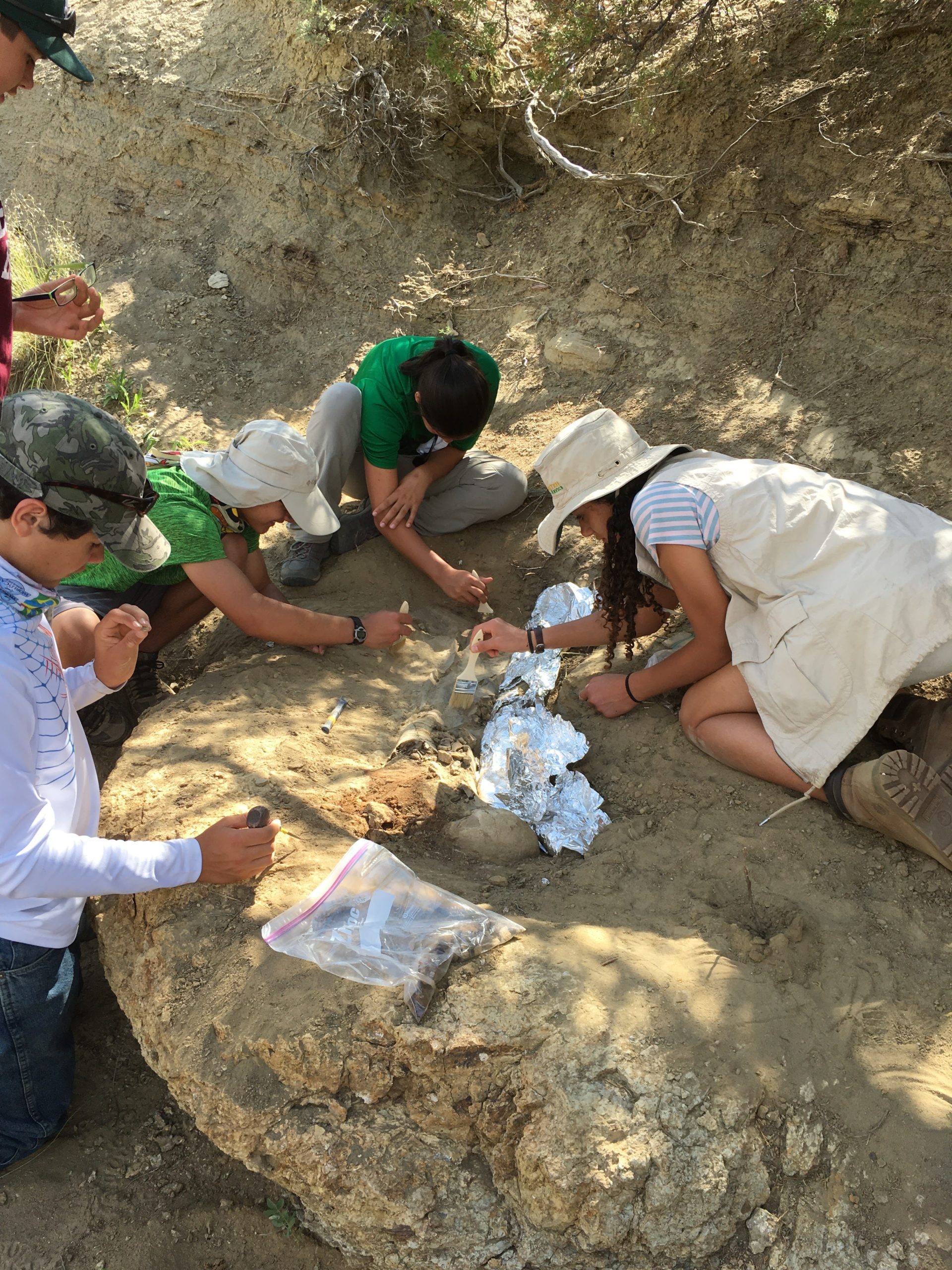
A 2017 group of Westhampton Beach middle and high school students apply a protective layer to the ornithischian dinosaur limb bone found on the grounds of the Zerbst Ranch in Lusk, Wyoming. Courtesy Westhampton Beach Union Free School District
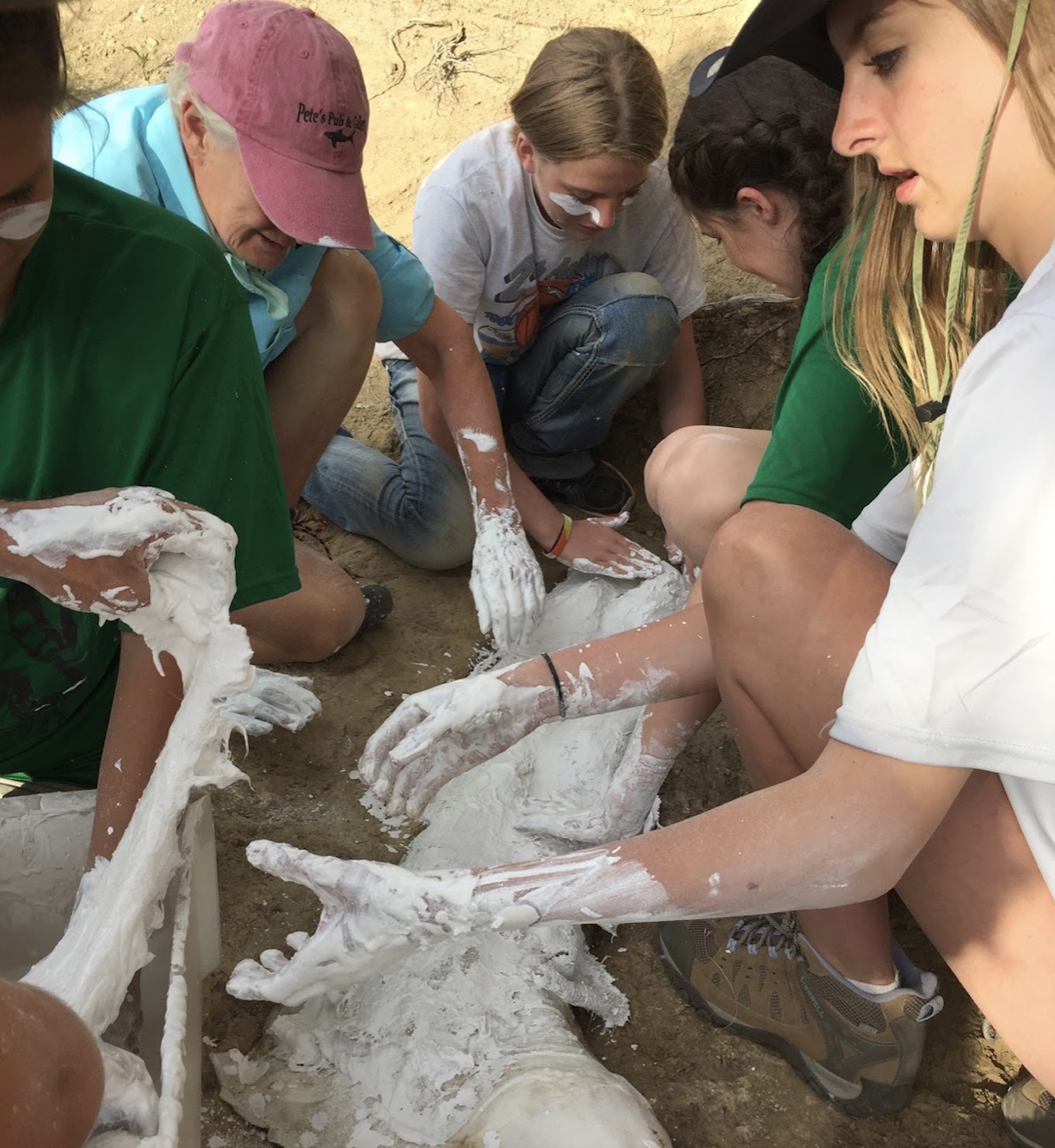
Westhampton Beach middle and high school students coat the dinosaur bone in a protective layer of plaster. Courtesy Westhampton Beach Union Free School District
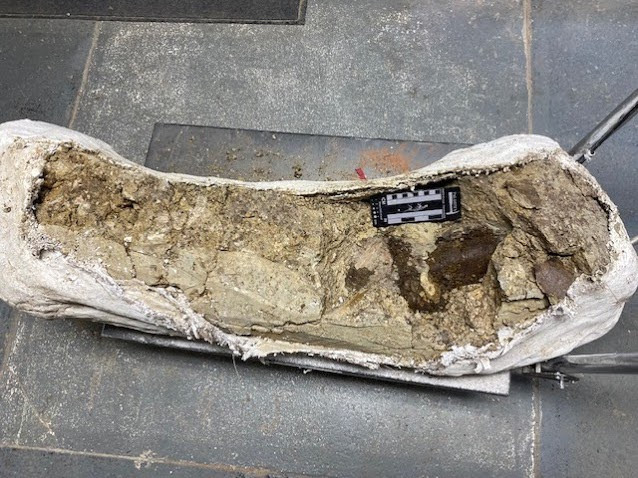
The ornithischian dinosaur limb bone bone encased in the matrix. The dark-colored material is the physical bone, and the lighter material is the matrix. Courtesy Westhampton Beach Union Free School District
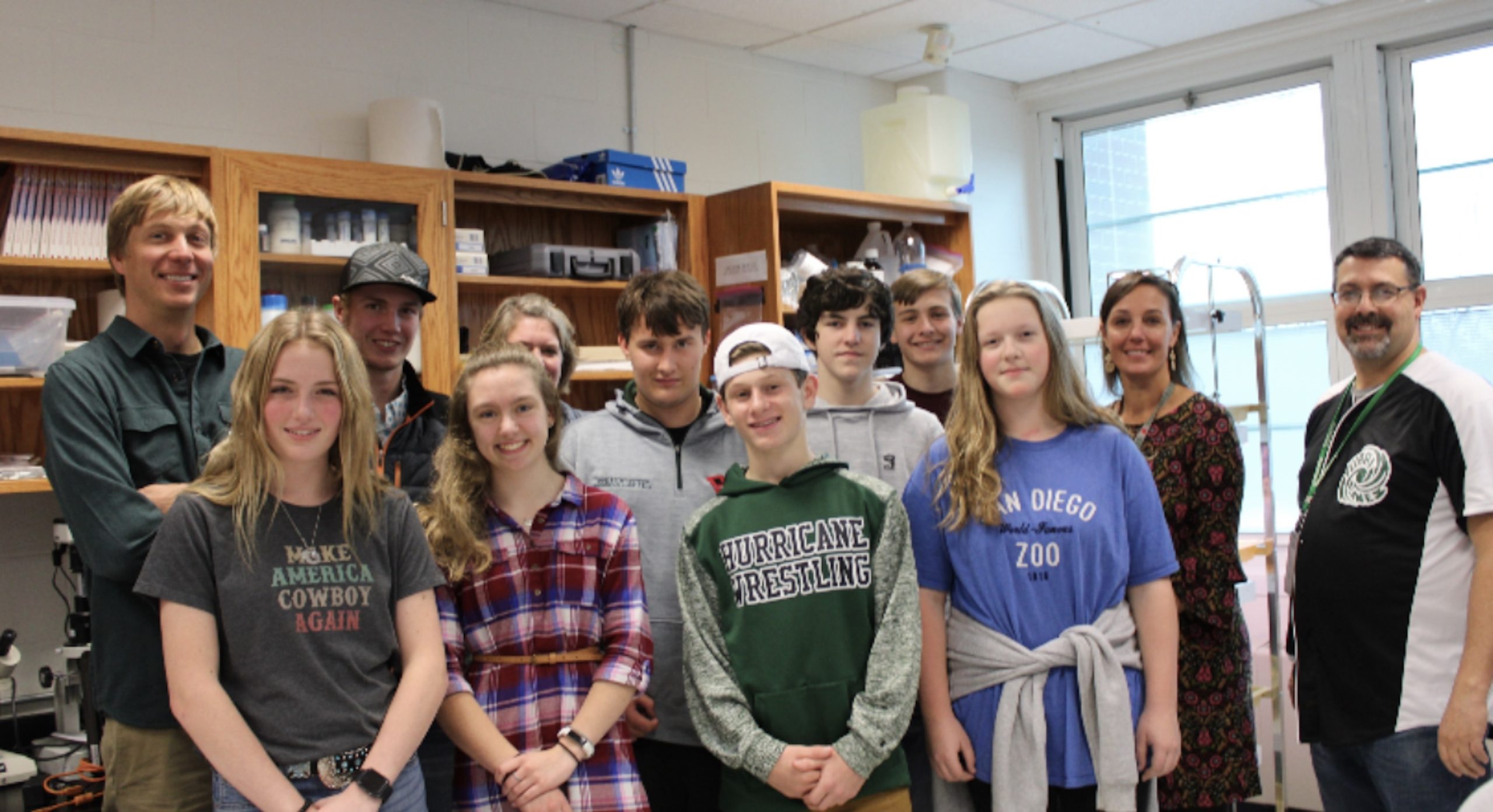
Paleontologist John Hankla, far left, visits students at Westhampton Beach High School. Courtesy Westhampton Beach Union Free School District
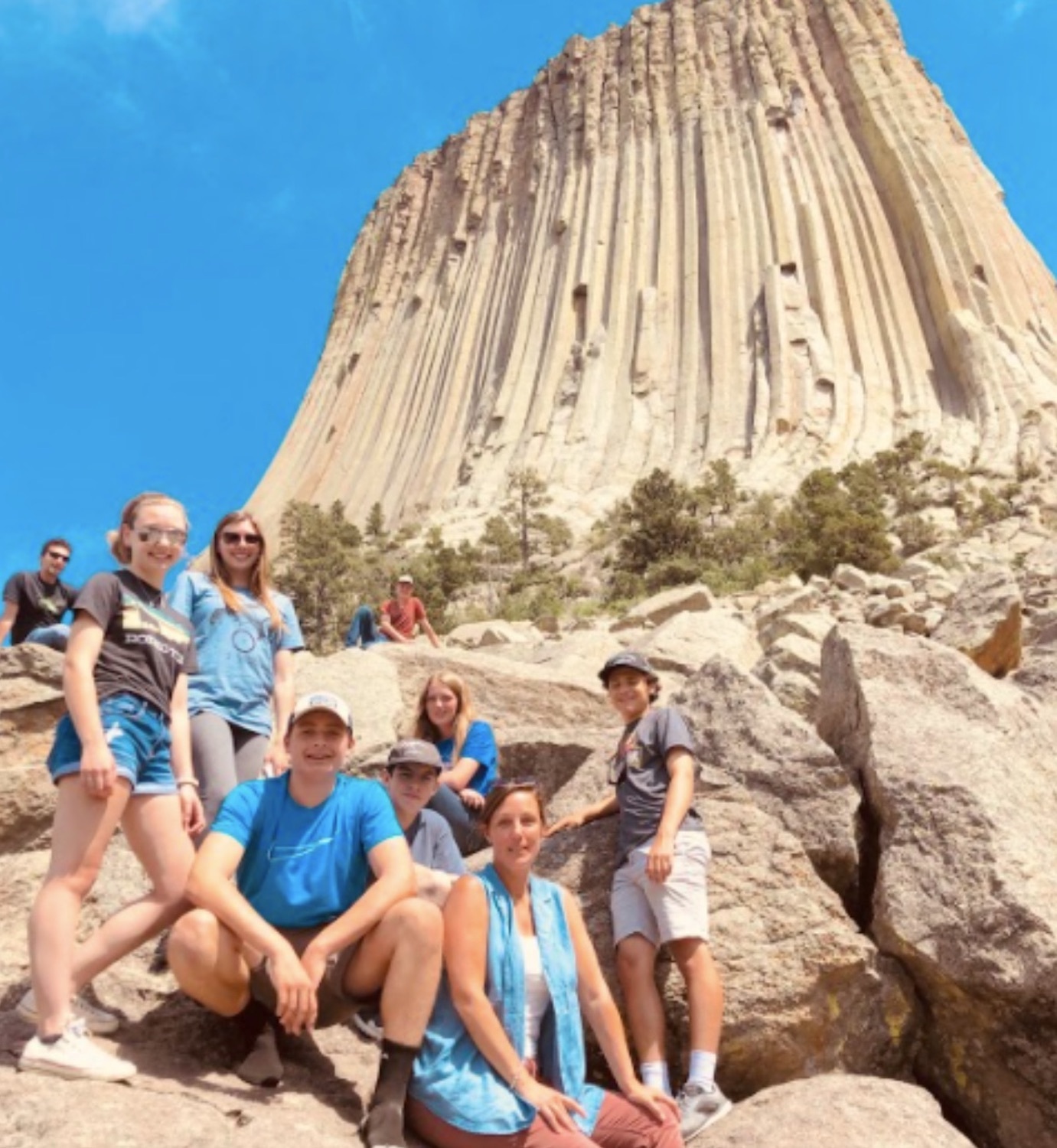
Westhampton Beach PALEOS club members visited the Black Hills Institute of Geological Research in South Dakota and prospected and uncovered 50 specimens in an attempt to identify potential “paleo-forest” locales within the Lance Formation in northeastern Wyoming. Students also visited the Devils Tower National Monument in Wyoming and attended the seventh annual Dino Shindig in Ekalaka, Montana. Courtesy Westhampton Beach Union Free School District
Westhampton Beach middle and high school students enrolled in Dr. Dianna Gobler’s science research program are completely restoring a 65-million-year-old dinosaur limb bone.
Julia Blydenburgh and Jack Schultz, along with some of their classmates in the district’s PALEOS club, are repairing and characterizing the herbivorous dinosaur fossil, known as an ornithischian limb bone, as part of a collaboration with the Denver Museum of Nature and Science and Wyoming’s Zerbst Ranch. After the students are finished with the restoration, the limb bone and all written notes will be delivered to the Denver museum.
“This may seem like a big undertaking for high school students, but we’ve done this before,” Julia said — as Jack held up a cast of one of two triceratops brow horns the pair previously restored — during a presentation about the project to the Westhampton Beach Board of Education on February 9. “And this is more than just a restoration, it’s a part of a nationwide biodiversity study being led by Dr. Joe Sertich of the Denver Museum of Nature and Science.”
Dr. Sertich, the curator of dinosaurs for the museum, will use the bone to aid in his research in the characterization of Laramidia. In the Mesozoic era, Laramidia was an island separated from Appalachia to the east by the Western Interior Seaway, which split the continent of North America in two.
Jack explained that at the end of the Cretaceous Period — around 66.5 million years ago — present-day Wyoming, where the fossil was discovered, looked more like the Gulf Coast of Florida.
“Wyoming was a flourishing habitat for a variety of creatures and dinosaurs,” he said. “The Western Interior Seaway occupied a large portion of the Midwest of the United States.”
In July 2017, a group of students accompanied science teacher and PALEOS club leader Robert Coleman and paleontologist John Hankla as they explored the Lance Formation — a division of late Cretaceous rocks in the western United States — on the Zerbst Ranch in Lusk, Wyoming. During the expedition, they uncovered a limb bone buried in the dense matrix, and under the supervision of Hankla, jacketed the bone to protect the specimen from further weathering. During the field season of 2019, a second group of students continued the excavation of the bone, and at the end of their excursion in July, successfully removed the bone and transported it to Hankla’s warehouse in Denver. For the majority of 2020, the bone lay jacketed in the warehouse.
In December 2020, Westhampton Beach students proposed a project to completely restore the fossil, and Hankla delivered it to Andre LuJan at PaleoTex — a company that provides fossils to the scientific community — in Hillsboro, Texas.
“The level of maturity and high-level thinking demonstrated by these students is truly commendable,” Mr. Coleman said. “They engaged in sophisticated discussions with scientists and represented the true spirit of our school community.”
For the past two months, Mr. LuJan and his team have begun preliminary inspections and preparations of the bone. In the coming month, he will finish his assessment, and the bone will be transported to the science research students at Westhampton Beach High School.
“The students have been so proactive with reaching out to scientists and asking questions,” Dr. Gobler said, adding, while laughing: “Every time I say you should do this or that, they go, ‘Oh, we already did that three days ago.’ They’re constantly on top of it and I’m very proud of the whole group.”
She said the bone, which has also been worked on by Griffin Schuerer, Morgan Donahoe, Matthew Daleo, Josh Kaplan and Evan Lockwood, will eventually be used by credited researchers all over the country.
Jack said he and his classmates are also looking to study microfossils like teeth, including one from a tyrannosaurus rex, and gastropods — or snails and slugs — that were found around the bone.
The students plan to visit the middle and elementary schools to teach students about paleontology, and make a mold and cast of the limb bone to display inside the district.
“We have learned through both experience and observation that research is all about the connections,” Julia said. “We can enhance our collaboration skills. We plan to continue to grow our connections which may lead to future research projects, internships, scholarships and occupational opportunities in the industry.”


